


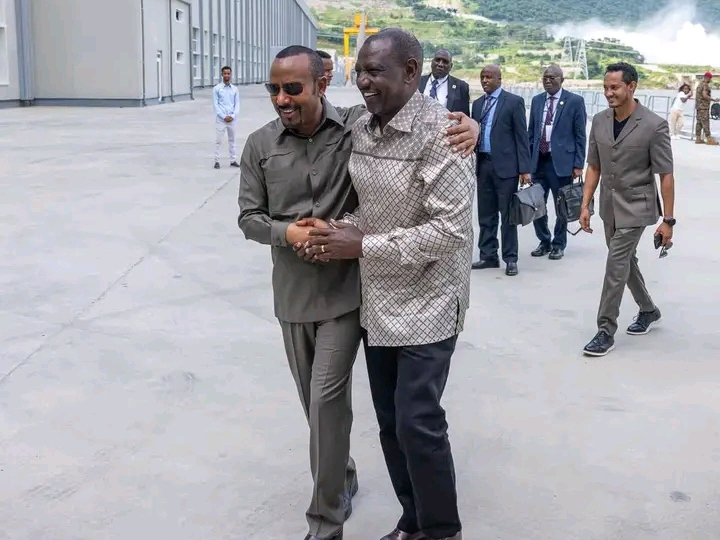

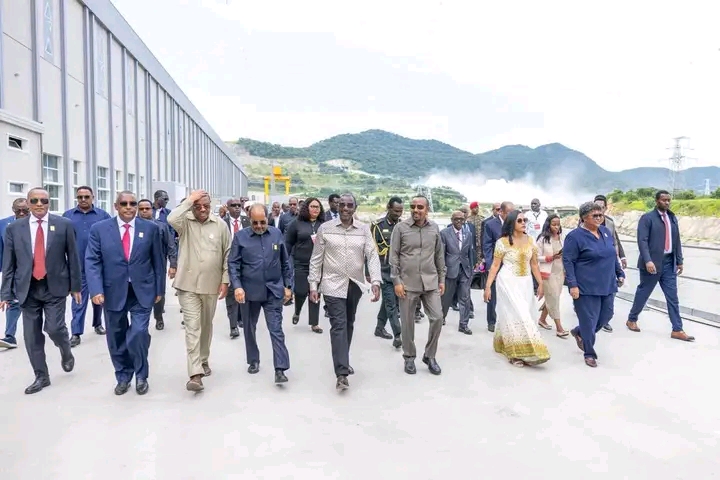
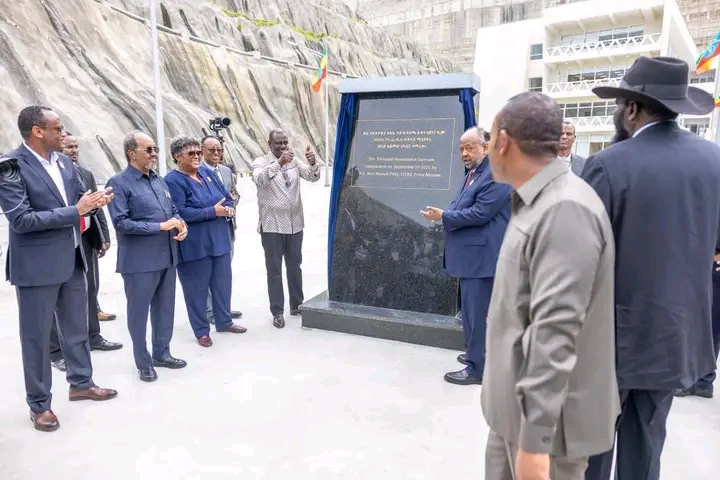
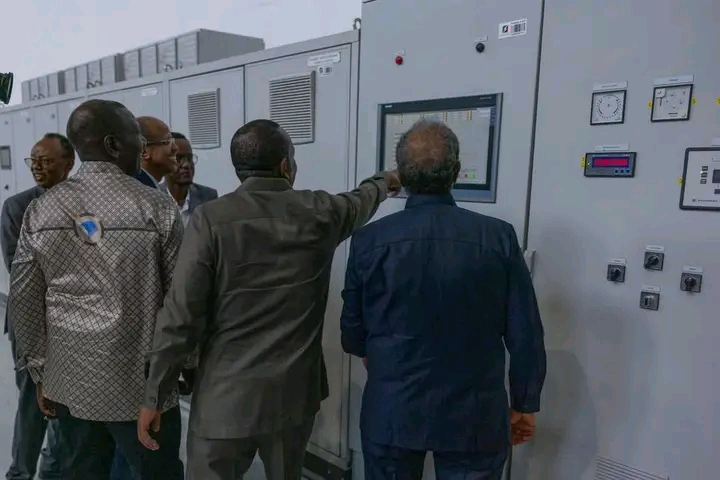
In a historic moment for Africa, the Grand Ethiopian Renaissance Dam (GERD) was inaugurated in Benishangul-Gumuz, Ethiopia, marking a monumental leap toward energy independence and regional prosperity.
Kenyan President William Ruto, joined by a distinguished assembly of African and international leaders, celebrated the $5 billion project as a shining beacon of Africa’s ability to harness its resources and shape its own future.
Dubbed the continent’s largest hydropower facility, the GERD is poised to transform Ethiopia and the broader East African region with its capacity to generate 6,450 megawatts of clean electricity.
A Monument to African Ambition
Speaking at the unveiling ceremony, President Ruto described the GERD as far more than an engineering feat. “This is not just an infrastructure project—it is a continental symbol of self-reliance, resilience, and progress,” he declared.
Entirely funded by the Ethiopian people, the dam stands as a testament to the nation’s determination to drive development without external dependency.
Ruto underscored the project’s significance as a bold statement of Africa’s capacity to finance and execute transformative initiatives, setting a precedent for other nations to follow.
The GERD, a colossal structure spanning the Blue Nile, has been a decade in the making.
Its completion signals Ethiopia’s emergence as a regional energy powerhouse, capable of meeting its own electricity demands while supplying surplus power to neighboring countries.
For Ethiopia, the dam promises to electrify millions of households, fuel industrial growth, and bolster economic stability.
Beyond its borders, the GERD’s ripple effects are expected to drive sustainable development across East Africa, fostering regional integration and economic collaboration.
Powering a Prosperous Future
President Ruto announced Kenya’s readiness to tap into the GERD’s potential, revealing plans to sign a power purchase agreement with Ethiopia to import surplus electricity.
This clean, renewable energy, he noted, would catalyze growth in key sectors such as manufacturing, agro-processing, and information and communication technology (ICT).
“Access to affordable, sustainable power will enhance Kenya’s competitiveness, create jobs, and sustain economic growth,” Ruto said, highlighting the transformative potential of cross-border energy cooperation.
The GERD’s capacity to generate 6,450 megawatts positions it as a game-changer for the region, where energy deficits have long hindered industrial and economic progress.
By providing a reliable source of clean energy, the dam aligns with Africa’s broader goals of transitioning to sustainable energy systems, reducing reliance on fossil fuels, and combating climate change.
The project’s success also underscores the importance of homegrown solutions to Africa’s developmental challenges, inspiring other nations to pursue ambitious, self-funded initiatives.
A Call for Dialogue Amid Regional Tensions
While celebrating the GERD’s inauguration, President Ruto addressed the longstanding tensions surrounding the dam’s impact on the Nile River’s water flow, particularly for downstream nations Egypt and Sudan.
Emphasizing Kenya’s commitment to regional harmony, he urged Nile Basin states to prioritize dialogue and compromise.
“No nation should be denied the opportunity to build transformative assets like the GERD,” Ruto stated. “With time, these projects become shared sources of prosperity, benefiting communities across borders.”
Ruto reaffirmed Kenya’s support for the equitable use of shared water resources and called for continued trilateral negotiations between Ethiopia, Egypt, and Sudan.
“Dialogue and good-faith discussions are the surest path to a fair agreement that safeguards prosperity and stability for all,” he said.
His remarks reflect a delicate balancing act, acknowledging Ethiopia’s sovereign right to develop its resources while advocating for cooperative solutions to address the concerns of downstream nations.
A Gathering of Global Leaders
The inauguration ceremony drew a high-profile delegation of leaders, underscoring the GERD’s significance on the global stage.
Among the attendees were Djibouti’s President Ismaïl Omar Guelleh, Somalia’s President Hassan Sheikh Mohamud, South Sudan’s President Salva Kiir Mayardit, Barbados Prime Minister Mia Mottley, Eswatini’s Prime Minister Russell Mmiso Dlamini, and African Union Commission Chair Mahmoud Ali Youssuf.
Their presence highlighted the dam’s role as a symbol of African unity and a catalyst for international partnerships.
The attendance of Barbados Prime Minister Mia Mottley, in particular, signaled the growing global interest in Africa’s development milestones.
The diverse representation of leaders underscored the GERD’s broader implications, not only for energy security but also for fostering diplomatic and economic ties across continents.
A New Era for Africa
The completion of the GERD marks a defining moment in Africa’s journey toward self-reliance and sustainable development.
As the continent’s largest hydropower project, it embodies the aspirations of a new generation of African leaders committed to unlocking the region’s vast potential.
For Ethiopia, the dam is a source of national pride, a testament to the resilience and ingenuity of its people. For the region, it is a catalyst for economic transformation, promising to power industries, light up homes, and create opportunities for millions.
President Ruto’s remarks at the inauguration captured the spirit of this milestone: “The GERD is proof that Africa can dream big, act boldly, and achieve greatness. It is a reminder that our destiny lies in our hands, and together, we can build a future that reflects our collective strength and ambition.”
As Ethiopia begins to harness the full potential of the GERD, the project is set to redefine the narrative of African development, showcasing the power of unity, innovation, and self-determination.
With ongoing dialogue to address regional concerns, the dam could pave the way for a new era of cooperation and shared prosperity in the Nile Basin and beyond.
Share This Post