

In a dramatic escalation of tensions in the Middle East, Qatar has issued a vehement condemnation of Israel following a targeted military strike in Doha on Tuesday, September 9, 2025.
The Israeli Defense Forces (IDF) claimed responsibility for what they described as a “precise strike” aimed at senior leaders of Hamas, the Palestinian militant group.
The attack, which Qatar labeled a “cowardly Israeli assault,” has sparked outrage, raised questions about international law, and heightened concerns over regional stability.
This incident marks a rare direct strike on Qatari soil, challenging the Gulf nation’s sovereignty and drawing global attention to the volatile dynamics of the Israeli-Palestinian conflict.
A Brazen Attack in the Heart of Doha
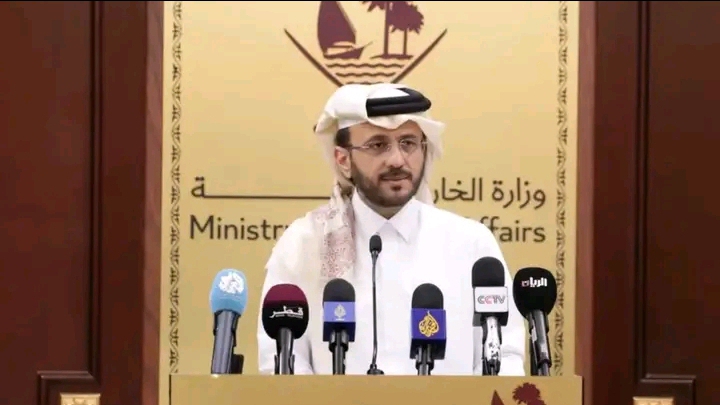
According to Majid Al Ansari, spokesperson for Qatar’s Ministry of Foreign Affairs, the Israeli strike targeted residential buildings in Doha, which were reportedly housing several members of Hamas’s political bureau.
The assault, which Qatar described as a “criminal act,” struck at the heart of the capital, sending shockwaves through the nation and prompting an immediate response from Qatari authorities.
Al Ansari condemned the attack as a “blatant violation of all international laws and norms,” emphasizing that it posed a direct threat to the safety and security of Qatar’s citizens and residents.
The Qatari government swiftly mobilized its security forces, civil defense teams, and other relevant authorities to address the aftermath of the attack.
Efforts focused on containing the incident’s repercussions, ensuring the safety of residents, and securing the surrounding areas.
While details about casualties or structural damage remain limited, the rapid response underscores Qatar’s commitment to safeguarding its population and maintaining stability in the face of an unprecedented act of aggression.
Israel’s Justification: A Strike on Hamas Leadership
In a statement released shortly after the attack, the Israeli army confirmed that it had conducted a “precise strike” targeting senior Hamas leaders in Doha.
The IDF provided no further details about the specific individuals targeted or the intelligence that prompted the operation.
However, the announcement aligns with Israel’s long-standing policy of pursuing Hamas operatives, whom it accuses of orchestrating attacks against Israeli civilians and undermining regional security.
Hamas, designated a terrorist organization by Israel, the United States, and several other countries, has maintained a political presence in Qatar for years.
Doha has served as a hub for Hamas’s political leadership, with Qatar playing a mediating role in ceasefire negotiations and humanitarian efforts in the Israeli-Palestinian conflict.
The decision to strike within Qatar’s borders represents a bold and provocative move by Israel, raising questions about the strategic calculus behind targeting Hamas figures in a neutral country known for its diplomatic efforts.
Qatar’s Defiant Response: A Stand Against “Reckless” Aggression
Qatar’s response to the attack was swift and unequivocal. Majid Al Ansari reiterated the nation’s strong condemnation, declaring that Qatar “will not tolerate this reckless Israeli behavior” or any actions that threaten its sovereignty and security.
The spokesperson accused Israel of disrupting regional stability and violating Qatar’s role as a neutral mediator in the region. “This assault not only undermines Qatar’s security but also jeopardizes the delicate balance of peace efforts in the Middle East,” Al Ansari stated.
Qatar’s condemnation reflects broader concerns about the implications of Israel’s actions. As a key player in regional diplomacy, Qatar has hosted talks between conflicting parties, facilitated humanitarian aid to Gaza, and worked to broker ceasefires in the Israeli-Palestinian conflict.
The attack on its soil could strain these efforts, potentially alienating a critical mediator and escalating tensions across the region.
International Law and Regional Ramifications
The strike has sparked intense debate about its legality under international law. Qatar’s assertion that the attack constitutes a “blatant violation” of global norms aligns with principles of state sovereignty, which prohibit military actions on the territory of a sovereign nation without consent.
Legal experts argue that Israel’s strike, conducted without Qatar’s approval, could set a dangerous precedent, undermining the principles of territorial integrity and diplomatic immunity.
The incident also raises questions about the broader geopolitical fallout. Qatar’s role as a mediator has positioned it as a key player in Middle Eastern politics, balancing relationships with Western allies, regional powers, and non-state actors like Hamas.
An attack on its soil could complicate these relationships, potentially drawing Qatar into a more confrontational stance with Israel and its allies.
Furthermore, the strike risks inflaming tensions in an already volatile region, where ongoing conflicts in Gaza, Lebanon, and elsewhere continue to destabilize the Middle East.
Global Reactions and the Path Forward
As news of the attack spread, international reactions began to emerge, with analysts and diplomats closely monitoring the situation.
The United Nations and other global bodies have yet to issue formal statements, but calls for de-escalation and adherence to international law are expected.
The strike’s timing, amid ongoing ceasefire negotiations and humanitarian challenges in Gaza, adds another layer of complexity to an already fraught regional landscape.
For Qatar, the incident represents a critical test of its resilience and diplomatic resolve. The government has vowed to take “all necessary measures” to protect its citizens and sovereignty, signaling a firm stance against future violations.
Meanwhile, Israel’s decision to target Hamas in Doha suggests a willingness to expand its military operations beyond traditional theaters of conflict, potentially signaling a new phase in its campaign against the group.
What Next?: A Region on Edge
The Israeli strike on Doha has thrust Qatar into the spotlight, challenging its role as a neutral mediator and raising the stakes in the Israeli-Palestinian conflict.
As Qatar condemns the “cowardly” attack and vows to protect its sovereignty, the international community watches closely, aware that the repercussions of this incident could ripple across the Middle East.
With regional tensions at a boiling point, the need for diplomatic solutions and adherence to international law has never been more urgent.
For now, Qatar’s swift response and Israel’s calculated strike underscore the fragile balance of power in a region where every action carries profound consequences.
For updates on this developing story, stay tuned to trusted news sources and official statements from Qatar and Israel.