

Tehran, Iran| The intensifying conflict between Iran and Israel has entered its second week, marked by a flurry of missile exchanges, significant casualties, and international calls for de-escalation.
Iran has issued a stern warning that foreign weapons shipments to Israel will be considered “legitimate targets,” escalating tensions and raising fears of a broader regional war.
Meanwhile, Tehran claims its retaliatory missile strikes have crippled Israel’s radar and defense capabilities, while Israel asserts its Operation Rising Lion has dealt a severe blow to Iran’s nuclear program.
As the death toll mounts and diplomatic efforts falter, the international community braces for potential consequences, including a new migrant crisis.
Iran’s Warning: Foreign Arms Shipments in the Crosshairs
On Saturday, an Iranian military spokesperson declared that any foreign weapons deliveries to Israel would be viewed as third-party participation in “aggression against the Islamic Republic.”
This statement, delivered amid ongoing hostilities, signals Tehran’s intent to broaden its targeting strategy, potentially drawing other nations into the conflict.
The warning comes as Iran accuses Western countries, particularly the United States, of bolstering Israel’s military capabilities.
Iran’s stance reflects its growing concern over Israel’s sustained airstrikes, which have targeted missile production sites and nuclear facilities across the country.
Tehran’s rhetoric underscores the risk of escalation, as foreign involvement could complicate an already volatile situation.
Iranian Claims: Israel’s Defense Systems “Significantly Damaged”
Citing intelligence reports, the Iranian military spokesperson claimed that retaliatory missile strikes have destroyed a “significant part” of Israel’s radar and defense infrastructure.
According to Tehran, the strikes have left Israel grappling with shortages of ammunition and equipment, hampering its ability to sustain its campaign.
While Iran has not provided verifiable evidence to support these claims, the assertion highlights Tehran’s intent to project strength and rally domestic support amid mounting losses.
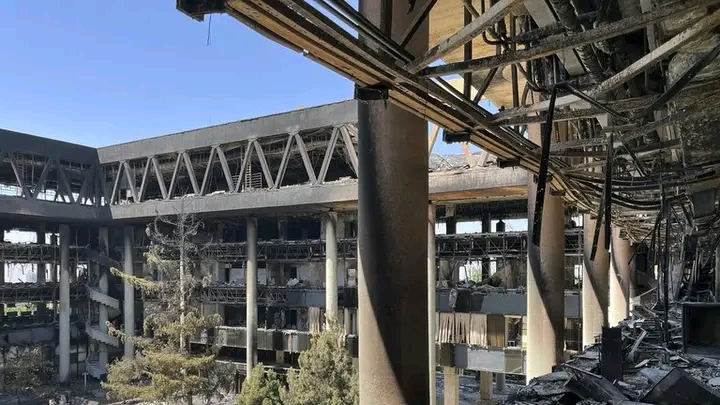
Iran’s missile barrage targeted key Israeli locations, including the strategic port city of Haifa, which sustained significant damage.
The strikes are part of Iran’s broader response to Israel’s Operation Rising Lion, a series of airstrikes aimed at crippling Iran’s military and nuclear capabilities.
Israel’s Operation Rising Lion: Targeting Iran’s Nuclear Program
Israeli Prime Minister Benjamin Netanyahu has hailed Operation Rising Lion as a decisive blow to Iran’s nuclear ambitions.
Israeli airstrikes have targeted critical nuclear facilities, including the Natanz enrichment site, the Isfahan nuclear research center, and the Arak heavy water reactor.
The International Atomic Energy Agency (IAEA) confirmed damage to infrastructure at Natanz and Isfahan, though the full extent of the impact remains unclear.
Netanyahu stated that the operation has “significantly set back” Iran’s nuclear program, a claim that aligns with Israel’s long-standing goal of preventing Tehran from developing nuclear weapons.
However, Iran has denied that its nuclear facilities sustained critical damage, insisting that its program remains intact and is solely for peaceful purposes.
Mounting Casualties and Humanitarian Concerns
The human toll of the conflict is staggering. According to Iran’s Health Ministry, Israeli strikes have killed at least 430 Iranians, including civilians, and injured more than 3,500.
Independent sources suggest the death toll may be higher, as rescue efforts continue in heavily bombarded areas.
In Israel, officials report 25 deaths and over 2,500 injuries, with civilian infrastructure, including Haifa’s port, bearing the brunt of Iran’s missile attacks.
The United Nations has warned that the escalating violence could trigger a new migrant crisis, as displaced populations in both countries seek safety.
The UN has called for immediate de-escalation and urged all parties to prioritize civilian protection and humanitarian access.
International Reactions and Diplomatic Efforts
The conflict has drawn sharp reactions from global powers. Russia condemned Israel’s initial airstrikes and called for restraint.
President Vladimir Putin held separate phone calls with U.S. President Donald Trump, Iranian President Masoud Pezeshkian, and Netanyahu to explore de-escalation measures and discuss the possibility of reviving negotiations on Iran’s nuclear program.
However, diplomatic progress remains elusive. U.S. President Trump, who has expressed support for Israel, said he would decide within two weeks whether the U.S. will join Israel’s campaign against Iran.
Trump noted the difficulty of pushing for a ceasefire when one side appears to be “winning,” a statement that drew criticism from Iranian Foreign Minister Abbas Araghchi.
Araghchi urged Washington to pursue peace, suggesting that a single phone call from Trump to Netanyahu could halt the violence.
The Road Ahead: Risks and Challenges
As the conflict enters its second week, both sides show no signs of backing down. Israel’s continued airstrikes and Iran’s missile barrages raise the specter of a prolonged war with devastating regional consequences.
The involvement of foreign powers, whether through arms supplies or direct military action, could further complicate the situation, potentially drawing in neighboring countries and destabilizing the Middle East.
Analysts warn that the destruction of critical infrastructure, including nuclear facilities and civilian targets, could have long-term implications for both nations.
The IAEA’s confirmation of damage to Iran’s nuclear sites may prompt renewed scrutiny of Tehran’s nuclear activities, while Israel’s losses in Haifa could strain its economy and security apparatus.
Path Forward
The Iran-Israel conflict, now in its second week, represents a dangerous escalation with far-reaching implications. Iran’s warning against foreign arms shipments, coupled with its claims of damaging Israel’s defenses, underscores the intensity of the confrontation.
Meanwhile, Israel’s Operation Rising Lion has targeted Iran’s nuclear infrastructure, raising questions about the future of Tehran’s nuclear program.
With hundreds dead, thousands injured, and the risk of a migrant crisis looming, the international community faces an urgent challenge to broker peace and prevent a wider war.
For ongoing updates on the Iran-Israel conflict, stay tuned ICBNews to get credible news and official statements from involved parties. The path to de-escalation remains uncertain, but diplomacy remains the best hope for averting further catastrophe.
Share This Post