




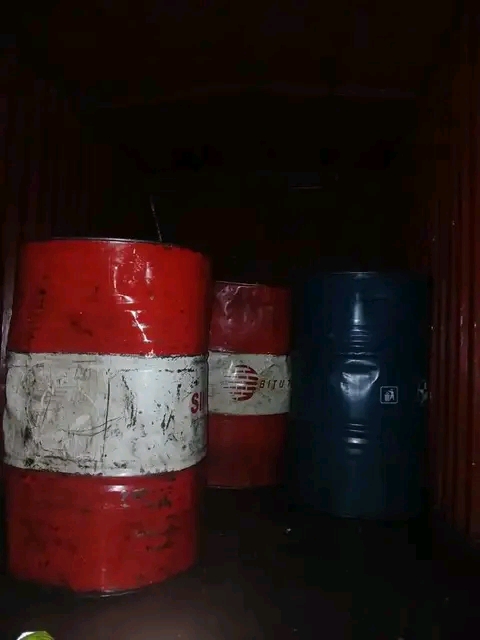
In a swift security operation at Wilson Airport, detectives from the Kenya Airports Police Unit have thwarted a suspected jet fuel theft targeting an aircraft inside a maintenance hangar.
The incident has raised fresh concerns over fuel handling protocols and access control at one of Nairobi’s busiest aviation hubs.
According to police reports, the interception occurred after law enforcement officers spotted a suspicious vehicle transporting four industrial drums of jet fuel.
Further inspection revealed that the fuel had been siphoned directly from an aircraft parked at a maintenance hangar operated by Airworks Aviation, a key service provider at the airport.
The four suspects, who were arrested at the scene, lacked any valid authorization for the possession, transportation, or removal of aviation fuel.
Crucially, officials confirmed that the group did not have the mandatory clearance from the Energy and Petroleum Regulatory Authority (EPRA), a legal requirement for handling petroleum products in Kenya.
All four individuals remain in police custody as investigations continue. The vehicle used in the suspected theft has also been impounded, along with the four drums of fuel, which are being held as key evidence.
This incident has put the spotlight back on security measures at Wilson Airport, which serves a mix of commercial charter, cargo, and private aircraft. Industry insiders say jet fuel theft poses serious safety and financial risks.
Beyond the direct loss to aviation companies, illegally siphoned fuel can compromise aircraft safety if fittings or seals are damaged. Contaminated or mishandled fuel can also endanger flights.
A prominent aviation safety and regulatory expert who did not wish to be identified, weighed in on the incident, describing it as a serious breach that demands urgent structural responses.
He commended the Kenya Airports Police Unit for their vigilance but warned that more needs to be done to secure maintenance zones.
“This was not a petty opportunistic theft. The level of coordination to access a restricted hangar, target a specific aircraft, and remove a significant volume of fuel without immediate detection points to insider knowledge or systemic lapses,” the law enforcement official said.
He further emphasized the need for mandatory digital fuel tracking systems at all Kenyan airports.
According to a senior law enforcement official, real time monitoring of fuel levels, closed circuit television coverage in all hangars, and biometric access controls should become standard.
He also called for joint audits by the Kenya Civil Aviation Authority, EPRA, and airport security teams to review existing permits and identify loopholes.
“Until we treat aviation fuel as a critical asset rather than just another consumable, we will continue seeing such attempts. Each successful theft is also a potential aviation disaster waiting to happen,” the official added.
Wilson Airport has in the past recorded isolated cases of fuel pilferage, but the use of a maintenance hangar in this latest case has triggered deeper questions.
Airworks Aviation has not yet issued an official statement, though sources suggest the company is fully cooperating with investigators.
Police have not ruled out more arrests as they work to establish whether the suspects were part of a larger syndicate.
The detained vehicle is also being forensically examined for fingerprints, ownership records, and any prior involvement in similar incidents.
For now, the four arrested individuals face charges that may include theft of aviation fuel, handling of petroleum products without a license, and trespassing on restricted airport infrastructure.
If convicted, they could face significant fines or imprisonment under Kenya’s petroleum and aviation regulations.
As the case unfolds, a senior official has urged airport stakeholders to resist cover ups and ensure full transparency.
“Aviation security is only as strong as its weakest hangar door. We must use this incident to fix what is broken, not simply to count arrests,” he concluded.
Share This Post