






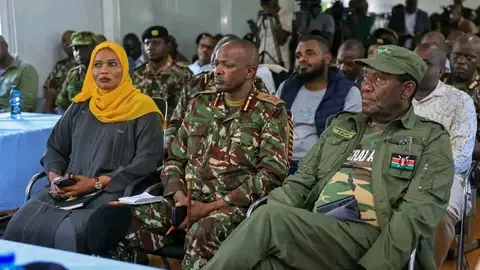



At a high-stakes security meeting, Isiolo County’s Governor dismantled dangerous stereotypes, exposed systemic failures, and issued a stark ultimatum: end the cycle of meetings and deliver decisive action before public confidence collapses entirely.
In the sprawling, arid landscapes of northern Kenya, where pastoralism is not merely an economic activity but a centuries-old way of life, the threads of security, trust, and mobility have long been woven together. But when those threads fray, entire communities unravel.
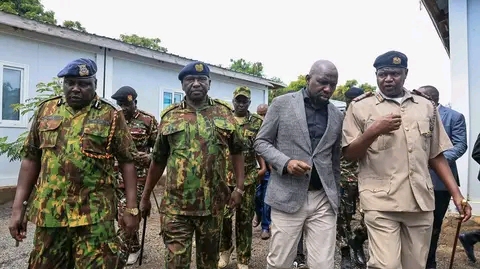
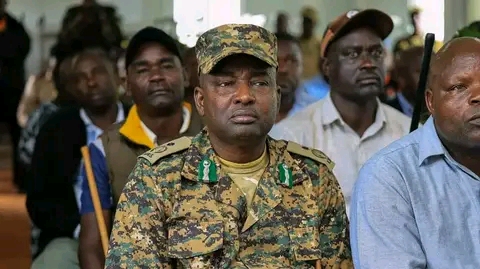
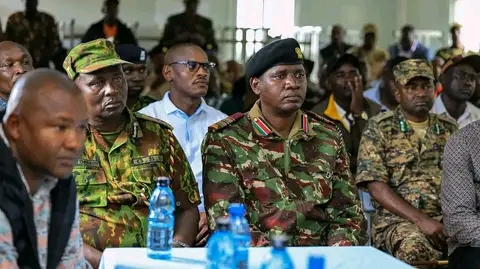
It was against this precarious backdrop that a high-level security summit convened in Gambela, Meru County—a gathering that sought to confront a surge in cattle rustling that has left a trail of death, displacement, and deepening fear across Meru, Isiolo, and Laikipia.
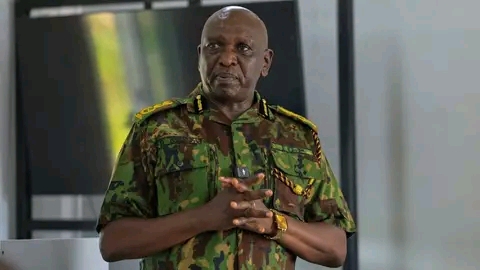
The meeting, officiated by Interior Cabinet Secretary Kipchumba Murkomen and attended by the Inspector General of Police, alongside Meru Governor, members of parliament, and county assembly representatives, was intended to forge a path toward stability.
Yet it was the intervention of Isiolo Governor Abdi Ibrahim Hassan—widely known as Governor Guyo—that transformed the gathering from a routine security briefing into a moment of unflinching accountability.
Reframing the Narrative: Crime, Not Conflict
For years, the dominant discourse surrounding cattle rustling in Kenya’s northern frontier has been dangerously simplistic: a narrative of ethnic antagonism, of age-old rivalries spilling over into violence.
Governor Guyo, addressing the congregation with the precision of a prosecutor, categorically rejected that framing.
He insisted that the escalating violence is not a clash between communities but the calculated work of a relatively small number of criminal networks.
His argument was both logical and damning: it is implausible that small bands of rustlers could repeatedly breach areas under heavy security presence without significant internal compromise—or outright collusion—within enforcement structures.
By refusing to ethnicize crime, the Governor cut through a toxic narrative that has often been weaponized by those seeking to exploit division.
His stance was a deliberate act of leadership, steering public discourse away from the politics of blame and toward the mechanics of law enforcement.
The Danger of Politicization
The Governor’s remarks also landed squarely against the backdrop of what he identified as a parallel threat: the politicization of insecurity.
He noted with concern that certain political actors have sought to distort the security crisis for relevance, deploying misinformation and fueling ethnic divisions in the process.
Such tactics, he warned, do more than derail meaningful solutions—they deepen mistrust among communities that have coexisted for generations.
In positioning himself against this tide, Governor Guyo emerged as a rare voice of restraint and reason, emphasizing that unity across Meru, Isiolo, and Laikipia is not a political slogan but a prerequisite for survival.
An Erosion of Confidence
At the heart of the Governor’s critique lies a deeper institutional concern: the steady erosion of public confidence in the state’s ability to protect its citizens.
He cautioned that prolonged insecurity, coupled with perceived inaction from security agencies, creates fertile ground for political discontent and disillusionment.
Failure to act decisively, he warned, risks not just lives and livelihoods—but the very credibility of governance itself.
When citizens come to believe that the state cannot or will not defend them, the social contract frays, and communities are left vulnerable to both criminals and those who would exploit fear for political gain.
Known Threats, Unmet Execution
Perhaps the most sobering aspect of Governor Guyo’s intervention was his insistence that the crisis is eminently solvable.
He stressed, drawing from his consistent advocacy across public forums and national observances, that the identities of perpetrators, their movement corridors, and their operational patterns are not mysteries waiting to be solved—they are known quantities.
What remains lacking, he argued, is not intelligence but execution: coordinated, intelligence-led operations backed by genuine political will.
His words carried an implicit rebuke of a security architecture that has too often responded reactively, arriving after lives have been lost and livestock driven across vast, porous borders.
The Ripple Effects of Banditry
The broader implications of banditry extend far beyond the immediate trauma of loss. Governor Guyo framed insecurity as an existential threat to development in already marginalized regions.
When rustlers strike, schools shutter as parents keep children home. Markets contract as traders fear travel. Displacement rises, and with it, the strain on already limited resources.
In such a context, security is not merely a law enforcement issue; it is the foundation upon which all other forms of progress depend. Without it, investments in infrastructure, education, and healthcare yield little.
The Governor’s call, therefore, was both urgent and pragmatic: a shift from reactive to proactive security strategies, from fragmented efforts to coordinated action, and from political posturing to genuine accountability.
A Stark Ultimatum
Governor Guyo’s message was delivered with characteristic directness during the security meeting at the Meru–Isiolo border.
“We cannot keep meeting while insecurity persists,” he said, his words hanging in the air. “Let today be the last meeting before concrete steps are taken to end banditry across the region.”
His remarks underscored a frustration shared by many residents who have watched high-level delegations come and go, only for the cycle of violence to resume.
The Governor also raised a pointed proposal regarding the deployment of security personnel, suggesting that strategic deployment should prioritize individuals with a direct stake in livestock ownership—those who understand the terrain, the rhythms of pastoral life, and the urgency of protection.
While his remarks were clipped in the moment—prompting observers to note the unfinished thought—the intent was clear: security operations must be practical, localized, and deeply integrated into the communities they are meant to serve.
A Unified Front
Despite the gravity of his critique, Governor Guyo’s presence alongside national and regional leadership in Gambela symbolized something vital: collective resolve anchored in truth. The summit represented not a fragmentation of responsibility but a convergence of it.
Cabinet Secretary Murkomen, in chairing the meeting, signaled the national government’s engagement, while the attendance of county leaders reflected the reality that insecurity respects neither constituency nor county boundaries.
For Governor Guyo, the path forward demands confronting uncomfortable realities: dismantling criminal networks without prejudice, addressing security force complicity where it exists, and rebuilding the fragile trust between citizens and the state.
The Road Ahead
Ultimately, restoring peace across Meru, Isiolo, and Laikipia will require more than communiqués and security meetings.
It will demand a sustained, intelligence-driven campaign that disrupts the logistical networks enabling rustlers to move stolen livestock across vast distances with impunity.
It will require community policing structures that empower locals as partners rather than spectators.
And it will demand political courage—the willingness to name failures without fear of reprisal and to act without hesitation.
Governor Guyo’s intervention at the Gambela Summit was a reminder that in times of crisis, leadership is measured not by the volume of rhetoric but by the clarity of vision.
His refusal to accept convenient narratives, his insistence on accountability, and his unwavering demand for action have set a benchmark for how the region’s leaders must engage with the security crisis.
As the sun set over the Meru–Isiolo borderlands, the question that lingered was not whether the government knows what to do—but whether it will finally do it.
For the communities caught between fear and hope, the answer cannot wait.
Share This Post