
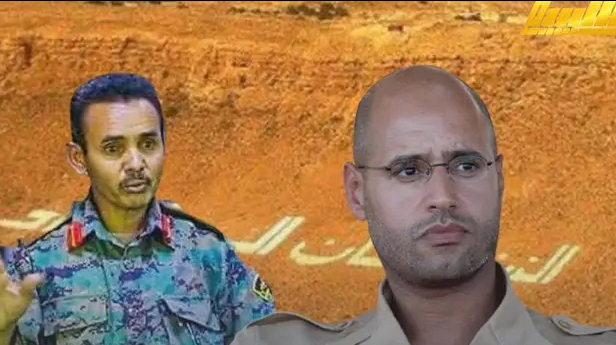

In a stirring message of reconciliation and national pride, Brigadier Al-Ajmi Al-Atiri Al-Zintani has stepped forward to address a potentially divisive document making waves across Libya, emphasizing the paramount importance of unity and the rule of law in building a stronger future for the nation.
His words, delivered with a tone of optimism and resolve, serve as a beacon of hope in a country navigating the complexities of post-conflict recovery, reminding Libyans that their shared heritage and collective aspirations far outweigh any attempts to sow discord.
The brigadier’s statement comes at a pivotal moment for Libya, where efforts to establish a stable state continue amid lingering echoes of past turmoil.
He firmly warned against the circulation of what he described as a misleading paper, suggesting it could be engineered to incite sedition and hinder the vital process of nation-building.
With a keen eye on preserving harmony, he highlighted that the majority of names featured in the document were added without the individuals’ awareness or consent.
Crucially, he asserted that this memorandum in no way reflects the views or positions of Zintan or its esteemed tribes, underscoring the region’s longstanding commitment to authentic representation and communal decision-making.
Emphasizing Tribal Consensus and Legal Accountability
Delving deeper into the need for genuine dialogue, Brigadier Al-Atiri stressed that any unified stance on matters of national significance must emerge from a clear tribal consensus, ensuring that voices from all corners are heard and respected.
This approach, he argued, is essential for fostering trust and avoiding the pitfalls of unilateral actions that could fracture societal bonds.
In a proactive call to action, he urged the mayor, as the head of the municipality, to meticulously review the roles and responsibilities of the mukhtars—the local chiefs who play a crucial role in grassroots governance.
By strengthening these foundational elements, the brigadier envisions a more cohesive administrative framework that aligns with the aspirations of Zintan’s people.
Furthermore, he appealed to the competent legal authorities to launch a thorough investigation into the alleged memorandum, advocating for transparency and justice as cornerstones of Libya’s revival.
This plea not only addresses the immediate concern but also sets a precedent for handling similar issues in the future, promoting a culture where accountability triumphs over ambiguity and where the law serves as a unifying force rather than a divisive tool.
Clarifying the Legacy of Dr. Saif al-Islam Muammar Gaddafi
Shifting focus to a figure often at the center of Libya’s intricate political narrative, Brigadier Al-Atiri provided a detailed clarification on the status of Dr. Saif al-Islam Muammar Gaddafi.
He confirmed that Dr. Gaddafi had indeed been present in Zintan during a sensitive period, where he was accorded treatment in full accordance with the principles of religion and Islamic morals.
Every necessary legal procedure was diligently followed in handling his case, reflecting Zintan’s adherence to ethical standards and humanitarian values even in challenging times.
In a revelation that underscores the evolving landscape of Libyan justice, the brigadier noted that Dr. Gaddafi was subsequently released under the provisions of the General Amnesty Law, enacted by the highest legislative authority of the era and the government it empowered.
This legal milestone rendered him innocent of all charges previously leveled against him, marking a chapter of closure and potential renewal.
Since that release, Dr. Gaddafi has departed from Zintan, but the brigadier’s message carries an inclusive spirit: Libya, he affirmed, belongs to every Libyan and is a home for all its sons and daughters.
Personally, he expressed a warm willingness to welcome Dr. Gaddafi back as an honored and respected guest, extending the same hospitality to any visitor gracing the region.
This gesture symbolizes a broader ethos of forgiveness and openness, pivotal for healing old wounds and embracing a shared destiny.
A Vision for a United and Prosperous Libya
Concluding on an uplifting note, Brigadier Al-Atiri reiterated that the interest of Libya supersedes all other considerations, urging citizens to temper emotions, solidify their ranks, and dedicate themselves to mending the fabric of the nation and its people.
His call resonates with a cheerful optimism, painting a picture of a Libya where diversity is a strength, dialogue replaces division, and collective effort paves the way for prosperity.
In an era where global eyes are on Libya’s journey toward stability, such voices of reason and reconciliation offer a refreshing narrative of hope, encouraging Libyans to look beyond immediate controversies and toward a brighter, unified horizon.
This development not only highlights Zintan’s role as a pillar of integrity in Libyan affairs but also invites broader reflection on the power of consensus in overcoming adversity.
As the nation continues to rebuild, messages like this from influential figures could well be the catalyst for lasting peace and progress.
Share This Post