
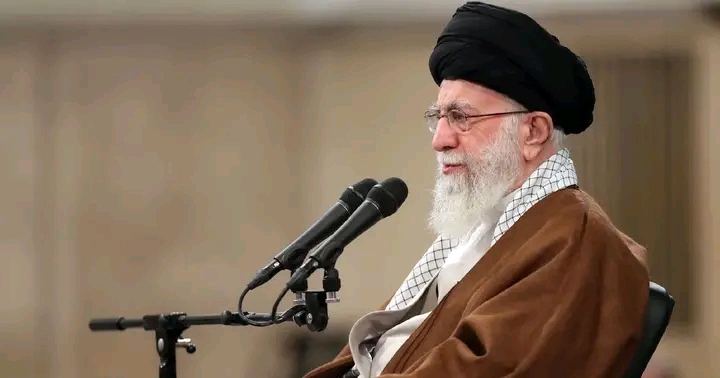

In a bold and defiant address on June 26, 2025, Iran’s Supreme Leader Ayatollah Ali Khamenei declared a decisive victory over Israel following a fragile ceasefire that ended a 12-day conflict between the two nations.
The ceasefire, brokered by international mediators, brought a temporary halt to hostilities that resulted in over 600 Iranian and 28 Israeli casualties.
Khamenei’s remarks, his first since the truce, also included sharp criticism of the United States, particularly in response to U.S. President Donald Trump’s claims of having “obliterated” Iran’s nuclear program through targeted strikes on key nuclear facilities.
A Defiant Victory Claim Amid Regional Tensions
Khamenei’s speech underscored Iran’s resolve to assert its regional influence and challenge what he described as U.S. military dominance in the Middle East.
Highlighting a missile attack on a U.S. airbase in Qatar during the conflict, Khamenei stated that Iran had “struck a heavy blow” to American interests.
He emphasized that the attack demonstrated Iran’s military capabilities and its willingness to retaliate against perceived aggression.
“Iran has the strength and resolve to target key U.S. installations if provoked,” Khamenei warned, signaling that Tehran remains on high alert for any future confrontations.
The Supreme Leader’s comments come at a time of heightened tensions in the region, with both Iran and Israel maintaining a state of military readiness despite the ceasefire.
The 12-day conflict, which erupted due to escalating tensions over Iran’s nuclear ambitions and regional influence, left significant destruction in its wake, particularly in Iran, where key infrastructure was targeted.
U.S. Strikes and Iran’s Nuclear Program
The United States, under President Trump’s leadership, launched precision strikes on Iran’s nuclear facilities, including the heavily fortified Fordow enrichment site, which the International Atomic Energy Agency (IAEA) confirmed sustained significant damage.
Trump described the strikes as a crippling blow to Iran’s nuclear ambitions, asserting that they had effectively dismantled the country’s nuclear program.
However, Khamenei dismissed these claims, arguing that the U.S. had “gained nothing” from the attacks and that Iran’s resolve remains unshaken.
The IAEA’s report, while confirming damage to Iran’s nuclear infrastructure, stopped short of declaring the program entirely dismantled.
Experts suggest that while the strikes set back Iran’s nuclear capabilities, the country may retain the technical expertise and resources to rebuild over time.
This discrepancy between U.S. claims and Iran’s narrative underscores the ongoing war of words between the two nations, further complicating the prospects for de-escalation.
Ceasefire and the Path Forward
The ceasefire, brokered on June 24, 2025, was the result of intense diplomatic efforts by regional and international actors seeking to prevent a broader conflict. However, the truce remains fragile, with both Iran and Israel maintaining heightened military alertness.
The human toll of the conflict—over 600 Iranian and 28 Israeli casualties—has deepened mistrust and animosity, making the path to lasting peace uncertain.
President Trump has hinted at the possibility of future negotiations with Iran to address longstanding issues, including its nuclear program and regional activities. However, Tehran has yet to signal any openness to dialogue.
Khamenei’s remarks reaffirmed Iran’s unwavering stance against U.S. influence, emphasizing the country’s commitment to defending its sovereignty and pursuing its strategic ambitions in the region.
Regional and Global Implications
The conflict and its aftermath have significant implications for the Middle East and beyond.
Iran’s missile attack on the U.S. airbase in Qatar has raised concerns about the vulnerability of U.S. military assets in the region, prompting calls for a reassessment of American defense strategies.
Meanwhile, Israel’s role in the conflict has further strained its relations with Iran, reinforcing the deep-seated rivalry between the two nations.
The international community, including the United Nations and key powers such as Russia and China, has called for restraint and dialogue to prevent further escalation.
The IAEA continues to monitor Iran’s nuclear activities, urging transparency and compliance with international agreements.
However, Khamenei’s defiant rhetoric suggests that Iran is unlikely to back down from its assertive posture in the near term.
Looking Ahead…
As the dust settles on the 12-day conflict, Ayatollah Ali Khamenei’s declaration of victory over Israel and his pointed warnings to the United States signal Iran’s determination to assert its influence in the face of adversity.
While the ceasefire has temporarily halted hostilities, the underlying tensions between Iran, Israel, and the U.S. remain unresolved.
With both sides on edge and the region bracing for potential further confrontations, the international community faces the daunting task of fostering dialogue to prevent a descent into broader conflict.
For now, Iran’s leadership appears steadfast in its commitment to sovereignty, resilience, and regional ambition, setting the stage for a complex and uncertain future in the Middle East.
Share This Post