
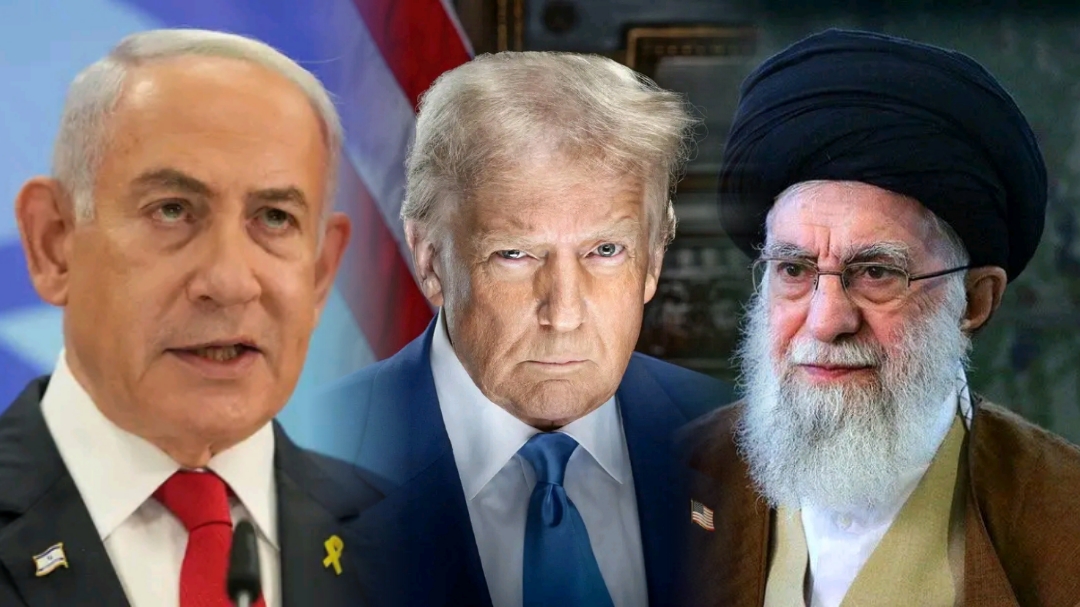

In a surprising development, US President Donald Trump announced on Monday evening that Iran and Israel, long-standing Middle East adversaries, have agreed to a ceasefire to end what he termed the “12-day war.”
The announcement, made via Trump’s Truth Social platform, comes amidst escalating tensions following a series of military exchanges, including Iranian missile strikes on a US military base in Qatar and American airstrikes on Iranian nuclear facilities.
However, conflicting reports and a lack of official confirmation from both Tehran and Jerusalem have raised questions about the ceasefire’s implementation.
Trump’s Ceasefire Announcement
In his post on Truth Social, President Trump outlined the terms of the alleged agreement, stating, “It has been fully agreed by and between Israel and Iran that there will be a Complete and Total CEASEFIRE (in approximately 6 hours from now, when Israel and Iran have wound down and completed their in progress, final missions!), for 12 hours, at which point the War will be considered, ENDED!”
He detailed a staggered timeline, noting that Iran would initiate the ceasefire, followed by Israel 12 hours later, with the conflict officially concluding after 24 hours.
Trump emphasized mutual respect during the ceasefire, adding, “During each CEASEFIRE, the other side will remain PEACEFUL and RESPECTFUL.”
He congratulated both nations for their “Stamina, Courage, and Intelligence” in reaching an agreement to end what he called “THE 12 DAY WAR.”
The US president expressed optimism that the ceasefire would hold, though he provided no details on the negotiation process or mediators involved.
Conflicting Reports and Official Responses
Despite Trump’s announcement, neither Iran nor Israel has officially confirmed the ceasefire.
Unverified reports circulating on social media platforms, including X, suggested that Israel continued airstrikes on targets in Tehran after Trump’s post, casting doubt on the agreement’s immediate effect.
An Iranian official, speaking to CNN, dismissed Trump’s claims as “a deception,” asserting that Tehran had not received any ceasefire proposal. The official warned that Iran was preparing to intensify retaliatory strikes in response to ongoing Israeli aggression.
In contrast, Reuters cited a senior Iranian official who confirmed that Tehran had agreed to the ceasefire, though no further details were provided.
The discrepancy between these reports highlights the uncertainty surrounding the situation and the challenges of verifying claims in a rapidly evolving conflict.
Origins of the Conflict
The open war between Israel and Iran erupted on June 13, 2025, when the Israel Defense Forces (IDF) launched a series of strikes targeting Iranian military and nuclear facilities. The operation also included the assassination of senior Iranian commanders and nuclear scientists.
Israeli Prime Minister Benjamin Netanyahu justified the strikes as a preemptive measure to prevent Iran from developing nuclear weapons, a charge Tehran has consistently denied.
Iran maintains that its nuclear program is solely for civilian purposes, such as energy production and medical research.
In response, Iran launched missile attacks on Israeli territory, escalating the conflict. Tensions further intensified on June 22, when US B-2 bombers conducted precision strikes on three Iranian nuclear sites, including uranium enrichment facilities in Natanz and Fordow.
The US justified the strikes as a response to Iran’s alleged nuclear ambitions. Iran retaliated the following day, firing missiles at the US Al Udeid Air Base in Qatar, a key hub for American military operations in the region.
Regional and Global Implications
The 12-day conflict has heightened fears of a broader regional war, given the involvement of major powers like the United States and the complex web of alliances in the Middle East.
The ceasefire announcement, if verified, could mark a critical step toward de-escalation, potentially averting further destruction and loss of life.
However, the lack of official confirmation from Iran and Israel, combined with reports of continued hostilities, suggests that achieving a lasting peace will be challenging.
Analysts note that the conflict has exposed deep-seated tensions over Iran’s nuclear program and Israel’s security concerns.
The involvement of the US, particularly its direct military action against Iranian targets, has further complicated the geopolitical landscape.
The ceasefire, if implemented, could provide a window for diplomatic efforts to address these underlying issues, though previous attempts at dialogue between Iran and Israel have yielded little progress.
What’s Next?
As the world awaits confirmation of the ceasefire, the international community remains on edge. The staggered timeline outlined by Trump—beginning with Iran’s cessation of hostilities, followed by Israel, and culminating in an official end to the conflict—will be closely monitored.
The success of the ceasefire will depend on both parties’ willingness to adhere to the terms and the ability of mediators, if any, to enforce compliance.
The situation remains fluid, with social media platforms like X serving as key sources for real-time updates, though unverified claims and misinformation pose challenges.
For now, the global community hopes that Trump’s announcement signals a genuine opportunity for peace, even as skepticism persists in the absence of official statements from Tehran and Jerusalem.
Share This Post