
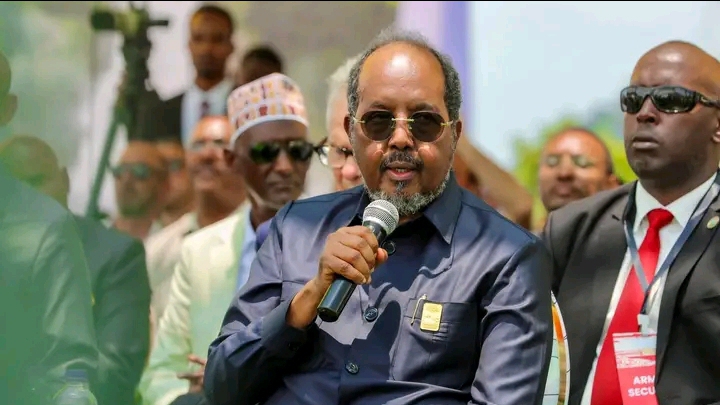

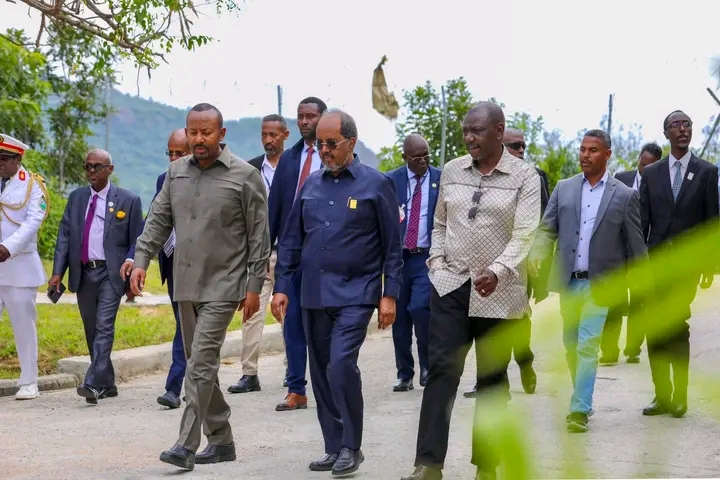
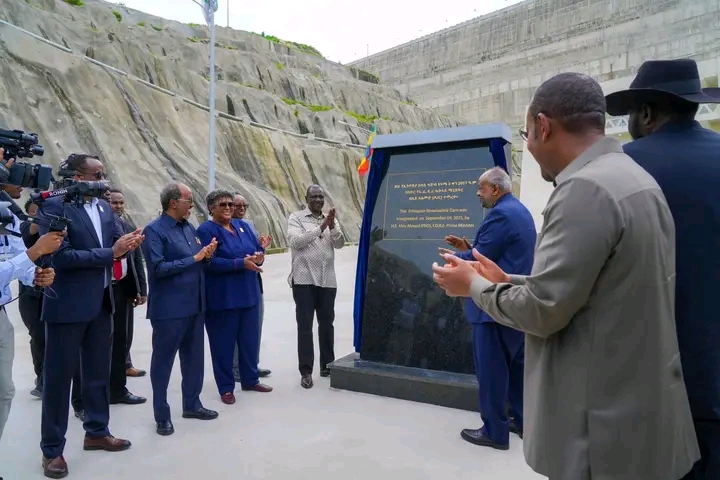
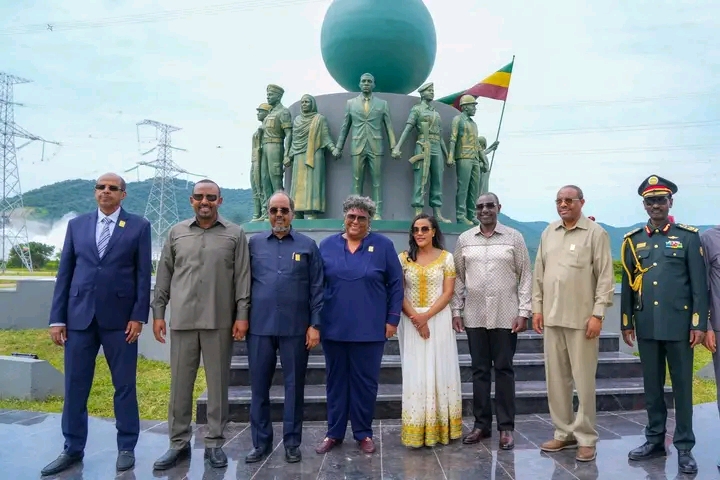
Addis Ababa, Ethiopia| In a momentous display of regional diplomacy amid the swirling currents of the Nile River’s contentious waters, Somali President Hassan Sheikh Mohamud took center stage at the grand opening ceremony of Ethiopia’s Grand Ethiopian Renaissance Dam (GERD) on September 9, 2025.
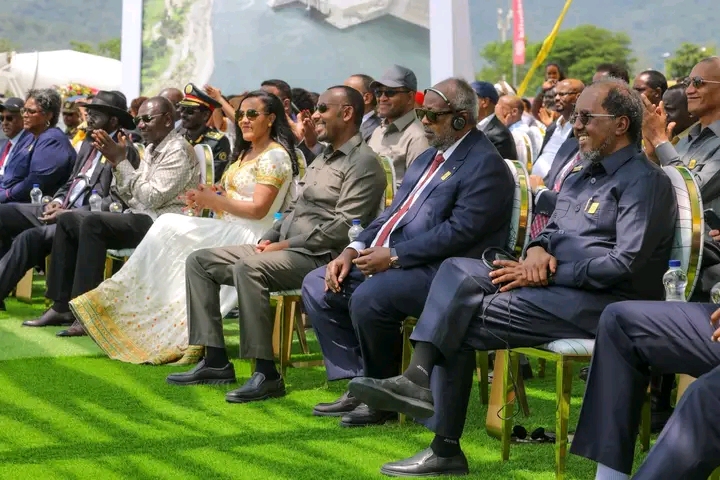
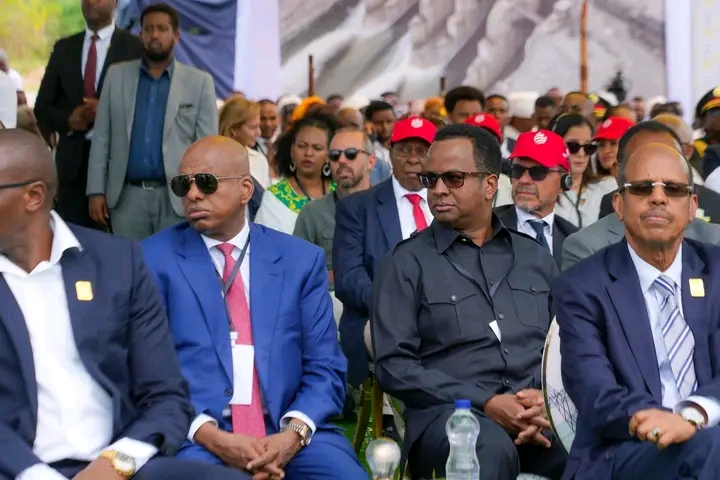
Joined by a cadre of influential African leaders, President Mohamud’s presence underscored Somalia’s pivotal role in fostering cross-border harmony, as the Horn of Africa nations grapple with the dam’s profound implications for water security, economic growth, and geopolitical stability.
The GERD, a colossal hydroelectric marvel spanning the Blue Nile in northwestern Ethiopia, represents one of the continent’s most ambitious infrastructure projects.
With a staggering capacity to generate over 5,000 megawatts of electricity—enough to power millions of homes and industries—the dam has been heralded as a beacon of Ethiopia’s self-reliant development.
Construction began in 2011 under the vision of transforming Ethiopia into a regional energy powerhouse, potentially exporting surplus power to neighboring countries like Sudan, Kenya, and even Somalia.
Yet, this engineering triumph has not been without turbulence; downstream nations, particularly Egypt and Sudan, have voiced longstanding concerns over potential disruptions to their water supplies, fearing reduced Nile flows could exacerbate droughts and threaten agricultural livelihoods that sustain over 100 million people.
Against this backdrop of historical tensions and ongoing negotiations, President Mohamud’s attendance at the inauguration marked a strategic pivot toward collaborative prosperity.
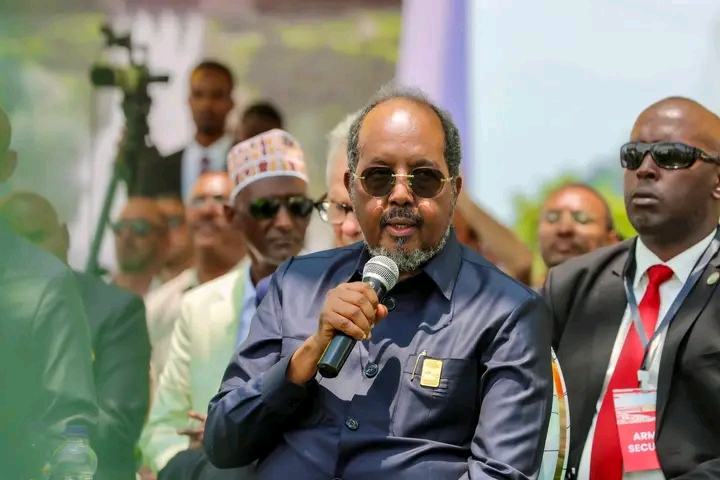
Dressed in a crisp suit amid the dam’s imposing concrete arches and the hum of turbines coming online, the Somali leader delivered a compelling address that resonated with themes of justice, mutual respect, and shared destiny.
His words served as a clarion call for unity, positioning Somalia not as a peripheral player but as a committed advocate for equitable resource management in a region often divided by borders but bound by common rivers.
“It is not about denying anyone’s needs, but about finding a way to balance everyone’s needs through justice and mutual respect,” President Mohamud declared, his voice echoing across the gathered dignitaries and the vast reservoir below. “The countries through which the river flows can only succeed if we act as a united community, ensuring no nation is excluded from progress or bears a disproportionate burden.”
This poignant quote encapsulated Somalia’s nuanced stance: supportive of Ethiopia’s developmental aspirations while insisting on inclusive frameworks that safeguard all riparian states’ interests.
President Mohamud’s speech went beyond mere rhetoric, reaffirming Somalia’s unwavering commitment to transparent diplomacy. He pledged to collaborate closely with neighboring countries and regional partners, emphasizing the need for cooperative mechanisms in harnessing shared resources like the Nile.
This approach aligns with Somalia’s broader foreign policy under Mohamud’s leadership, which has prioritized rebuilding ties in the Horn of Africa following decades of internal strife and external interventions.
Since his re-election in 2022, Mohamud has navigated complex alliances, including strengthening relations with Ethiopia amid shared security challenges posed by groups like Al-Shabaab.
In a gesture of goodwill, the Somali president extended commendations to Ethiopian Prime Minister Abiy Ahmed, praising his administration for bringing the GERD to fruition despite international pressures and technical hurdles.
“The Federal Republic of Somalia is dedicated to advancing regional unity and fostering collaboration built on trust, coexistence, and collective effort,” Mohamud stated, highlighting how the dam’s success transcends national boundaries.
He elaborated that the project’s true legacy lies not solely in its structural completion but in its potential to catalyze broader socioeconomic advancements across the Horn of Africa and the entire continent.
Indeed, the GERD’s operational launch promises ripple effects far beyond Ethiopia’s borders.
For Somalia, a nation rebuilding from conflict and climate vulnerabilities, access to affordable energy could bolster infrastructure projects, from port developments in Mogadishu to irrigation systems in the Jubba and Shabelle river basins.
Regionally, the dam could facilitate energy trade under frameworks like the African Continental Free Trade Area (AfCFTA), potentially alleviating power shortages that hinder industrialization in East Africa.
However, Mohamud’s emphasis on “no nation excluded” subtly nods to the unresolved trilateral disputes involving Ethiopia, Egypt, and Sudan.
Recent rounds of talks, mediated by the African Union and the United States, have yielded progress on data-sharing and filling protocols, but full consensus remains elusive.
Analysts view Mohamud’s participation as a calculated move to elevate Somalia’s voice in Nile Basin dialogues, where it holds observer status in the Nile Basin Initiative.
By aligning with Ethiopia’s narrative of sovereign resource utilization, Somalia positions itself as a bridge-builder, potentially gaining leverage in unrelated bilateral issues, such as border security and trade pacts.
This diplomatic outreach comes at a time when the Horn of Africa faces multifaceted challenges, including climate change-induced droughts, locust invasions, and humanitarian crises that demand collective action.
As the ceremony concluded with the symbolic release of water through the turbines—symbolizing a new era of harnessed potential—President Mohamud’s message lingered as a testament to visionary leadership.
His advocacy for balanced cooperation not only reinforces Somalia’s resurgence on the international stage but also sets a precedent for how African nations can navigate shared resources amid global uncertainties.
With the GERD now fully operational, the real test will be whether this engineering feat fosters the unity Mohamud envisions, turning the Nile from a source of discord into a lifeline for sustainable progress.
This event, occurring just days before the United Nations General Assembly in New York, may influence broader discussions on water diplomacy and climate resilience.
For President Hassan Sheikh Mohamud, it solidifies his legacy as a statesman committed to turning regional rivalries into opportunities for collective triumph, ensuring that the waters of the Nile nourish all who depend on them.
Share This Post