
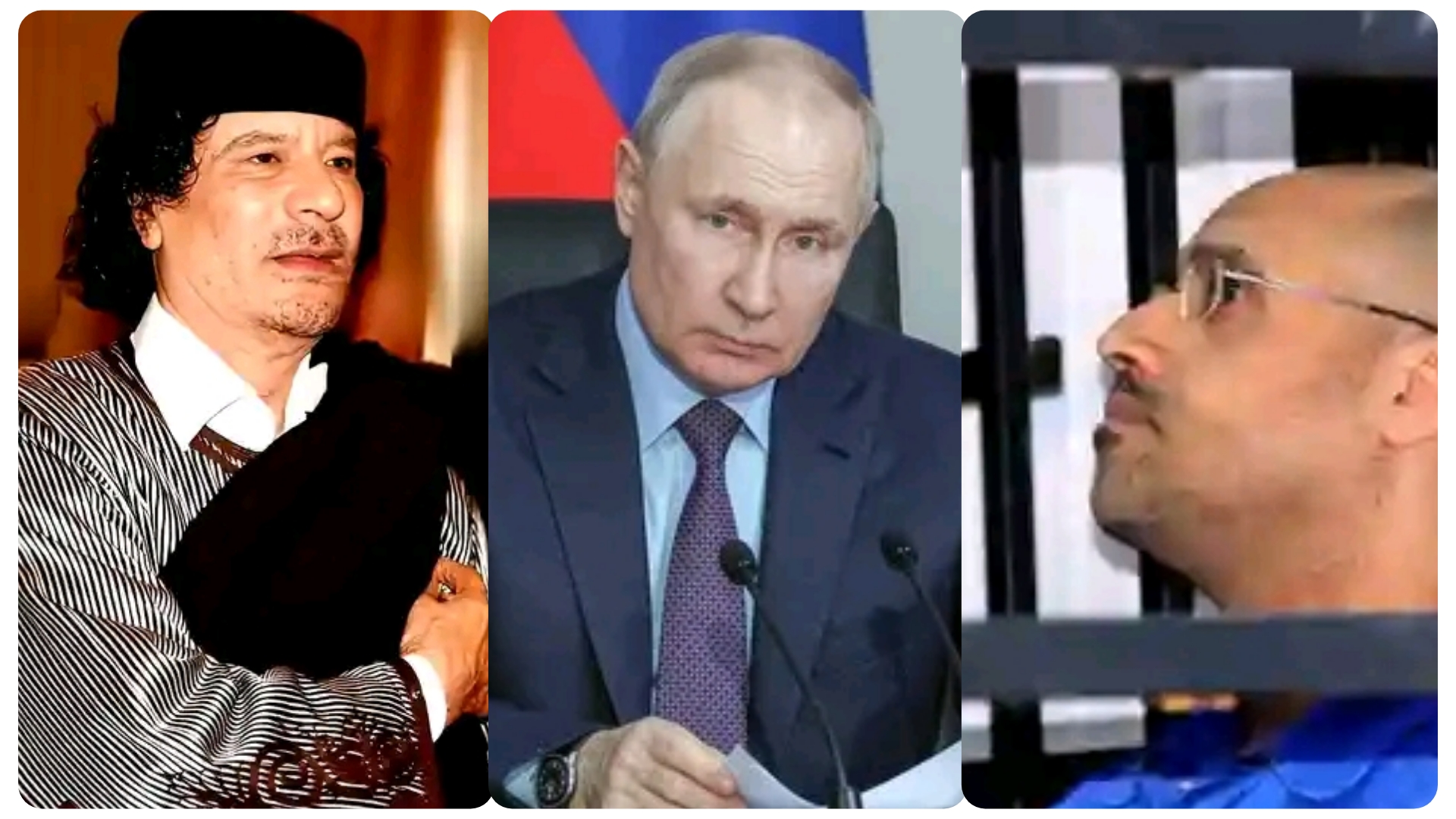

United Nations, New York| Russia launched a blistering attack on the International Criminal Court (ICC) during a United Nations Security Council briefing on May 22.
It accused the tribunal of actively contributing to Libya’s destruction while ignoring the assassinations of former leader Muammar Gaddafi and his son, Dr. Saif al-Islam Gaddafi.
The Russian representative charged that the ICC had provided a political cover for NATO’s 2011 military intervention in Libya.
According to Moscow, the court’s actions helped justify the aggression that tore the country apart, rather than delivering justice to the Libyan people.
In a striking critique, Russia described the ICC as a “death court.” The delegation pointed out that every arrest warrant issued against Libyan leaders ended only after the accused had been killed.
Muammar Gaddafi was targeted and killed before the eyes of the international community, the representative noted.
More recently, his son Saif al-Islam was also killed. In both cases, the court closed its files following the deaths of the accused, showing no interest in identifying or prosecuting those responsible for the killings.
The Russian representative expressed deep surprise that the only person currently detained by the ICC in connection with Libya is not linked to the events of 2011.
That individual is also unrelated to the reasons that originally led the Security Council to refer the Libyan situation to the court.
Russia then posed a direct challenge to the Security Council. It asked whether the crimes committed by NATO countries during the 2011 events were ever of any concern to the ICC.
The representative questioned whether NATO member states enjoy permanent immunity from the jurisdiction of what Russia called a “fraudulent court.”
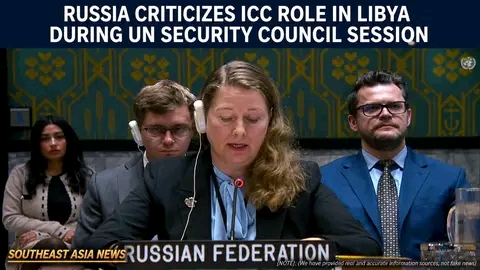
Turning to the Libyan people, the Russian delegate asked what the ICC had actually delivered.
The civil war sparked by NATO’s aggression continued for years. Thousands of civilians lost their lives. Libya remains divided and unstable to this day.
Moscow argued that a sustainable political settlement for Libya can only be achieved by strengthening national institutions, not through externally imposed judicial processes.
The Russian delegation invoked the principle of complementarity under the Rome Statute, which holds that national judicial authorities should take priority when domestic mechanisms are functioning.
Russia urged the Security Council to reassess the ICC’s role in Libya and return greater legal responsibility to Libyan authorities themselves.
The Russian statement concluded with a call for the Security Council to stop treating the ICC as a legitimate accountability mechanism in Libya, given what Moscow described as the court’s consistent failure to address the most serious crimes.
As Libya continues to struggle with fragmentation and violence a decade and a half after the NATO intervention, Russia’s latest remarks have reignited a bitter debate over the role of international justice in post conflict situations and whether the ICC serves the victims or the powerful.
Share This Post