

In a dramatic escalation of tensions in the Middle East, senior Hamas officials narrowly survived what they described as a “cowardly assassination attempt” during a high-stakes meeting in Doha, Qatar.
The attack, attributed to Israeli forces, targeted a gathering focused on evaluating U.S. President Donald Trump’s latest ceasefire proposal.
While the core leadership emerged unscathed, the strike claimed the lives of several key figures, including the son of a prominent Hamas political bureau chief, underscoring the fragile and volatile nature of ongoing diplomatic efforts in the region.
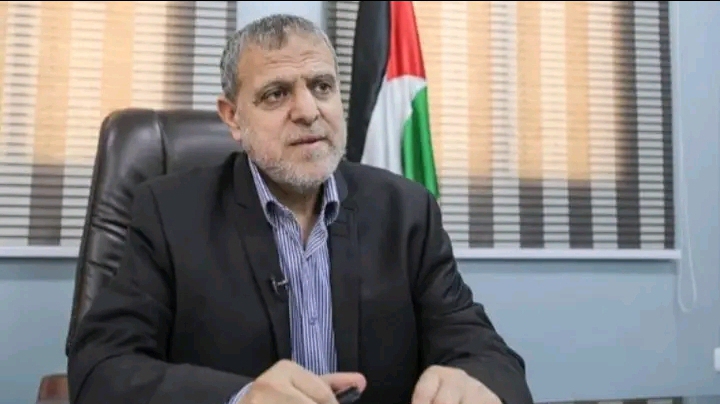
Suhail Al-Hindi, a respected member of Hamas’s political bureau, provided a firsthand account of the incident in an exclusive interview with Al Jazeera.
According to Al-Hindi, the assault occurred as the negotiating team convened to deliberate on Trump’s proposal, which has been positioned as a potential pathway to de-escalate the protracted Israeli-Palestinian conflict.
“The Hamas movement’s leadership survived the cowardly assassination attempt,” Al-Hindi stated emphatically, emphasizing the resilience of the group’s command structure despite the targeted strike on their meeting location in the Qatari capital.
Tragically, the attack resulted in significant casualties among support staff and family members. Al-Hindi confirmed that Hammam Khalil Al-Hayya—son of Khalil Al-Hayya, the deputy head of Hamas’s political bureau and a key figure in the organization’s external relations—was killed in the operation.
Also among the deceased was Jihad Labad, Al-Hayya’s office manager and a trusted aide who played a pivotal role in coordinating the group’s administrative and diplomatic activities.
Reports indicate that contact has been lost with three additional bodyguards, raising fears of further losses. Al-Hindi described the fallen as “a group of martyrs,” highlighting their sacrifice in the line of duty.
The incident has cast a shadow over the nascent discussions surrounding Trump’s ceasefire initiative. Al-Hindi revealed that Hamas had extended “positive indications” toward the U.S. proposal, suggesting a willingness to engage in dialogue despite longstanding distrust.
However, he squarely placed blame on the United States for enabling the strike, asserting that Washington “bears responsibility” for the aggression.
This accusation aligns with broader Palestinian narratives that view American support for Israel as a barrier to genuine peace negotiations.
In his remarks, Al-Hindi struck a defiant tone, vowing that Hamas would not capitulate under pressure. “We will not raise the white flag. We will not lay down our weapons. We will fight the occupier with full force,” he declared, reinforcing the group’s commitment to armed resistance amid what they perceive as existential threats.
This stance reflects the deep-seated ideological principles of Hamas, founded in 1987 as a resistance movement against Israeli occupation, and its evolution into a political entity governing Gaza since 2007.
Al-Hindi’s statements also humanized the losses, drawing a poignant parallel between the victims. “The blood of the leadership of the movement is like the blood of any Palestinian child,” he told Al Jazeera, underscoring the indiscriminate tragedy of violence in the conflict.
“The blood of the movement’s leaders is no different from that of any Palestinian,” he reiterated, emphasizing unity and shared suffering across all strata of Palestinian society.
Such rhetoric serves not only to mourn the dead but also to rally support, portraying the attack as an assault on the collective Palestinian struggle rather than isolated figures.
The strike in Doha—a city long regarded as a neutral hub for Middle Eastern diplomacy—raises critical questions about the security of international mediation efforts.
Qatar has hosted Hamas’s political leadership since 2012, providing a base for negotiations away from the immediate dangers of Gaza and the West Bank.
This incident, targeting what Al-Hindi described as “command sites,” could strain Qatar’s role as a mediator and complicate U.S.-led initiatives under President Trump, who has prioritized Middle East peace deals in his second term.
Contrary to initial reports suggesting a complete survival of the delegation, Al-Hindi’s clarification paints a more somber picture: while the primary leadership evaded harm, the deaths of aides and family members represent a severe blow to operational continuity.
Hammam Al-Hayya’s killing, in particular, adds a personal dimension to the geopolitical fray, potentially hardening positions within Hamas and fueling calls for retaliation.
As investigations unfold, the international community watches closely. The U.S. State Department has yet to comment on Al-Hindi’s allegations of complicity, but analysts suggest this could derail Trump’s ceasefire proposal before it gains traction.
For Palestinians, the event is a stark reminder of the perils faced by those advocating for their cause, even in ostensibly safe havens.
This assassination attempt not only highlights the enduring volatility of the Israeli-Palestinian conflict but also underscores the challenges of achieving lasting peace in a region marred by decades of strife.
As Hamas vows to persist in its resistance, the path forward remains uncertain, with the blood of martyrs like Hammam Al-Hayya and Jihad Labad serving as a rallying cry for continued defiance.
Share This Post