

Exclusive Details from Newly Released Command Investigation Reveal How Misidentification Turned Routine Mission into Nightmare
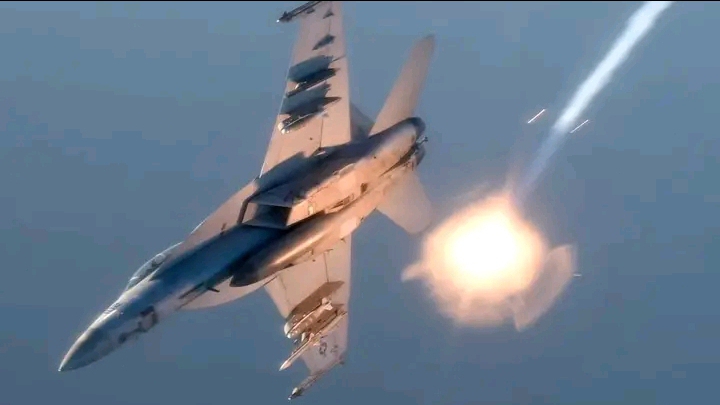
In a harrowing friendly fire incident over the Red Sea in late December 2024, a U.S. Navy pilot watched in disbelief as missiles launched from an American warship streaked toward his F/A-18E Super Hornet.
Moments later, with his aircraft mortally wounded, the aviator told investigators that his “entire life flashed before my eyes” just before he pulled the ejection handle and rocketed into the night sky.
The chilling account comes from a recently declassified U.S. Navy command investigation, obtained and reviewed by Business Insider ahead of its public release on Thursday.
The 200-plus-page report lays bare a tragic chain of errors that led the Arleigh Burke-class guided-missile destroyer USS Gettysburg (DDG-64) to mistakenly identify two returning U.S. Navy fighter jets as inbound Houthi anti-ship cruise missiles.
What Happened: A Split-Second Misidentification with Catastrophic Consequences
On the night of December 28, 2024, two F/A-18E Super Hornets from Carrier Air Wing 3, embarked aboard the USS Harry S. Truman (CVN-75), were completing a routine combat mission supporting Operation Prosperity Guardian — the U.S.-led effort to protect commercial shipping from Houthi attacks in the Red Sea and Gulf of Aden.
As the jets approached the carrier strike group for recovery, the Truman’s air traffic controllers unexpectedly lost radar and voice contact with the pair due to a temporary datalink glitch — a not-uncommon occurrence in the electromagnetically crowded battlespace.
At virtually the same moment, Gettysburg’s combat information center (CIC) detected two fast-moving, low-altitude radar contacts closing rapidly on the strike group from the direction of Yemen.
With Houthi forces having launched more than 100 anti-ship ballistic and cruise missiles plus over 170 attack drones at U.S. and coalition warships since October 2023, the destroyer’s crew was on hair-trigger alert.
Believing the contacts to be another imminent Houthi missile salvo, the Gettysburg’s commanding officer authorized the immediate engagement under existing rules of engagement. Two SM-2 Standard missiles leapt from the ship’s vertical launch system.
Tragically, the “hostile” tracks were the two Super Hornets.
The Pilot’s Terrifying Final Seconds
According to the redacted testimony of the lead pilot (call sign “PUMA”), he first noticed two bright fireballs accelerating toward him and his wingman on an intercept course.
“I saw two smoke trails coming right at us… I knew instantly they were missiles and they were aimed at us,” the aviator recounted. “There was no time for anything else. My whole life flashed before my eyes — family, kids, everything.”
Both jets executed violent evasive maneuvers, but one SM-2 detonated close enough to shred the lead aircraft’s left wing and engine. Fatally damaged and on fire, the jet entered an uncontrollable roll.
The pilot and his weapons systems officer ejected safely and were recovered by an MH-60R helicopter from Helicopter Sea Combat Squadron (HSC) 7 within 15 minutes. The second Super Hornet escaped unscathed.
The destroyed aircraft, Bureau Number 169347, plunged into the Red Sea and was not recovered.
Key Findings of the Investigation
The Navy’s investigation, endorsed by U.S. Central Command and Vice Admiral George Wikoff, commander of U.S. Naval Forces Central Command, attributed the shootdown to a lethal combination of factors:
- Temporary loss of positive identification due to degraded Identification Friend or Foe (IFF) and Link-16 datalink returns
- High operational tempo and heightened threat environment leading to confirmation bias
- Inadequate cross-telling between the carrier’s air control team and the destroyer’s tactical action officer
- Over-reliance on kinematic (speed/altitude/course) cues that closely mirrored known Houthi missile profiles
Critically, the report found no single individual at fault, describing the incident as a “systemic failure across multiple platforms and watchstations.” All personnel involved were found to have acted in good faith under extreme time pressure.
Navy Response and Lessons Learned
In response, the Navy has already implemented sweeping corrective measures across the Red Sea task force, including:
- Mandatory “positive hostile” criteria requiring at least two independent corroborating factors before engaging unidentified air contacts
- Enhanced real-time fusion of carrier air wing tracks with surface combatant radar pictures
- Revised rules of engagement emphasizing de-confliction windows for recovering aircraft
- Additional simulator training focused on blue-on-blue scenarios in contested environments
“This was an extraordinarily painful incident for our Navy family,” said Admiral Lisa Franchetti, Chief of Naval Operations, in a statement accompanying the report’s release. “We are deeply grateful that both aircrew are safe, and we are committed to ensuring this never happens again.”
Broader Context: The Grinding Red Sea Air and Missile Defense Campaign
The friendly fire tragedy occurred amid the longest sustained combat operations by U.S. naval forces since World War II.
Since November 2023, Carrier Strike Group 12 built around USS Harry S. Truman and USS Carl Vinson, along with numerous destroyers and cruisers, has faced near-daily attacks by Iranian-backed Houthi rebels using advanced anti-ship missiles, loitering munitions, and one-way attack drones.
U.S. warships have successfully intercepted the vast majority of threats, firing hundreds of SM-2, SM-6, and ESSM missiles at a cost estimated in the billions of dollars — while simultaneously conducting offensive strikes against Houthi launch sites inside Yemen.
The intense pace has stretched crews, systems, and identification procedures to their limits, making the December shootdown a grim reminder of the razor-thin margins in modern naval warfare.
As the Red Sea remains a active combat zone into 2025, the Navy insists the hard lessons from this incident have made the force safer and more effective — even as the human cost of one terrifying night serves as a permanent cautionary tale for every watchstander standing the mid-watch.
Share This Post