
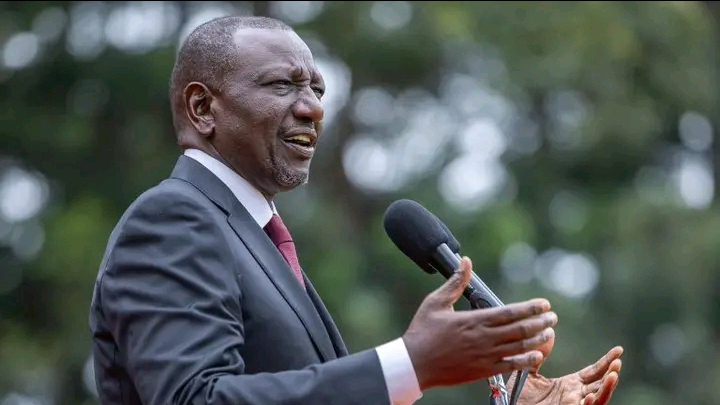

In a bold and unflinching address that underscores the escalating battle against graft in Kenya, President William Ruto has launched a scathing critique of the Judiciary, accusing it of inadvertently providing a safe haven for corrupt officials through controversial legal mechanisms.
Speaking amid growing concerns over economic crimes that have long plagued the nation’s development, Ruto highlighted the practice of anticipatory bail—a judicial tool he claims is uniquely Kenyan—as a significant impediment to justice and accountability.
This pointed rebuke not only reignites debates on judicial independence but also signals the administration’s unwavering resolve to dismantle corruption networks at all levels.
The Core of Ruto’s Criticism: Anticipatory Bail Under Fire
At the heart of President Ruto’s remarks is his disdain for anticipatory bail, a preemptive legal remedy that allows individuals facing potential arrest to seek court protection before any formal charges are filed.
Unlike standard bail processes seen in many jurisdictions worldwide, this provision enables suspects to obtain injunctions that effectively block law enforcement from detaining them, even in cases involving serious allegations of embezzlement, bribery, or misuse of public funds.
Ruto described this practice as a “step backwards” in Kenya’s arduous fight against corruption, arguing that it creates an uneven playing field where the wealthy and influential can manipulate the system to evade scrutiny.
“I want to ask the judiciary not to be a haven for the corrupt to hide behind judicial decisions,” Ruto stated emphatically. “A corrupt person goes to court and gets anticipatory bail; this makes it impossible for such a person to be arrested and prosecuted. How does that help fight corruption?”
His comments come at a time when Kenya grapples with endemic corruption, which has siphoned billions from public coffers, stalled infrastructure projects, and eroded public trust in institutions.
According to Transparency International’s Corruption Perceptions Index, Kenya has consistently ranked poorly, highlighting systemic issues that Ruto’s government has vowed to address since taking office in 2022.
By targeting the Judiciary, Ruto is drawing attention to what he perceives as a critical weak link in the anti-corruption chain, where court orders can halt investigations and arrests, allowing evidence to potentially dissipate or suspects to flee.
Broader Context: Kenya’s Ongoing War on Graft
President Ruto’s administration has positioned itself as a champion of transparency and accountability, implementing reforms such as digitizing government services to reduce opportunities for bribery and launching high-profile probes into past scandals.
Initiatives like the Ethics and Anti-Corruption Commission (EACC) have been bolstered with increased funding and autonomy, leading to notable arrests and asset recoveries.
However, critics argue that these efforts are often thwarted by judicial interventions, including anticipatory bail, which they claim is abused by powerful elites.
Legal experts explain that anticipatory bail, rooted in Kenya’s Constitution and judicial precedents, is intended to protect citizens from arbitrary arrests and uphold the right to liberty.
It allows individuals who anticipate arrest—often based on media reports or summons—to approach the courts for relief, provided they demonstrate a genuine threat to their rights.
Proponents defend it as a safeguard against politically motivated persecutions, a concern in Kenya’s turbulent political landscape marked by historical rivalries and vendettas.
Yet, Ruto contends that this tool has morphed into a shield for the corrupt, enabling them to continue their activities unchecked.
He warned that such rulings undermine national efforts to root out economic crimes, which cost Kenya an estimated KSh 2 trillion annually in lost revenue and development opportunities.
“No one should be beyond the reach of the law, regardless of their social or political standing,” Ruto affirmed, reiterating his commitment to holding all offenders accountable.
This stance aligns with his “bottom-up” economic agenda, which prioritizes equitable resource distribution and punishes those who exploit public trust.
Implications for Judicial Independence and Anti-Corruption Reforms
Ruto’s outspoken criticism has sparked a broader conversation about the delicate balance between judicial independence and executive oversight.
While the Judiciary, led by Chief Justice Martha Koome, has defended its role in upholding constitutional rights, some observers fear that executive pressure could erode public confidence in the courts.
In recent years, similar tensions have arisen, with past administrations accusing judges of leniency toward graft suspects, leading to calls for judicial reforms.
For ordinary Kenyans, who bear the brunt of corruption through inflated taxes, poor services, and stalled projects, Ruto’s words offer a glimmer of hope. Social media platforms have buzzed with support, with hashtags like #EndCorruptionKE trending as citizens demand swift action.
However, legal scholars caution that abolishing or restricting anticipatory bail could infringe on fundamental rights, potentially leading to a slippery slope of authoritarianism.
As Kenya navigates this crossroads, President Ruto’s administration faces the challenge of translating rhetoric into tangible results. Proposed legislative changes, such as amending bail provisions or enhancing prosecutorial powers, could be on the horizon.
In the meantime, Ruto’s message is clear: the fight against corruption demands unity across all branches of government, with no room for loopholes that protect the guilty at the expense of the nation.
This development not only highlights the complexities of governance in one of Africa’s most dynamic economies but also serves as a reminder of the ongoing struggle to build a corruption-free society.
As investigations continue and court battles loom, all eyes are on how the Judiciary will respond to this high-stakes challenge from the executive.
Share This Post