

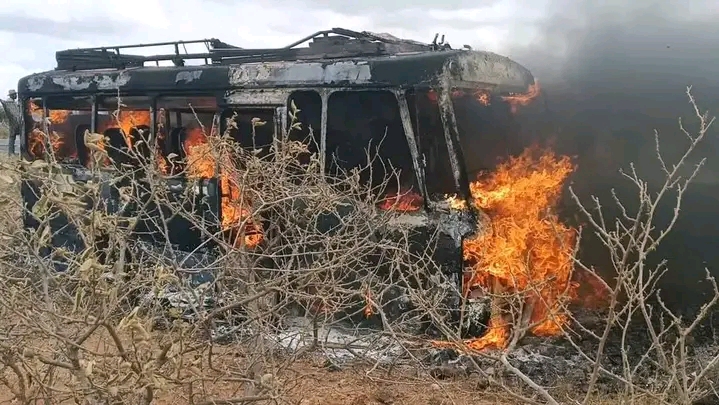
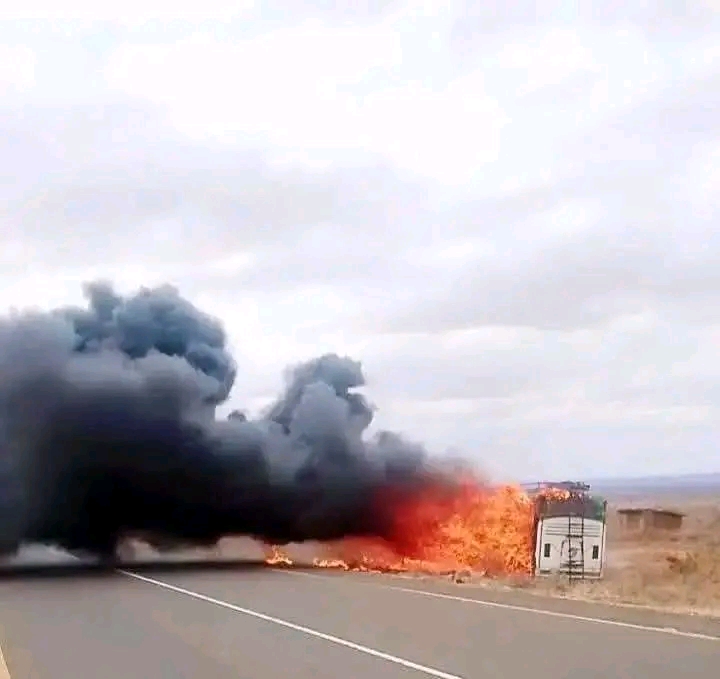
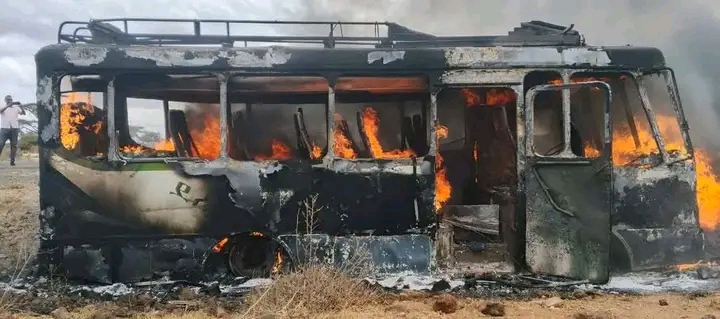
Yabello, Ethiopia| In a harrowing incident that underscores the perils of road travel in Ethiopia’s rugged southern terrains, a passenger bus en route from Moyale to Yabello was reduced to a smoldering wreck after bursting into flames on Friday morning.
Miraculously, all aboard escaped unscathed, turning what could have been a tragic disaster into a tale of quick thinking and fortunate timing.
The dramatic event unfolded in the Madhacho locality of Dirre District, within the Borana Zone of Oromia Regional State.
Eyewitnesses described a scene straight out of a nightmare: the bus, laden with travelers navigating the dusty highways that connect Ethiopia’s border town of Moyale with the bustling hub of Yabello, suddenly made contact with an overhead power line.
Sparks flew, and within mere minutes, ferocious flames consumed the vehicle, leaving behind nothing but a charred skeleton of twisted metal and ashes.
Preliminary investigations by local authorities point to the overhead power line as the primary culprit.
Such incidents, while rare, highlight the vulnerabilities of Ethiopia’s infrastructure in remote areas, where high-voltage lines often crisscross above busy roadways without adequate safeguards.
“The fire spread so fast; it was like a bomb went off,” recounted one eyewitness, a local farmer who rushed to the scene. “People were scrambling out the doors and windows, but thank God, no one was hurt. It was chaos, but everyone made it out alive.”
The bus, operated by a regional transport service, was carrying an undisclosed number of passengers – a mix of locals, traders, and possibly cross-border commuters given Moyale’s proximity to the Kenyan border.
Moyale, a key frontier town, serves as a vital link for trade and migration between Ethiopia and Kenya, while Yabello, known for its vibrant markets and cultural heritage in the Borana pastoralist region, attracts travelers from afar.
The route itself is notorious for its challenging conditions: pothole-riddled roads, unpredictable weather, and the ever-present risk of mechanical failures or external hazards like this one.
This close call comes amid a worrying surge in road accidents across the Borana Zone in recent months.
Official records from the Oromia Regional State’s transport bureau indicate a spike in incidents, ranging from minor collisions to fatal crashes, often attributed to speeding, poor vehicle maintenance, and inadequate road infrastructure.
Just last month, a similar accident involving a truck in the same district claimed several lives, fueling public outcry for immediate reforms.
In response to these escalating concerns, authorities have ramped up calls for enhanced road safety measures.
“We cannot afford to lose lives on our roads,” stated a spokesperson from the Borana Zone administration. “Drivers, particularly those responsible for passenger vehicles, must prioritize caution: reduce speed, stay alert to overhead hazards, and adhere strictly to safety protocols.”
The statement echoes broader national efforts in Ethiopia to combat road fatalities, which claim thousands of lives annually according to the World Health Organization.
Initiatives like mandatory vehicle inspections, public awareness campaigns, and infrastructure upgrades are being pushed forward, though challenges in funding and enforcement persist in rural zones like Borana.
Local communities, too, are voicing their demands. Residents of Dirre District, a predominantly pastoralist area where livestock herding intersects with modern transport, have long advocated for better road signage, elevated power lines, and emergency response teams.
“This isn’t the first time something like this has happened,” said a community elder in Madhacho. “We need action now to prevent the next one from turning deadly.”
As investigations continue, the incident serves as a stark reminder of the fragility of life on Ethiopia’s highways.
While the passengers’ safe escape offers a silver lining – a testament to human resilience and perhaps a bit of divine intervention – it also ignites urgent discussions on sustainable development in the region.
For travelers planning trips along the Moyale-Yabello corridor, experts advise checking vehicle conditions, avoiding peak hazard times, and staying informed about local alerts.
In a country where road transport remains the lifeline for economic and social connectivity, ensuring safety isn’t just a policy – it’s a necessity.
As Borana Zone grapples with its accident-prone reputation, this fiery ordeal may well catalyze the changes needed to protect future journeys. Stay tuned for updates as authorities release more details on the probe.
Share This Post