
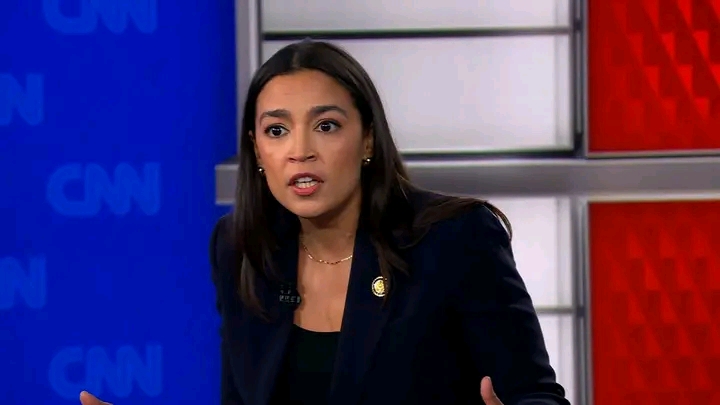

Rep. Alexandria Ocasio-Cortez has ignited a fierce national debate with her explosive assertion that Republicans are deliberately targeting and exploiting young boys online, steering them away from healthy masculinity toward an insecure version rooted in domination and division.
The New York Democrat made the remarks during a CNN town hall on October 15, 2025, sharing the stage with Sen. Bernie Sanders and responding to a college student’s question about why Republican messaging on social media appears far more effective at reaching young audiences than Democratic efforts.
AOC began by praising her party’s clarity on core issues such as healthcare as a human right, a living minimum wage, and tuition-free public college.
She contrasted this with what she described as the GOP’s success in promoting divisive content, including claims that women are inferior, LGBTQ Americans are subhuman, and the circulation of racial and white supremacist messaging.
And they are able to radicalize and target and exploit a generation of young boys in particular away from healthy masculinity and into an insecure masculinity that requires the domination of others who are poorer browner darker or a different gender than them she declared.
AOC went further, arguing that this approach appeals to humanity’s basest instincts to sow division.
The ultimate goal, she suggested, is to distract Americans while tech billionaires like Elon Musk, Peter Thiel, and Mark Zuckerberg secure tax advantages and economic dominance at the expense of ordinary citizens.
The statement, captured in full on CNN transcripts and widely circulated in video clips, has since gone viral once again in early 2026, resurfacing across social media platforms and conservative outlets as a prime example of Democratic rhetoric on gender and youth.
The Political and Cultural Firestorm
Critics wasted no time in condemning the comments as an attack on traditional manhood and an attempt to shame young males for embracing strength and independence.
Sen. Tommy Tuberville, a Republican from Alabama and former college football coach, fired back sharply. He accused Democrats of demonizing young men for more than two decades by labeling them racist, sexist, and toxic simply for being male.
Tuberville highlighted efforts to block men from certain jobs based on skin color and the fallout from the Me Too movement, warning that such attitudes explain why more than half of young men supported Donald Trump in the 2024 election.
Other prominent voices, including commentator Megyn Kelly, echoed the backlash.
Kelly argued that one party had indeed radicalized young men, but placed the blame squarely on Democrats for years of messaging that portrayed boys as inherently problematic from birth.
The controversy arrives against a backdrop of documented shifts in voter behavior. Exit polls and analyses from the 2024 presidential election showed Republicans making notable gains among men under 30, with Trump capturing majority support in key male demographics, including substantial portions of young white, Black, and Latino men.
This trend prompted Democrats to launch multimillion-dollar research initiatives aimed at better understanding and reconnecting with male voters.
Deeper Implications for Youth and Masculinity
At its core, AOC’s critique taps into a larger cultural conversation about masculinity in the 21st century.
Proponents of her view see it as a necessary warning against online influences that glorify dominance over empathy, emotional resilience, or mutual respect.
Detractors counter that labeling confidence, competitiveness, and protectiveness as insecure or toxic risks alienating an entire generation of boys who already face challenges such as higher dropout rates, mental health struggles, and economic pressures in a changing workforce.
Young men today navigate a digital landscape filled with competing messages, from fitness influencers promoting discipline to critics questioning traditional male roles.
AOC’s intervention frames Republican success not as legitimate policy appeal but as exploitation of insecurity, a charge that has intensified partisan divides rather than bridging them.
As midterms approach and both parties vie for the hearts and minds of emerging voters, this episode underscores a fundamental question: Is the path to engaging young men through empowerment and achievement, or through warnings about the dangers of certain expressions of strength?
AOC’s remarks have ensured the debate will remain front and center, forcing politicians, parents, and cultural figures alike to confront how best to guide the next generation of American men toward confidence rather than conflict.
The conversation continues to evolve, with clips of the town hall moment still generating thousands of reactions daily and highlighting the enduring power of bold statements in an increasingly polarized media environment.
Share This Post