
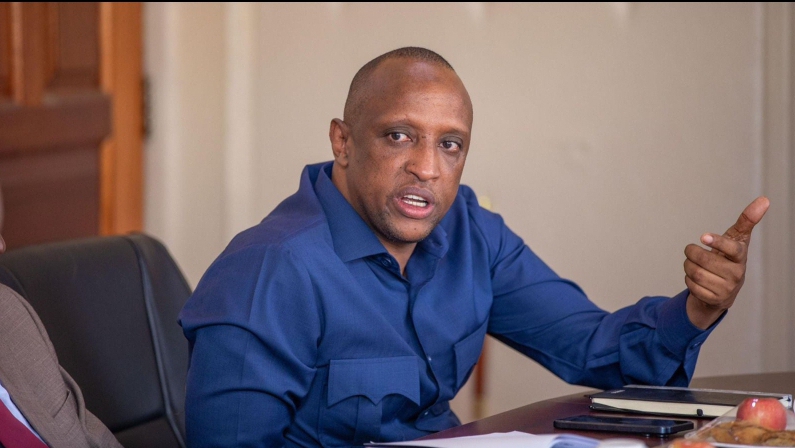

Isiolo County—a once-promising gateway to the northern region’s untapped potential—now reels under an unrelenting wave of terror that has transformed its bustling township into a ghost town of fear and despair.
Since Governor Abdi Ibrahim Hassan, better known as Governor Guyo, ascended to power in August 2022, insecurity has not just persisted but escalated into a full-blown crisis, leaving residents to fend for themselves against marauding bandits.
In this opinion piece, I shall delve deep into the harrowing reality on the ground, exposing how Guyo’s administration has spectacularly failed its people, turning a blind eye to bloodshed while prioritizing personal agendas over public safety.
The Surge of Violence: From Remote Outposts to Urban Nightmare
Historically, banditry in Isiolo was confined to the county’s remote grazing lands—places like Charri, Cherrab, Garbatulla, and Sericho, where herders clashed over scarce water and pasture.
These incidents, while tragic, were isolated, allowing the township of Isiolo—billed as a potential resort city—to thrive as a hub of commerce and culture.
But under Governor Guyo’s watch, this fragile peace has shattered. The insecurity has migrated aggressively into the urban core, infiltrating neighborhoods and streets that were once considered safe havens.
Just four days ago, a fresh onslaught began, with bandits suspected to hail from the Turkana community launching brazen raids in and around Isiolo township.
Reports detail the theft of countless goats and sheep, stripping families of their livelihoods in a region where livestock is more than wealth—it’s survival.
The human toll is even more devastating: at least four lives lost, including that of a innocent 12-year-old girl whose death symbolizes the indiscriminate brutality of these attacks. Tens more have been injured, their wounds a grim testament to the chaos.
Eyewitness accounts paint scenes of pandemonium, with gunfire echoing through the night and residents barricading doors against invaders who show no mercy.
What makes this escalation particularly alarming is its proximity to the county’s nerve center. Governor Guyo’s own village, Olla Odha, on the northern edge of the township, has become a flashpoint.
Hundreds of terrified villagers have fled to the central business district (CBD), seeking refuge in overcrowded shelters amid fears of being slaughtered or robbed.
This mass displacement underscores a profound shift: banditry is no longer a peripheral threat but a direct assault on the county’s urban fabric, raising urgent questions about why such violence has been allowed to fester and spread unchecked.
Guyo’s Absent Leadership: A Governor in Hiding
Amid this turmoil, one figure remains conspicuously absent: Governor Guyo himself. Not a single public address, not a word of condolence to the grieving families, and certainly no visible action to stem the tide of terror.
His silence is deafening, especially in light of his recent decision to skip a crucial Senate appearance meant to probe graft allegations within his administration.
In a letter reportedly shown to ICBNews, Guyo cited the very security crisis in Isiolo as his excuse for dodging accountability—claiming he was “dealing with it.” Yet, days later, he is nowhere to be found, effectively missing in action while his county burns.
This dereliction extends to his entire team. County Secretary Dadhe Boru and other key officials have similarly vanished from the public eye, failing even to visit the injured languishing in Isiolo’s dilapidated hospital.
That facility itself stands as a monument to the administration’s negligence: pharmacies ravaged by unchecked theft of medicines, infrastructure crumbling from years of mismanagement.
Patients endure substandard care in a system hollowed out by corruption, where resources meant for healing are siphoned off, leaving the vulnerable even more exposed.
Residents of Isiolo have grown accustomed to this abandonment. In the Guyo era, calling on government agencies for help feels futile—like shouting into a void. The police, under-resourced and seemingly directionless, offer little protection.
Community leaders whisper of a leadership vacuum so profound that ordinary citizens are left to organize their own patrols, a dangerous stopgap in the face of armed raiders.
This isn’t governance; it’s abdication, forcing people to confront the harsh truth: under Governor Guyo, they are truly on their own.
Silent Enablers and Sinister Speculations
Compounding the crisis is the eerie quiet from other elected officials. Isiolo’s Member of Parliament, Joseph Samal, elected alongside Guyo in 2022, has uttered not a single word on the matter.
This is no surprise to those familiar with his controversial past—accusations of funding and providing political cover to insurgents have dogged him for years. His silence now feels like complicity, allowing the violence to rage without parliamentary scrutiny or intervention.
But why the inertia from Guyo? Whispers in Isiolo point to political cowardice. The governor, already polling poorly among the Turkana community—a key demographic in the county—may fear alienating potential voters by cracking down on suspects from that group.
Such calculations prioritize electoral survival over human lives, a damning indictment of his priorities.
More chilling are the conspiracy theories gaining traction: allegations of a deliberate plot to ethnically cleanse Isiolo’s indigenous populations, paving the way for land grabs by powerful cartels from Nairobi.
While unproven, these claims resonate in a region scarred by historical land injustices, where insecurity could be a tool for forced evictions rather than mere coincidence.
The Human Cost and a Call for Reckoning
The ramifications of this unchecked banditry ripple far beyond immediate casualties.
Families shattered by loss, economies crippled by stolen livestock, and a township on the brink of collapse—Isiolo’s social fabric is unraveling.
Children like the slain 12-year-old girl represent a stolen future, their dreams extinguished in a hail of bullets.
Displaced residents huddle in the CBD, their homes abandoned to looters, while the broader community grapples with trauma that no amount of rhetoric can heal.
So, what is the endgame for the people of Isiolo County? Are we destined to be erased from lands our ancestors called home for centuries, sacrificed on the altar of political expediency and greed?
Where is the higher authority—the national government, the security apparatus—that can impose order and justice?
Governor Guyo’s tenure has exposed a rot at the core of local leadership: incompetence masked as strategy, corruption fueling chaos.
It’s time for accountability, for voices to rise against this betrayal. Isiolo deserves better than a governor who hides while his people bleed.
The question isn’t just how this ends—it’s whether Guyo will ever emerge from the shadows to face the reckoning he so richly deserves.
Disclaimer| The views and opinions expressed in this article are author’s very own
Share This Post