
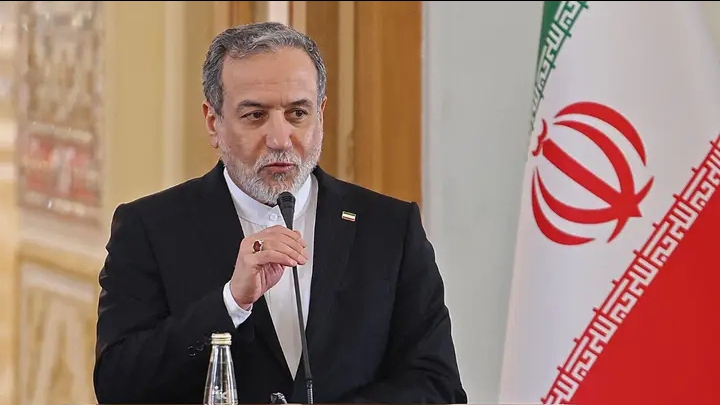

In a bold and unflinching declaration that has sent ripples through international diplomatic circles, Iran’s Foreign Minister Abbas Araghchi has warned the United States of a full-scale military response should Washington launch any attack on Iranian soil.
This stark message, delivered amid a backdrop of domestic unrest and regional volatility, underscores the precarious balance of power in the Middle East, where the specter of broader conflict looms larger than ever.
A Direct Challenge from Tehran
Araghchi’s warning came in the form of an opinion piece published in The Wall Street Journal, where he articulated Iran’s position with unflinching clarity.
“Unlike the restraint Iran showed in June 2025, our powerful armed forces have no qualms about firing back with everything we have if we come under renewed attack,” he wrote, framing the statement not as a mere threat but as a necessary conveyance of reality from a diplomat who claims to abhor war.
This reference to the 12-day war initiated by Israel against Iran in mid-2025 highlights Tehran’s narrative of past forbearance, during which Iranian forces reportedly exercised measured responses despite significant provocations.
The foreign minister’s words arrive at a critical juncture, following Iran’s recent violent crackdown on nationwide protests that erupted over economic hardships, governance issues, and lingering effects of international sanctions.
Araghchi contended that the unrest, which he described as initially peaceful before being hijacked by “foreign and domestic terrorist actors,” was swiftly contained within 72 hours.
Yet, the government’s response—a near-total internet blackout and aggressive security measures—has drawn widespread condemnation and fueled accusations of human rights violations, amplifying global scrutiny.
Iranian officials have repeatedly emphasized that their stance is one of deterrence rather than aggression.
“We do not seek war, but we will defend our sovereignty with unwavering resolve,” Araghchi reiterated in subsequent statements, echoing a sentiment shared by other high-ranking figures in Tehran.
This defensive posture is rooted in Iran’s long-held doctrine of strategic patience, balanced against its advanced military capabilities, including missile systems and proxy networks across the region.
Escalating Tensions and US Maneuvers
The timing of Araghchi’s pronouncement coincides with heightened US military activity in the Middle East, including the repositioning of an aircraft carrier strike group and additional air and missile defense assets.
Reports indicate that the United States has begun withdrawing non-essential personnel from certain bases in the region, a precautionary measure amid fears of imminent escalation.
President Donald Trump’s administration has been vocal in its criticism of Iran, with the president himself threatening intervention in response to the protest crackdown and broader regional instability.
From Washington’s perspective, these movements are part of a strategy to maintain unpredictability and deter Iranian actions, as articulated by Western military officials.
Trump has previously labeled Iran’s Supreme Leader Ali Khamenei a “sick man” and called for regime change, rhetoric that Tehran dismisses as inflammatory and unhelpful.
Iranian leaders, including Brigadier General Abolfazl Shekarchi, have countered such statements forcefully, vowing to “set their world on fire” if any hand is raised against their leadership.
This exchange of barbs is not isolated; it builds on a history of fraught relations, including the US withdrawal from the 2015 nuclear deal under Trump’s first term, subsequent sanctions that crippled Iran’s economy, and the 2025 Israel-Iran conflict that saw direct strikes on Iranian nuclear facilities.
Araghchi has accused the US of exploiting the protests for political gain, labeling provocative statements from American officials as “shameful” and detrimental to Iranians’ basic rights.
He has also pointed fingers at Israel, claiming Mossad involvement in stoking unrest, further complicating the geopolitical web.
Regional Ramifications and Global Concerns
The potential for a wider conflict is palpable, with Araghchi warning that any full-scale confrontation would be “ferocious, prolonged, and felt far beyond the region.”
Iran’s alliances, including with Russia—evidenced by Araghchi’s planned visit to Moscow—add layers of complexity, as do its warnings to US allies in the Middle East that their territories could become targets if they facilitate American strikes.
This has prompted urgent calls from the international community, including the United Nations, for restraint and renewed dialogue.
Experts note that while Iran’s military rhetoric serves as a deterrent, it also reflects internal pressures to project strength amid economic woes and public discontent.
On the US side, the strategy of maximum pressure aims to curb Iranian influence, but critics argue it risks miscalculation in an already volatile area.
Channels of communication remain open, as Araghchi acknowledged in interviews, yet he stressed that Iran is “prepared for all options,” including military readiness far exceeding previous levels.
Pathways to De-Escalation
As global attention fixates on this high-stakes standoff, the emphasis shifts to diplomacy as the antidote to disaster. Araghchi’s op-ed, while resolute, leaves room for negotiation, urging a “fundamental shift” in Washington’s approach.
Historical precedents, such as the restrained responses during the 2025 war, offer glimmers of hope that cooler heads might prevail.
Yet, with US forces on the move and Iranian resolve unyielding, the world watches breathlessly, hoping that deterrence evolves into dialogue rather than devastation.
In this era of uncertainty, the resilience of nations like Iran in defending their sovereignty, coupled with the imperative for international cooperation, serves as a poignant reminder of the fragile pursuit of peace.
As tensions simmer, the choices made in Tehran and Washington will shape not just the Middle East, but the global order for years to come.
Share This Post