
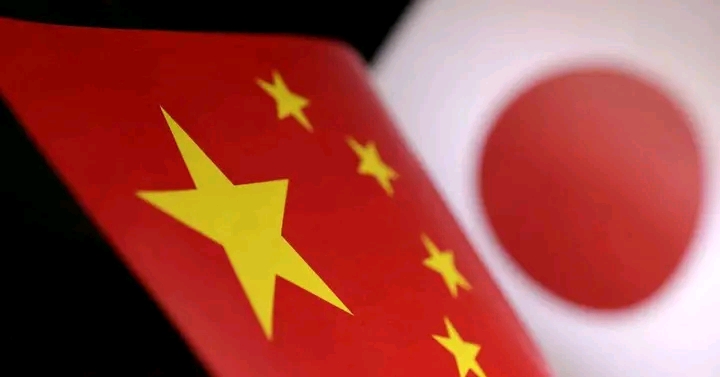

Tokyo, Japan| Tensions in the Asia-Pacific region have reached a new high after Japan publicly accused China of a highly provocative military maneuver, alleging that a Chinese fighter jet locked its fire-control radar onto a Japanese Self-Defense Forces (JSDF) aircraft over the contested East China Sea.
The incident, described by Japanese officials as “extremely dangerous,” has prompted a formal diplomatic protest and renewed fears of accidental conflict between Asia’s two largest economies.
Details of the Alleged Incident
According to a statement released by Japan’s Ministry of Defense on [date if available], the encounter occurred during a routine maritime surveillance patrol conducted by a JSDF aircraft.
Japanese authorities claim that a People’s Liberation Army Air Force (PLAAF) fighter jet illuminated the Japanese plane with its weapons-control radar — a critical step that precedes the launch of air-to-air missiles.
“This is not a simple case of close approach,” a senior Defense Ministry official told reporters in Tokyo. “Locking fire-control radar onto another nation’s military aircraft is an overtly hostile act that violates established international protocols for preventing dangerous military incidents at sea and in the air.”
Japan has formally lodged a protest through diplomatic channels, labeling the action “unacceptable” and demanding that Beijing take immediate steps to prevent recurrence.
Historical Context and Pattern of Encounters
This is not the first time the two nations have traded accusations over radar illumination.
Similar incidents were reported in 2013, when Japan claimed Chinese naval vessels locked radar on Japanese ships and aircraft near the Senkaku/Diaoyu Islands — a chain of uninhabited islets administered by Tokyo but claimed by Beijing.
The East China Sea has emerged as one of Asia’s most volatile flashpoints, with overlapping air defense identification zones (ADIZ), frequent military patrols, and unresolved territorial disputes fueling near-constant friction.
Both countries routinely scramble fighter jets in response to perceived incursions, creating an environment where miscalculation could rapidly spiral.
China’s Response and Broader Strategic Dynamics
As of publication, China’s Ministry of National Defense and Foreign Ministry have not issued an official detailed response to Japan’s latest allegations.
In past incidents, Beijing has either denied the radar lock-on claims outright or asserted that its forces were operating lawfully within its own ADIZ and responding to provocative Japanese surveillance activities near Chinese territory.
Analysts note that China’s rapidly expanding naval and air capabilities, coupled with its assertive posture in both the East and South China Seas, have heightened regional anxiety.
Japan, in response, has significantly increased defense spending, deepened security ties with the United States, and begun joint military exercises with partners including Australia, India, and several Southeast Asian nations.
Expert Analysis: Rising Risk of Miscalculation
Security experts warn that repeated close encounters of this nature dramatically elevate the risk of unintended escalation.
“Fire-control radar lock-on is universally understood in military aviation as a prelude to engagement,” said retired JSDF Air Force Lieutenant General Kenichi Fujii.
“Even if the Chinese pilot had no intention of firing, the Japanese crew had seconds to decide whether this was the opening move of an attack. In split-second situations like these, human error or technical malfunction can trigger catastrophe.”
Dr. Sheila Smith, a senior fellow for Asia-Pacific studies at the Council on Foreign Relations, added: “We are seeing a classic security dilemma unfold in real time. Both sides justify increased patrols as defensive responses to the other’s actions, but the cumulative effect is a compressed decision-making space where accidents become more likely.”
Regional and International Implications
The incident occurs against the backdrop of broader geopolitical shifts:
- Strengthened Japan-U.S. alliance under the Kishida and incoming Trump administrations
- Growing coordination among the Quad (U.S., Japan, India, Australia) nations
- Ongoing militarization of artificial islands in the South China Sea
- Heightened alertness across Taiwan Strait contingencies
ASEAN member states, many of whom have their own maritime disputes with China, are watching developments closely, wary that any Japan-China clash could destabilize the entire region.
Calls for De-escalation and Crisis-Prevention Mechanisms
Both Japanese and international observers have renewed calls for binding crisis-management mechanisms, including functional military hotlines and agreed rules of behavior for air and maritime encounters.
While a Japan-China maritime and air communication mechanism was established in 2018, critics argue it has been underutilized and lacks enforcement teeth.
Japan’s Chief Cabinet Secretary Yoshimasa Hayashi stated during a press conference: “We will continue to urge China to exercise self-restraint and engage in serious dialogue to prevent recurrence of such dangerous actions.”
As both nations continue to assert their claims with increasing military presence, the latest radar lock-on allegation serves as a stark reminder that the East China Sea remains one of the world’s most precarious flashpoints — where routine patrols can, in an instant, transform into the opening chapter of a larger conflict.
International observers now wait to see whether Beijing will offer a substantive response or allow the incident to fade into the long list of unresolved bilateral frictions that continue to define Japan-China relations in the 21st century.
Share This Post