


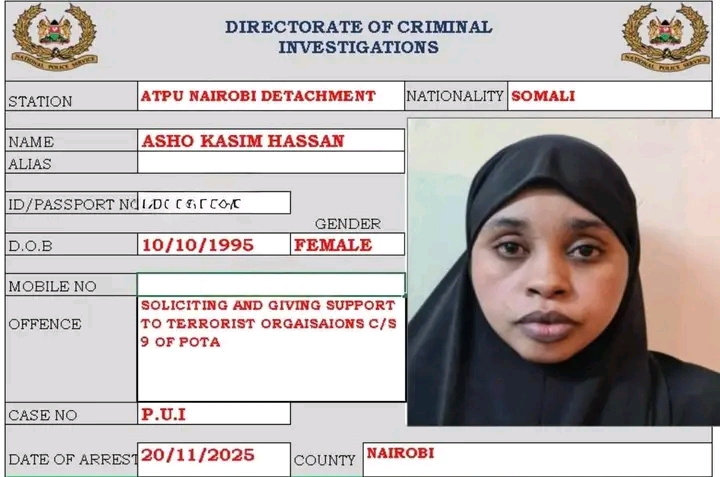
Nairobi, Kenya| In a swift and precise intelligence-driven operation, detectives from Kenya’s elite Anti-Terrorism Police Unit (ATPU) have apprehended a female suspect accused of actively soliciting and providing material support to a terrorist organization.
The arrest, executed in the bustling Eastleigh suburb of Nairobi, underscores the ongoing vigilance of Kenyan security forces in combating terrorism threats on home soil.
Details of the High-Profile Arrest
The suspect, identified as Asho Kassim Hassan, described in reports as a 30-year-old woman of Somali origin, was taken into custody during a targeted raid on her hideout along Major Muriithi Street in Eastleigh – a densely populated area popularly known as “Little Mogadishu” due to its large Somali diaspora community.
Acting on credible intelligence, ATPU officers stormed the residential premises, apprehending Hassan without incident. During the operation, authorities seized critical items believed to hold vital clues: her passport and a mobile phone.

These have been handed over to forensic experts for in-depth digital and document analysis, aimed at unraveling any broader terrorist network she may be connected to, including potential communications, financial transactions, or travel histories linked to extremist groups.
Hassan is currently detained at a secure facility, where she is undergoing formal processing.
She is expected to be arraigned in court soon, facing serious charges under Kenya’s Prevention of Terrorism Act, which carries severe penalties for providing support – financial, logistical, or otherwise – to designated terrorist entities.
Why Eastleigh? A Persistent Hotspot for Counter-Terrorism Operations
Eastleigh has long been a focal point for Kenya’s counter-terrorism efforts. The neighborhood’s strategic location, vibrant cross-border trade, and significant Somali-Kenyan population make it both a economic hub and, unfortunately, a potential conduit for illicit activities, including terror financing and recruitment.
Kenya has faced persistent threats from Al-Shabaab, the Somalia-based Al-Qaeda affiliate responsible for major attacks such as the 2013 Westgate Mall siege, the 2015 Garissa University massacre, and numerous border incursions.
While the exact terrorist group linked to Hassan has not been publicly specified – likely to protect ongoing investigations – such arrests often tie into efforts to disrupt Al-Shabaab’s fundraising and support networks operating within urban centers.
This operation comes amid a spate of recent anti-terror actions across the country.

Just days earlier, authorities arrested individuals in Marsabit and Mombasa on similar financing-related charges, highlighting a renewed push to choke off terrorist funding streams, including through cryptocurrencies and informal hawala systems common in Eastleigh’s remittance economy.
DCI’s Commitment: Intelligence, Collaboration, and Community Vigilance
In its official statement, the Directorate of Criminal Investigations (DCI) emphasized the role of “intensified intelligence operations, enhanced inter-agency coordination, and sustained community partnerships” in making the arrest possible.
These elements form the backbone of Kenya’s multi-layered counter-terrorism strategy, blending cutting-edge surveillance, international cooperation (including with neighbors like Somalia and partners such as the United States), and grassroots tip-offs from the public.
The DCI reiterated its unwavering resolve: “We remain steadfast in safeguarding the country and ensuring that every Kenyan can go about their daily lives without fear.”
To encourage public participation, the agency continues to promote its anonymous reporting channels under the #FichuaKwaDCI campaign:
- Toll-free hotline: 0800 722 203
- WhatsApp: 0709 570 000
- Message: Usiogope! (Don’t be afraid!)
Broader Implications for Kenya’s National Security
This arrest serves as a stark reminder that the terror threat in Kenya remains active and adaptive, even as military operations in Somalia under the African Union Transition Mission (ATMIS) have degraded Al-Shabaab’s conventional capabilities.
Urban support cells, often involved in low-profile but critical roles like fundraising and logistics, pose a insidious challenge.
Experts note that women have increasingly featured in terror networks, sometimes acting as couriers, recruiters, or financiers to evade profiling. Hassan’s case could shed light on evolving gender dynamics within these groups.
As forensic examinations proceed and potential accomplices are pursued, Kenyans await further details.
Operations like this not only disrupt immediate threats but also deter would-be supporters, reinforcing public confidence in the ATPU and DCI’s proactive stance.
Kenya’s fight against terrorism is far from over, but successes like the Eastleigh raid demonstrate that vigilance, intelligence, and community trust are powerful weapons in protecting the nation.
Stay informed, stay alert, and report suspicious activities – your tip could save lives.
Share This Post