
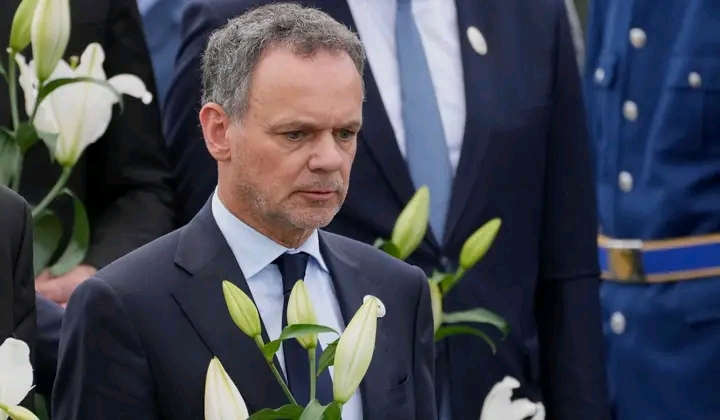

In a dramatic escalation of political turmoil within the Netherlands, Foreign Minister Caspar Veldkamp tendered his resignation on August 22, 2025, citing irreconcilable differences within the caretaker government over imposing tougher sanctions on Israel amid the ongoing war in Gaza.
This move, which triggered a wave of solidarity resignations from his party colleagues, underscores growing frustrations in Europe over Israel’s military actions and the worsening humanitarian catastrophe in the Palestinian enclave.
Veldkamp’s departure comes at a pivotal moment, as a UN-backed report officially declared famine in Gaza City, and Israeli forces ramp up operations to seize control of the area—actions that have drawn sharp international condemnation even from Israel’s traditional allies.
The Resignation: A Cabinet in Crisis
Veldkamp, a 61-year-old seasoned diplomat and former Dutch ambassador to Israel, announced his resignation late Friday evening following a heated cabinet meeting where his proposals for new sanctions against Israel were rebuffed by coalition partners.
Speaking to the Dutch news agency ANP, he expressed profound disillusionment, stating, “I feel constrained in setting the course I consider necessary as foreign minister.”
He elaborated that he was “insufficiently able to take meaningful additional measures” to pressure Israel over its conduct in Gaza and settlement expansion in the occupied West Bank.
The rift stemmed from Veldkamp’s push for unilateral Dutch sanctions, including trade restrictions, after repeated failures to secure broader European Union consensus.
Earlier in the week, he had informed parliament of his intent to introduce measures in response to Israel’s planned offensive in densely populated Gaza City, but coalition resistance—particularly from parties wary of straining ties with Israel—proved insurmountable.
Veldkamp’s frustration was compounded by Germany’s ongoing blockade of efforts to suspend the EU-Israel Association Agreement, a trade pact that grants Israel preferential access to European markets.
Dutch parliamentarians had urged the government not to wait for EU-wide action, advocating for independent sanctions to address what they described as Israel’s violations of international law.
In a show of unity, all ministers and state secretaries from Veldkamp’s New Social Contract (NSC) party resigned in solidarity, plunging the caretaker government—already fragile after recent elections—into deeper disarray.
This mass exodus has raised questions about the stability of Dutch politics, with opposition parties calling for snap elections.
Just days after the resignations, Dutch MPs voted against recognizing a Palestinian state, further highlighting the polarized debate over Israel-Palestine within the Netherlands.
Veldkamp’s stance builds on prior actions, including the Netherlands’ July 2025 ban on two far-right Israeli ministers—National Security Minister Itamar Ben-Gvir and Finance Minister Bezalel Smotrich—from entering the country.
The ban was imposed due to their vocal support for policies deemed as promoting ethnic cleansing in Gaza and the West Bank, marking a rare rebuke from one of Israel’s staunchest European supporters.
The Gaza Humanitarian Catastrophe: Famine Amidst Relentless Conflict
Veldkamp’s resignation coincided with a grim milestone in the 22-month-old Gaza war: the Integrated Food Security Phase Classification (IPC), a UN-backed global hunger monitoring body, officially confirmed famine in Gaza Governorate, including Gaza City, as of August 15, 2025.
The report paints a harrowing picture, estimating that over 500,000 Palestinians—more than a quarter of Gaza’s population—are facing catastrophic hunger, with conditions expected to spread to other areas in the coming weeks.
UN Secretary-General António Guterres described the famine as “a failure of humanity itself,” emphasizing that it unfolds under the watch of advanced military technology.
The conflict, sparked by Hamas’ October 7, 2023, attack on Israel, has exacted a devastating toll. Palestinian health authorities report over 62,000 deaths, nearly 160,000 injuries, and at least 281 starvation-related fatalities, including 114 children.
These figures, while contested by Israel, align with independent assessments highlighting an unprecedented civilian casualty rate.
A leaked Israeli military intelligence database revealed that 83% of those killed in Gaza by May 2025 were civilians, underscoring the war’s disproportionate impact on non-combatants.
Aid deliveries have been severely hampered by Israeli restrictions, border closures, and ongoing bombardments, exacerbating malnutrition and disease outbreaks.
EU Humanitarian Aid Commissioner Janez Lenarčič condemned the situation, stating, “Famine is no longer a risk in Gaza. It is a reality. Children are dying from hunger and disease, while families are going days without food.”
Relief organizations warn that without immediate, unhindered access for humanitarian aid, the death toll from starvation could surge dramatically.
Israel’s Military Escalation: Seizing Gaza City and Fiery Rhetoric
As famine grips Gaza, Israeli forces have intensified operations, approving a plan to seize full control of Gaza City—once home to around one million people—and impose security dominance over the entire Strip.
The Israeli Defense Forces (IDF) have called up 60,000 reservists in preparation, with airstrikes and ground incursions already underway in the city’s suburbs. On August 22, at least 65 Palestinians were killed in escalated attacks, including civilians seeking aid.
Israeli Defense Minister Israel Katz ramped up rhetoric, warning that “soon, the gates of hell will open” in Gaza City if Hamas refuses Israel’s conditions for ending the war: the release of all hostages and the group’s complete disarmament. Katz vowed the city’s destruction unless terms are met, framing the operation as targeting Hamas’ “last bastion.”
This stance persists despite Hamas accepting an Arab-mediated ceasefire proposal earlier in the week, which mirrors one previously endorsed by Israel but stalled in negotiations.
Israel’s Prime Minister’s Office dismissed the IPC famine report as an “outright lie,” attributing shortages to Hamas’ alleged diversion of aid.
However, international observers, including the International Committee of the Red Cross, warn that the offensive will worsen an “already catastrophic” situation.
International Reactions: Praise, Criticism, and Calls for Accountability
Veldkamp’s bold move has elicited polarized responses. Hamas praised the resignation, viewing it as a principled stand against Israel’s “assault on Gaza and settlement activities.”
In contrast, Israeli New Hope party leader Gideon Sa’ar urged Europe to “choose Israel or the terrorists,” criticizing Veldkamp’s actions as siding with extremism.
Across Europe, calls for tougher measures against Israel are mounting. Sweden joined the Netherlands in advocating for suspending the EU-Israel trade agreement, citing human rights abuses.
Human Rights Watch and other NGOs argue that reinstating tariffs could pressure Israel to comply with international law. Yet, unanimity remains elusive, with Germany and others blocking full suspension.
Protests erupted in European cities on August 24, with demonstrators denouncing the Gaza famine and demanding an end to arms sales to Israel.
Broader Implications: A Turning Point for Europe-Israel Relations?
Veldkamp’s resignation highlights a shifting European landscape, where even close allies like the Netherlands are reevaluating support for Israel amid the Gaza war’s humanitarian toll.
It could galvanize momentum for EU-wide sanctions, though political hurdles persist. For the Netherlands, the fallout risks prolonging governmental instability, potentially delaying responses to domestic issues.
In Gaza, the convergence of famine and military escalation demands urgent global intervention. As UN officials implore, “This is a 21st-century famine watched over by drones”—a stark reminder that diplomatic rifts in Europe may be the catalyst for broader accountability.
With ceasefire talks stalled and casualties mounting, the world watches to see if Veldkamp’s stand sparks meaningful change or merely deepens divisions.
Share This Post