
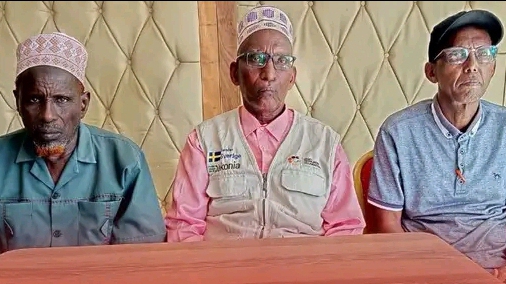

In a recent development in Isiolo County, Kenya, elders from the Somali community have firmly denied allegations of political manipulation in their petition to the National Assembly opposing the establishment of Oldonyiro as a new sub-county.
The elders, representing a significant segment of the local population, emphasized that their actions were independently motivated by a desire for fairness and inclusion in the administrative restructuring process.
This statement comes amid rising tensions and public discourse surrounding the proposed sub-county, highlighting the community’s call for transparency, dialogue, and collaborative governance in Isiolo County.
Elders Assert Autonomy in Petition Process
Led by their chairman, Shariff Abdullahi, the Somali elders clarified that their decision to submit the petition was a collective and autonomous effort, free from external political influence.
Abdullahi underscored that the community’s move to seek redress through parliamentary channels stemmed from their exclusion from the consultation process for establishing Oldonyiro as a sub-county.
“We were not involved in the decision-making process, and our petition reflects our genuine concerns as a community seeking justice,” Abdullahi stated during a press address in Isiolo.
Supporting this position, Osman Bidhu, the deputy chairman of the Somali elders’ council, and Idle Hassan, the community secretary, reiterated the group’s commitment to pursuing all available avenues to ensure their grievances are addressed.
Bidhu emphasized the community’s readiness to escalate the matter to the courts if necessary, stating, “We are prepared to take legal action until our concerns are fully heard and resolved.”
This stance reflects the elders’ determination to safeguard their community’s interests while advocating for equitable representation in administrative decisions.
Call for Dialogue with County Leadership
Despite their firm opposition to the current proposal, the elders expressed openness to constructive dialogue with Isiolo County Governor Abdi Guyo.
The community seeks greater clarity on the geographical boundaries and administrative implications of the proposed Oldonyiro sub-county.
“We are ready to sit down with the governor to discuss the areas that will fall under the new sub-county and ensure our people’s interests are considered,” Hassan noted.
This willingness to engage in talks underscores the elders’ preference for a collaborative resolution over prolonged conflict.
The proposed creation of Oldonyiro sub-county is part of broader efforts to enhance administrative efficiency and service delivery in Isiolo County.
However, the lack of inclusive consultations has sparked concerns among various communities, particularly the Somali population, who fear marginalization in the new administrative framework.
The elders’ petition to the National Assembly highlights these grievances, calling for a review of the process to ensure it aligns with principles of fairness and inclusivity.
Appeal for Unity Among Isiolo Leaders
In addition to addressing the Oldonyiro sub-county issue, the Somali elders urged Isiolo’s political leaders to prioritize unity and development over public disputes.
The elders’ statement comes in the wake of accusations that some local politicians were interfering with the sub-county’s establishment, fueling tensions within the county.
“We call on our leaders to avoid divisive rhetoric and work together to bring meaningful development to all residents of Isiolo,” Abdullahi said, emphasizing the need for cohesive leadership to address the county’s challenges.
The elders’ appeal reflects broader concerns about political polarization in Isiolo, where competing interests have occasionally hindered progress on development initiatives.
By advocating for unity, the Somali community aims to foster a collaborative environment that prioritizes the welfare of all residents, regardless of ethnic or political affiliations.
Context of the Oldonyiro Sub-County Proposal
The proposal to establish Oldonyiro as a sub-county is part of Kenya’s ongoing efforts to decentralize governance and bring services closer to the people.
Isiolo County, located in the northern region of Kenya, is characterized by its diverse ethnic composition, including Somali, Borana, and Meru communities, among others.
The creation of new administrative units, such as sub-counties, is intended to improve resource allocation, enhance security, and streamline service delivery.
However, such initiatives often spark debates over boundaries, resource distribution, and representation, as seen in the current controversy surrounding Oldonyiro.
The Somali elders’ petition highlights a critical issue in Kenya’s devolution process: the importance of inclusive stakeholder engagement.
Without comprehensive consultations, administrative changes risk alienating certain communities, leading to disputes that could undermine the very objectives of decentralization.
The elders’ proactive approach—through both parliamentary petitions and a willingness to engage in dialogue—demonstrates their commitment to ensuring that the creation of Oldonyiro sub-county benefits all residents of Isiolo County.
Broader Implications for Isiolo County
The controversy surrounding Oldonyiro sub-county reflects broader challenges in Kenya’s devolved system of governance, where ethnic diversity and competing interests often complicate administrative reforms.
Isiolo County, with its strategic location and growing economic potential, has been a focal point for development initiatives, including infrastructure projects and investments in agriculture and trade.
However, unresolved disputes over administrative boundaries and resource allocation could hinder these efforts, underscoring the need for transparent and inclusive governance.
The Somali elders’ actions also highlight the critical role of community leadership in advocating for equitable development. By engaging with both national and county-level authorities, the elders are setting a precedent for constructive civic participation.
Their call for unity among Isiolo’s leaders further emphasizes the importance of collaborative governance in addressing the county’s complex challenges, from resource allocation to conflict resolution.
Next Steps and Community Expectations
As the National Assembly reviews the elders’ petition, the Somali community in Isiolo awaits a response that addresses their concerns about the Oldonyiro sub-county proposal.
The elders have expressed hope that their grievances will be taken seriously and that the process will be revised to include broader consultations.
In the meantime, their willingness to engage in talks with Governor Guyo signals an opportunity for a negotiated resolution that could set a positive precedent for future administrative reforms in the county.
The situation in Isiolo also serves as a reminder of the delicate balance required in Kenya’s devolution process. Ensuring that all communities feel represented and included is essential for fostering stability and promoting sustainable development.
The Somali elders’ proactive stance, coupled with their call for unity, offers a pathway toward resolving the current dispute while strengthening community cohesion in Isiolo County.
What’s Next?
The Somali elders’ rejection of claims of political influence in their petition against the Oldonyiro sub-county proposal underscores their commitment to advocating for their community’s interests through independent and lawful means.
By seeking redress through the National Assembly and expressing openness to dialogue with county leadership, the elders are navigating a complex issue with a focus on fairness and inclusivity.
Their call for unity among Isiolo’s leaders further highlights the need for collaborative governance to drive development in the county.
As the situation unfolds, the resolution of the Oldonyiro sub-county dispute could serve as a critical test of Kenya’s ability to balance administrative reforms with the principles of equity and community engagement.
Share This Post