
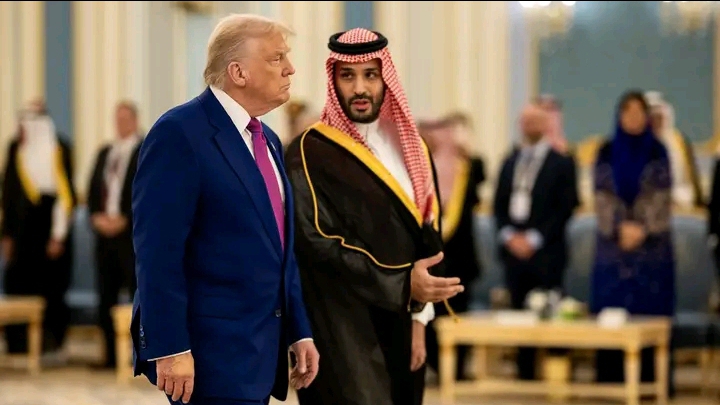

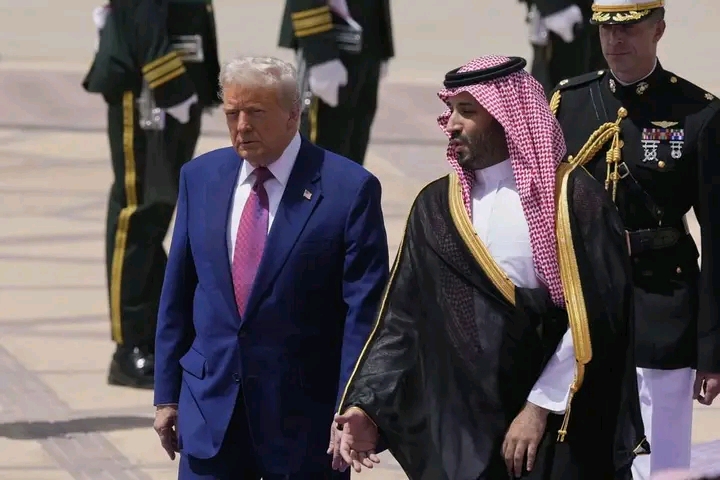
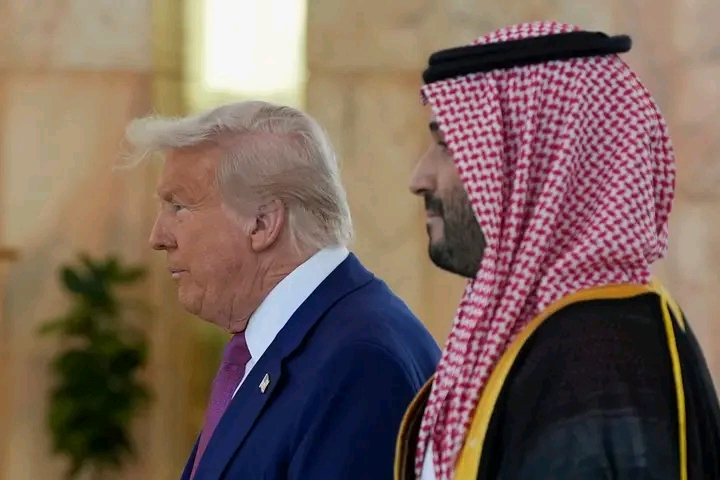
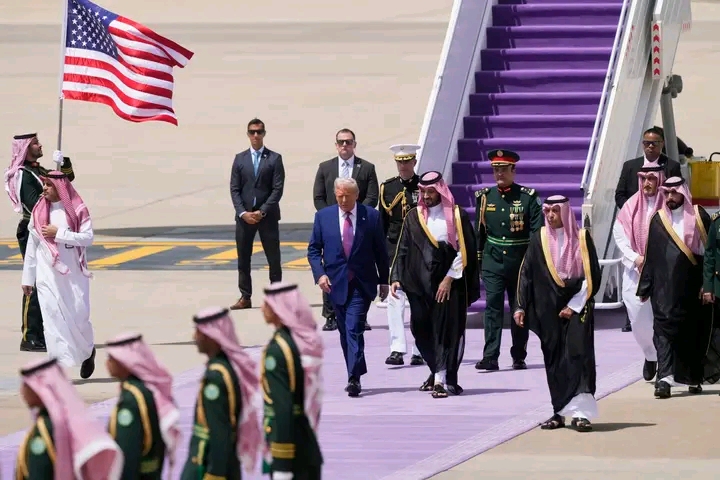
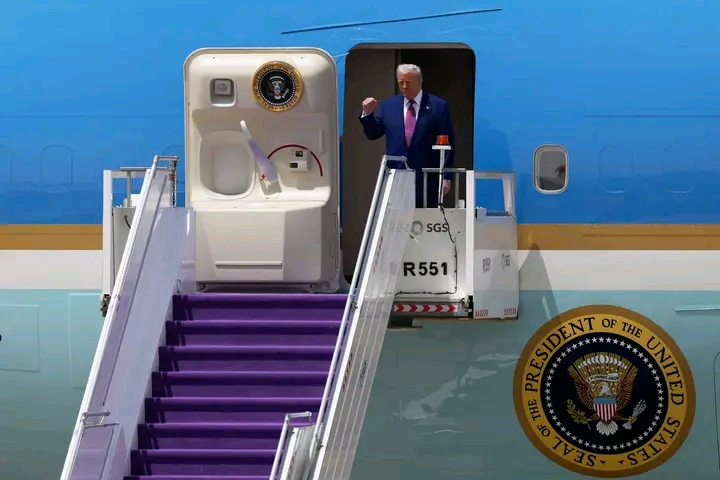
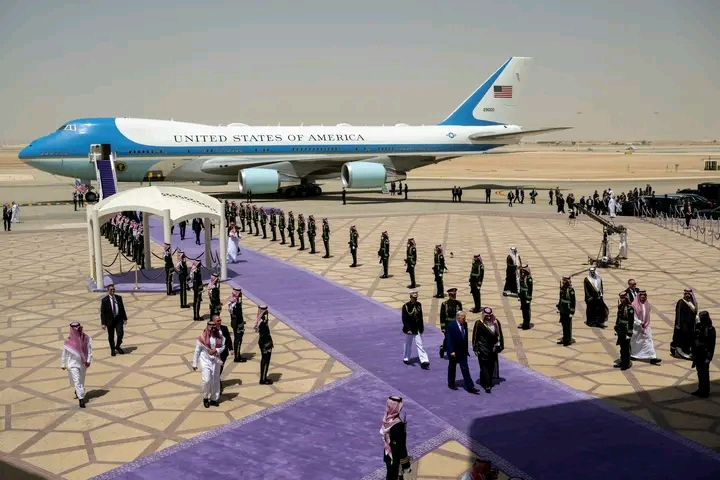
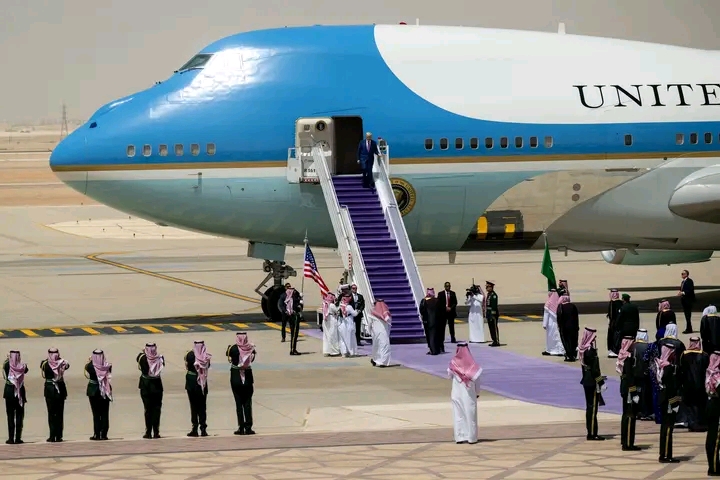
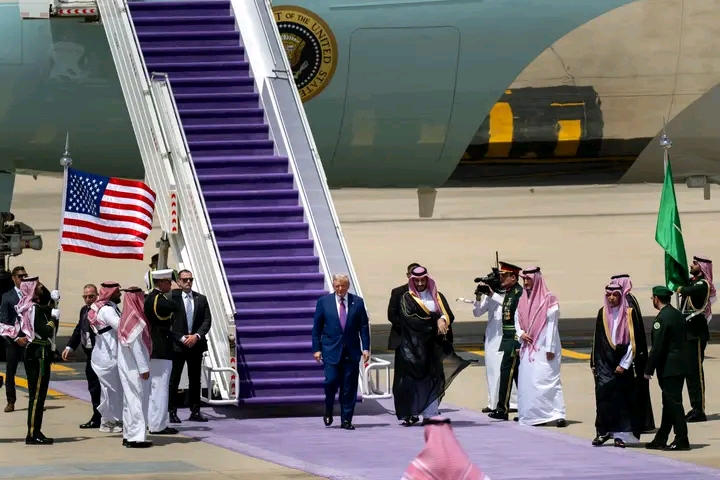
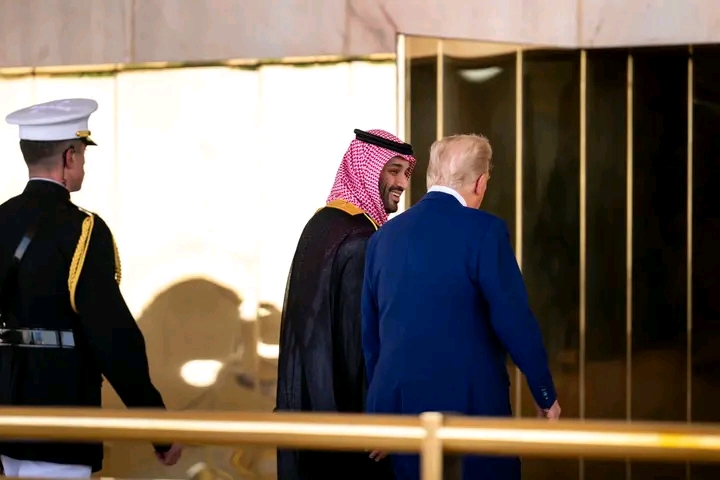
Riyadh, Saudi Arabia| United States President Donald Trump received a grand reception in Saudi Arabia on Tuesday as he commenced his first international trip of his second presidential term.
In a ceremonious display of diplomatic pageantry and strategic economic alignment, the Kingdom announced business agreements worth hundreds of billions of dollars with the U.S., with an emphasis on defense, technology, and artificial intelligence.
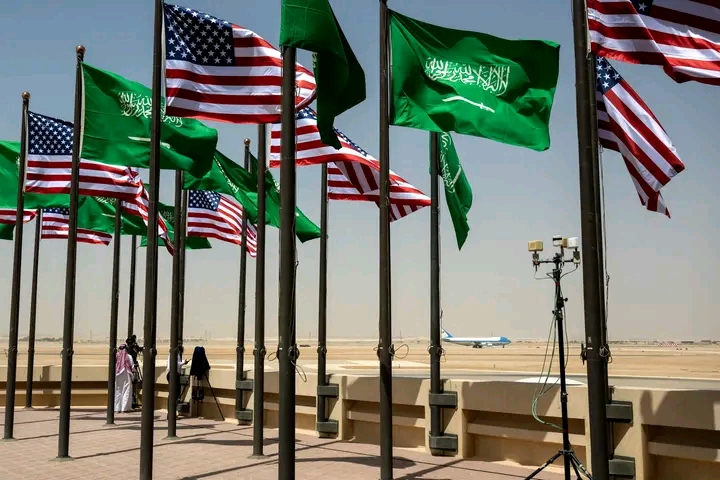
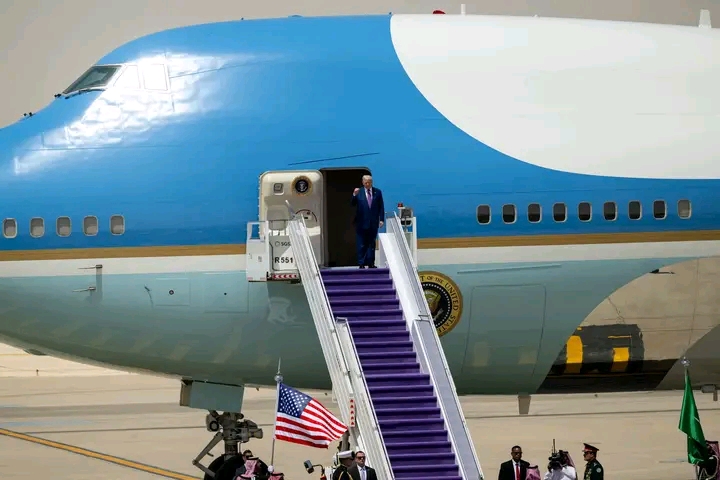
Air Force One was escorted into Saudi airspace by a fleet of Royal Saudi Air Force fighter jets, underscoring the symbolic importance of the visit.
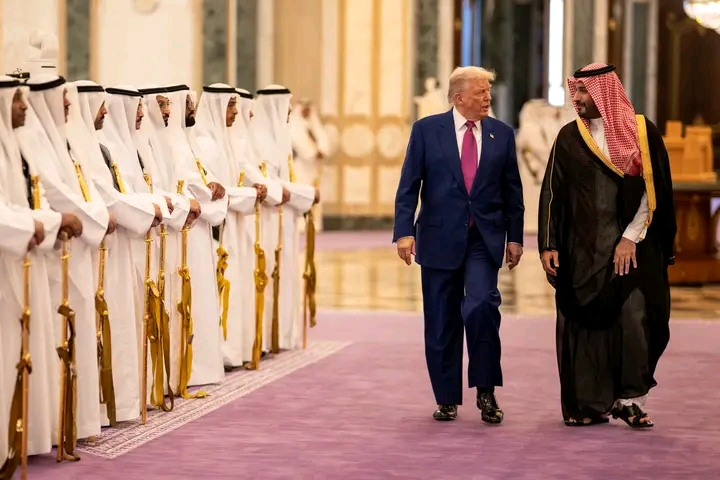
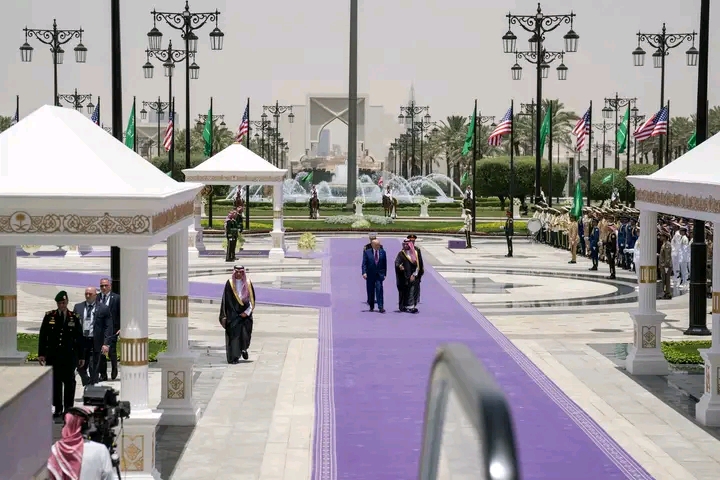
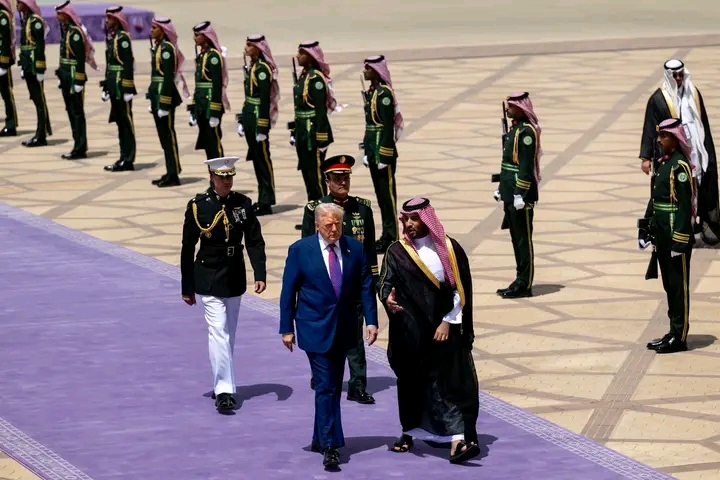
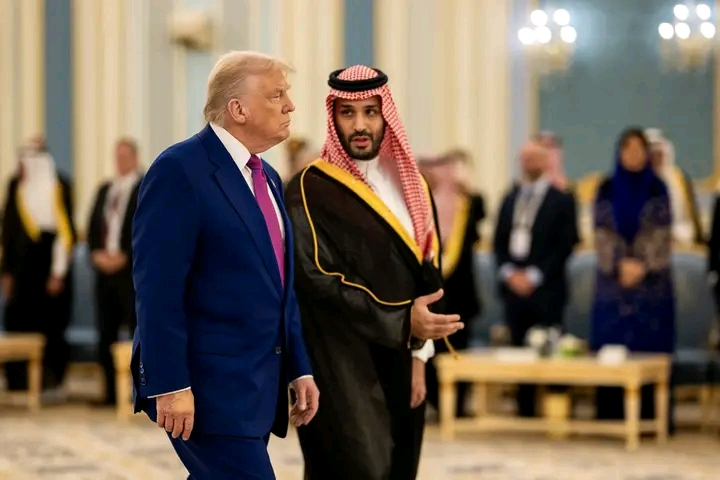
On arrival at King Khalid International Airport’s Royal Terminal, Trump was welcomed personally by Crown Prince Mohammed bin Salman (MBS).
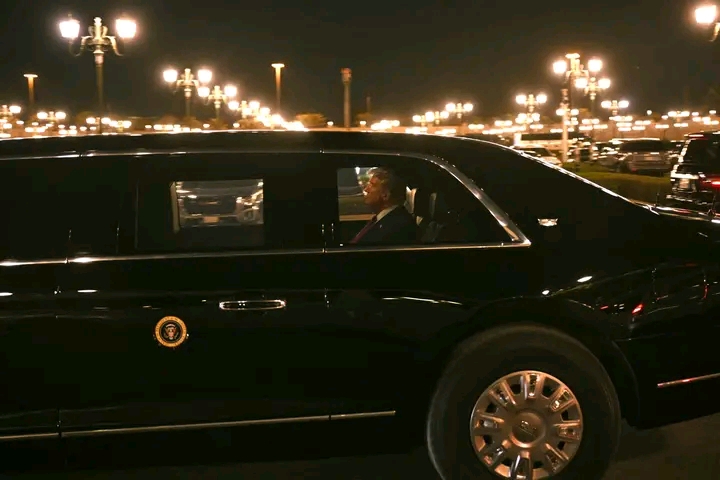
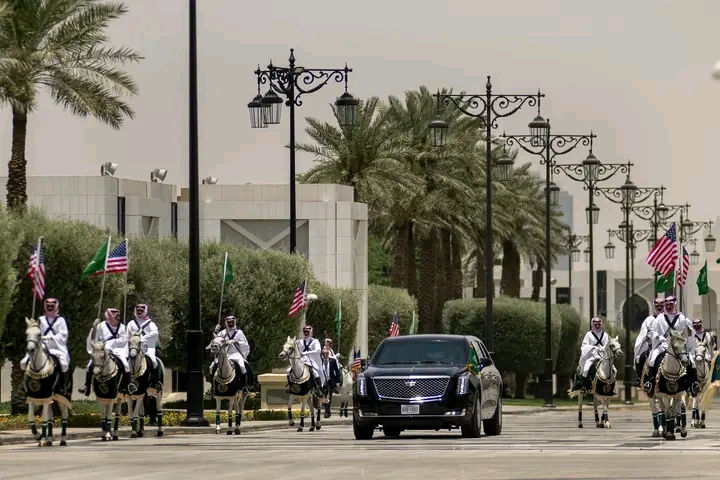
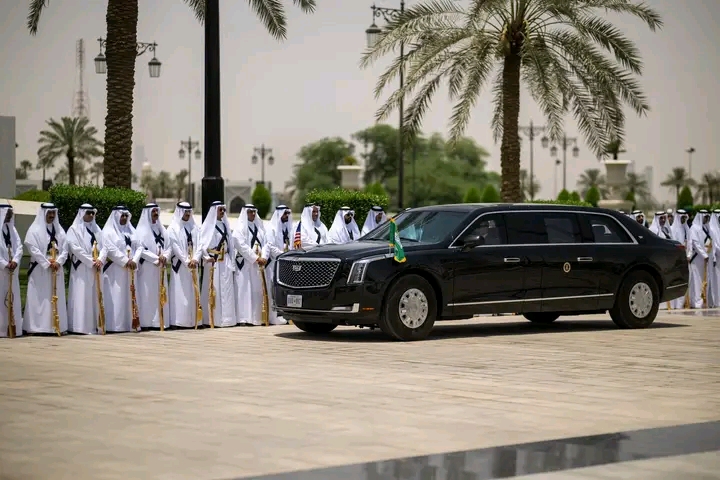
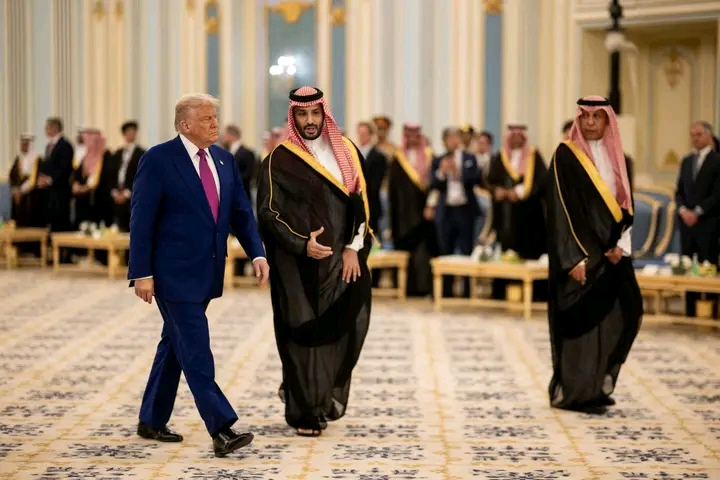
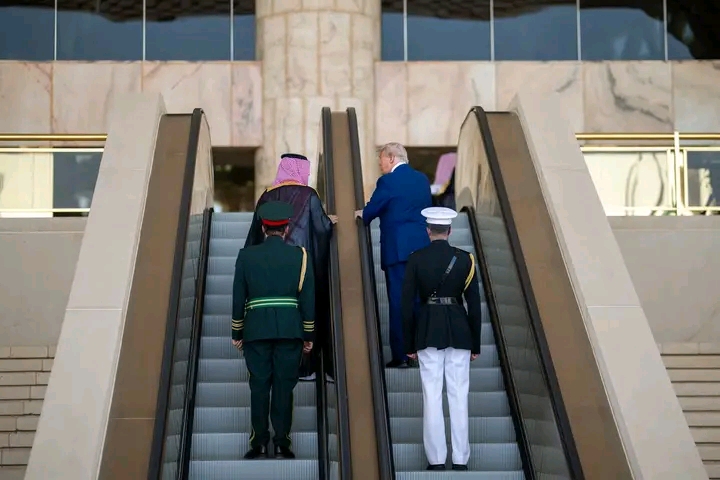
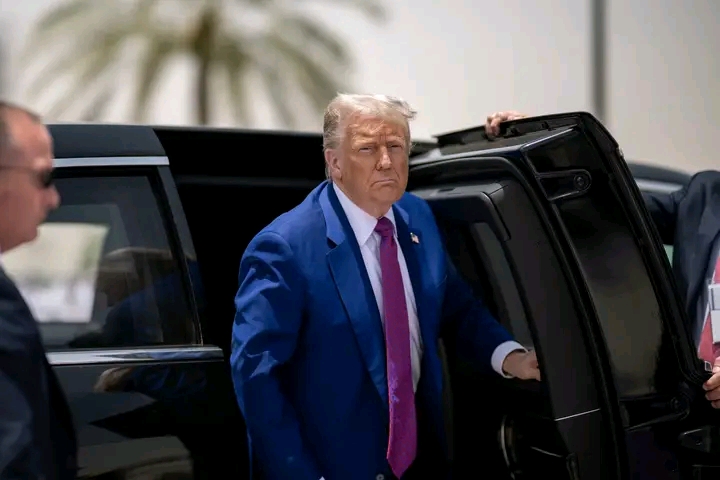
A flag-waving cavalry and an extensive honor guard accompanied his motorcade to the royal palace in Riyadh, where meetings unfolded under glittering chandeliers and with a long procession of Saudi royals and top business leaders in attendance.
The Crown Prince pledged an investment package totaling $600 billion in the U.S. economy, spanning sectors such as defense, energy, artificial intelligence, and transportation.
President Trump, known for his flair for hyperbole, quipped that the figure could rise to $1 trillion.
Unprecedented Defense and Technology Deals
At the heart of the engagements was a defense agreement valued at $142 billion—described by the White House as one of the largest such deals in U.S. history.
The package includes advanced military equipment and services sourced from over a dozen American defense firms.
Among other components, the deal encompasses the delivery of GE gas turbines and cutting-edge energy technologies worth $14.2 billion and Boeing 737-8 commercial airliners valued at $4.8 billion.
In a parallel announcement, Saudi technology firm DataVolt committed $20 billion toward constructing artificial intelligence and data infrastructure facilities within the United States, signaling a new frontier of cooperation between the two nations in high-tech development.
American technology giants, including Google, also announced bilateral investment plans that will benefit both the U.S. and Saudi Arabia.
These initiatives mark a strategic step forward for the Kingdom, which has historically encountered restrictions accessing certain U.S. technologies.
The push aligns with Saudi Arabia’s broader Vision 2030 plan aimed at reducing dependence on oil exports and modernizing its economy.
Symbolism, Strategy, and Diplomacy
This visit mirrors Trump’s first international trip in 2017—also to Saudi Arabia—where he famously participated in a sword dance and a mysterious ceremony involving a glowing orb.
The decision to revisit Riyadh as the first stop of his second term once again diverges from the traditional diplomatic route taken by most U.S. presidents, who typically prioritize visits to European allies.
In contrast, Trump’s itinerary includes Qatar and the United Arab Emirates (UAE), both key Gulf allies with extensive economic and personal ties to his administration.
The trip highlights Trump’s ongoing pivot towards strategic energy partners and high-value investment diplomacy in the Middle East.
Regional Dynamics and Geopolitical Undercurrents
The visit also comes amid shifting geopolitical currents. Unlike his predecessor, President Joe Biden, whose administration maintained a more cautious posture toward Riyadh—particularly following the 2018 killing of journalist Jamal Khashoggi—Trump has consistently expressed confidence in Crown Prince Mohammed bin Salman’s leadership.
During their meeting, he lauded the Crown Prince as “a wise and impressive leader” despite his relative youth.
Trump’s warm reception in the Kingdom stands in contrast to Western discomfort with his diplomatic style. Nevertheless, Gulf leaders appear to view Trump not just as a global powerbroker but also as a business ally.
Jon Alterman, a regional expert at the Center for Strategic and International Studies, observed that Gulf monarchies “treat Trump and his family with deference and see them as reliable partners for strategic and commercial collaboration.”
Saudi Arabia, meanwhile, is stepping up its role in global diplomacy, including hosting talks related to the ongoing war between Ukraine and Russia.
Similarly, Qatar has taken a leading role in mediating ceasefire discussions between Israel and Hamas, working alongside the U.S. and Egypt.
Iran Tensions Loom in the Background
While Trump focuses on economic diplomacy, underlying tensions between the U.S. and Israel over Iran’s nuclear program are intensifying.
Israel has issued firm warnings about Iran’s uranium enrichment activities, with Foreign Minister Gideon Saar declaring that Iran must be prevented from acquiring dangerous technologies.
Although Tehran insists its nuclear program is purely for civilian energy purposes, Israeli leaders remain skeptical.
Israeli President Isaac Herzog emphasized dialogue but did not rule out the possibility of unilateral measures should negotiations with Iran collapse.
Meanwhile, Trump’s administration appears to be exploring diplomatic overtures with Iran—an approach that may further strain relations with America’s traditional Middle East ally.
A Calculated Return
As President Trump continues his Gulf tour with stops in Doha and Abu Dhabi, the visit underscores a deliberate return to the region with the dual aims of solidifying economic partnerships and repositioning the U.S. as a central player in Gulf security and technological advancement.
The sheer scale of the deals announced, along with the spectacle of the welcome Trump received, illustrates a potent combination of diplomacy, economics, and optics—marking a defining moment in the evolving U.S.-Gulf alliance.
Reporting from Riyadh
Share This Post