
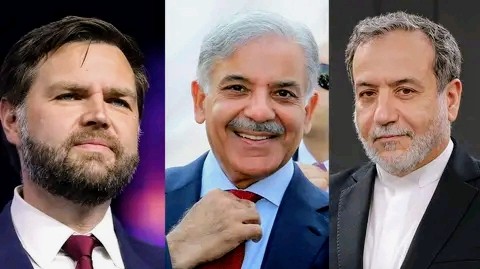

Islamabad, Pakistan| In a high-stakes diplomatic gambit playing out past midnight in Pakistan’s capital, envoys from the Islamic Republic of Iran and the United States are engaged in intensive indirect negotiations.
This is despite profound and persistent differences that have long defined one of the world’s most adversarial relationships.
According to an informed source speaking to the Islamic Republic News Agency (IRNA), the two sides are continuing to exchange messages in a new round of talks hosted by Islamabad.
The negotiations, described as “intensive,” have stretched into the late hours, with discussions reportedly continuing around midnight local time.
While the very fact of dialogue signals a mutual desire to de-escalate, the path forward remains obstructed.
A source familiar with the proceedings told IRNA that “Washington’s addiction to excessive demands” has become the primary impediment to meaningful progress.
The remark underscores the deep-seated mistrust that continues to shadow even back-channel communications between the longtime foes.
The Iranian delegation, according to the source, is now offering the American team what it calls “the last opportunities”—a pointed diplomatic turn of phrase intended to gauge Washington’s genuine seriousness in reaching a framework agreement that could advance negotiations beyond procedural exchanges.
A Fragile Ceasefire After 40 Days of War
The Islamabad talks are not happening in a vacuum. They follow a devastating 40-day war imposed, as the IRNA report describes, by the United States and the Israeli regime on Iran.
While the exact nature and scope of the conflict remain subject to varying international accounts, what is clear is that the two warring parties have agreed to a two-week-long ceasefire—a truce brokered by Pakistan after weeks of both covert and overt mediation.
The diplomatic initiative was first proposed by Pakistani Prime Minister Shehbaz Sharif, who has positioned Islamabad as an unlikely but increasingly indispensable bridge between Tehran and Washington.
After weeks of quiet shuttle diplomacy and public appeals for restraint, Sharif’s proposal came to fruition, culminating in talks that began on Saturday, April 11, 2026.
High Stakes, Low Expectations?
The venue—Pakistan’s capital—is itself a statement. Islamabad has long maintained ties with both Iran and the United States, navigating a delicate geopolitical balancing act.
Hosting these talks bolsters Pakistan’s regional stature as a mediator, even as the odds of a breakthrough remain uncertain.
For Iran, the talks represent an opportunity to test American willingness to move beyond what Tehran views as unilateral and excessive conditions.
For Washington, the challenge lies in reconciling its security commitments—particularly to Israel—with the urgent need to prevent a wider conflagration.
As midnight falls on Islamabad, the message from the Iranian side is clear: doors remain open, but patience is wearing thin.
Whether the coming days yield a framework for lasting peace or a return to hostilities may depend on how seriously the United States responds to what Iran calls its “last opportunities.”
This is a developing story. Further updates will follow as negotiations continue behind closed doors in Pakistan’s capital.
Share This Post