
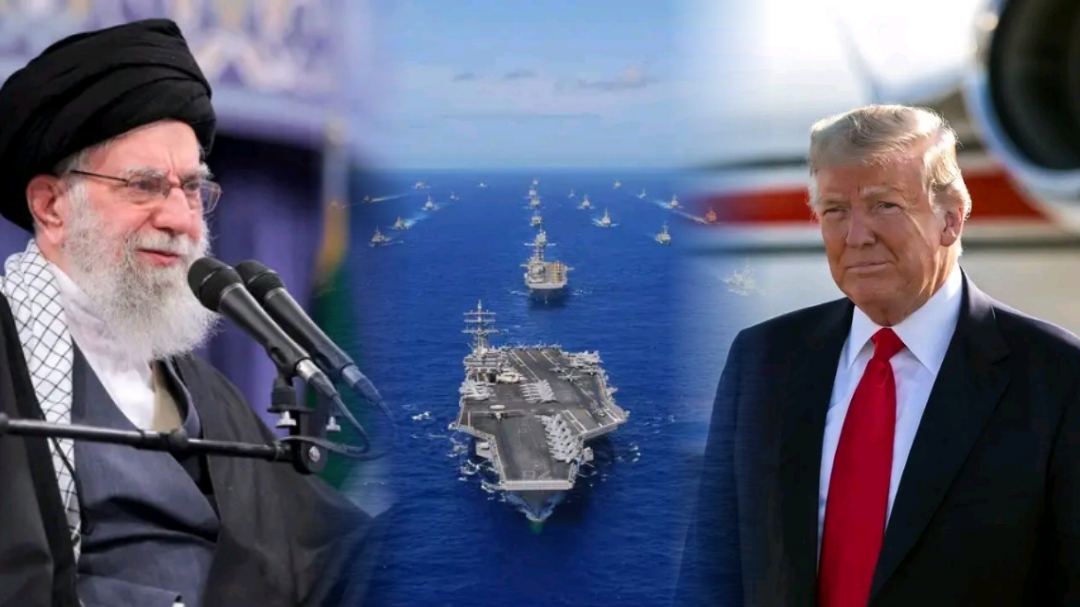

As of February 20, 2026, the United States and Iran find themselves locked in the most dangerous confrontation in years, with the 2026 US-Iran crisis pushing the region toward a potential military flashpoint.
At the heart of the standoff lie Iran’s advancing nuclear program, its expanding ballistic missile arsenal, and its continued backing of proxy militias across the Middle East.
Over the past week, credible reports of imminent American strikes, possibly coordinated with Israel, have surged as indirect nuclear negotiations have stalled and the Pentagon has assembled one of the most formidable US force concentrations in the Persian Gulf and Arabian Sea since the 2003 invasion of Iraq.
No attack has been launched yet, and President Donald Trump has yet to issue final orders, but the window for peaceful resolution is closing rapidly.
Diplomatic Efforts Reach a Critical Crossroads
Indirect talks between Washington and Tehran, mediated by Oman and supported by other regional players, have resumed in recent weeks but remain deeply fragile.
The first session held in Muscat on February 6 was characterized by both sides as a constructive beginning.
A follow-up round in Geneva on February 17 achieved modest headway on establishing guiding principles and pinpointed key technical hurdles, yet wide divergences persist on core issues. Iran has agreed to return to the negotiating table in approximately two weeks.
The United States continues to insist on the complete elimination or severe restriction of uranium enrichment on Iranian soil, the full transfer of Iran’s remaining stockpile of approximately 400 kilograms of enriched uranium, tight limits on ballistic missile development, and an immediate halt to Tehran’s financial and military support for groups including Hezbollah, Hamas, and the Houthis.
Iranian officials categorically reject any demand for zero enrichment, insisting on their sovereign right to maintain a peaceful nuclear energy program. They also view any concessions on missiles or regional allies as unacceptable threats to national security.
On February 19, President Trump delivered a blunt public message, declaring that the world would know within roughly ten days whether a diplomatic breakthrough was possible or whether “bad things will happen.”
A senior Trump adviser informed Axios that internal assessments place the probability of kinetic military action in the coming weeks at approximately 90 percent.
The White House has repeatedly stressed that Iran would be “very wise” to accept a comprehensive agreement while keeping every option, including military force, firmly on the table.
Unprecedented American Military Buildup in the Persian Gulf
In a display of raw power projection, the Pentagon has rapidly deployed an extraordinary array of naval, air, and support assets across the Middle East.
Officials describe the current concentration as among the largest since the lead-up to the Iraq War, granting President Trump the capacity for immediate, sustained, or even weeks-long strikes against Iranian nuclear facilities, missile bases, weapons depots, and potentially higher-value regime targets.
Two full aircraft carrier strike groups now anchor this formidable presence. The USS Abraham Lincoln and its escort ships, including multiple Arleigh Burke-class destroyers, have patrolled the Arabian Sea for nearly a month, positioned roughly 240 kilometers off the Omani coast and approximately 700 kilometers from Iranian shores.
On board are squadrons of advanced F-35 Lightning II stealth fighters, F/A-18 Super Hornets, EA-18G Growler electronic warfare aircraft, and more than 5,600 sailors and aviators ready for high-intensity operations.
Meanwhile, the world’s largest carrier, the nuclear-powered USS Gerald R. Ford, along with Carrier Strike Group 12, is steaming toward the region after departing the Caribbean and Mediterranean.
Its Automatic Identification System briefly activated off Morocco on February 19, confirming its eastward transit, with full integration into the theater expected within days.
Supporting these carriers are roughly twelve additional US warships operating throughout the Middle East, including guided-missile destroyers stationed in the Persian Gulf, the eastern Mediterranean, and the Red Sea.
At least three specialized vessels remain on station at the US naval base in Bahrain, while submarines and logistical support ships complete the naval armada.
In the skies, squadrons of F-35s and F-22 Raptors, backed by KC-135 and KC-46 refueling tankers and E-3 Sentry airborne warning and control aircraft, stand ready at bases across Qatar, the United Arab Emirates, and Iraq. This aerial component can generate hundreds of combat sorties per day for extended periods.
On the ground, between 40,000 and 50,000 American troops are positioned at key regional installations, providing logistics, intelligence, and command support for a prolonged campaign.
Pentagon sources emphasize that no large-scale ground invasion is contemplated, focusing instead on precision air and naval strikes.
The acceleration of this buildup began in late January and early February 2026. By February 18, multiple outlets including CNN and CBS reported that forces were positioned for possible action as early as that weekend, though full operational readiness could extend into mid-March.
Recent incidents have only heightened the tension: on February 3, a US F-35 operating near the Abraham Lincoln downed an Iranian Shahed-139 drone in the Arabian Sea, while US escorts thwarted an Iranian Revolutionary Guard Corps attempt to seize an American tanker in the Strait of Hormuz.
High Probability of Strikes as Trump Weighs Final Decision
Leading news organizations, among them CNN, Reuters, The New York Times, The Washington Post, Axios, and the Institute for the Study of War, consistently report that the US military has presented President Trump with detailed strike options and that he has been actively briefed.
Sources describe potential joint US-Israeli operations as “massive,” “weeks-long,” and potentially “existential” for the Iranian regime.
Israel has elevated its military alert levels and is preparing contingency plans of its own.
Prediction markets such as Polymarket currently assess the likelihood of a US strike by the end of March at approximately 57 percent, a sharp rise from earlier in the month.
Target lists are believed to focus on fortified nuclear sites, ballistic missile installations, command-and-control centers, and storage facilities.
While Trump has not yet authorized any operation, his growing frustration with the pace of diplomacy has been unmistakable.
Iran’s Defiant Posture and Defensive Preparations
Tehran has responded with a mixture of public defiance and continued engagement in talks on its own terms.
On February 17, Supreme Leader Ali Khamenei firmly rejected any notion of zero enrichment or restrictions on missiles, warning that Iran could deliver a blow so severe that even the strongest military would be unable to recover.
Iranian naval forces conducted live-fire missile drills in the Strait of Hormuz the same day.
Beginning February 19, Iran, Russia, and reportedly China launched the “Maritime Security Belt 2026” joint exercises in the Gulf of Oman and near the Strait of Hormuz, focusing on counter-piracy and search-and-rescue operations.
Additional measures include the recent seizure of two foreign tankers in the Persian Gulf on February 5, the deployment of Ghadir-class mini-submarines in shallow coastal waters, and accelerated fortification of nuclear facilities using concrete bunkers visible in commercial satellite imagery.
Iranian leaders have threatened missile barrages against US bases, Israeli targets, and commercial shipping, along with the possible closure of the Strait of Hormuz should conflict erupt.
Despite facing domestic challenges, including the aftermath of deadly crackdowns on anti-government protests in late 2025 and early 2026, Iranian authorities appear convinced that limited confrontation carries less long-term risk than outright capitulation.
Global Risks and the High-Stakes Calculus
Any American or joint strike would carry significant dangers. Iran possesses the capability to retaliate with ballistic missiles, activate proxy forces such as the Houthis in the Red Sea, and disrupt global oil flows, potentially driving energy prices sharply higher.
Russia and China maintain a symbolic naval presence in the area and could escalate their involvement.
Although US and Israeli air and naval superiority is described as overwhelming, Iran’s asymmetric arsenal and hardened defenses could still impose painful costs.
Reports indicate that the United Kingdom has denied the use of certain British bases for potential operations. No large-scale deployment of American ground forces is anticipated.
The Critical Ten Days Ahead
As February 20, 2026 dawns, diplomacy continues under extreme pressure. The unprecedented concentration of American naval and air power in and around the Persian Gulf and Arabian Sea, coupled with explicit timelines and internal assessments approaching 90 percent confidence in military action, has transformed the threat of strikes from speculative to genuinely credible within days or weeks.
President Trump’s decision in the coming ten days will likely chart the course toward either de-escalation or open conflict.
Every capital from Washington to Tehran, Jerusalem to Beijing, and every global market is watching with heightened vigilance as the most volatile chapter in recent US-Iran relations unfolds in real time.
Share This Post