
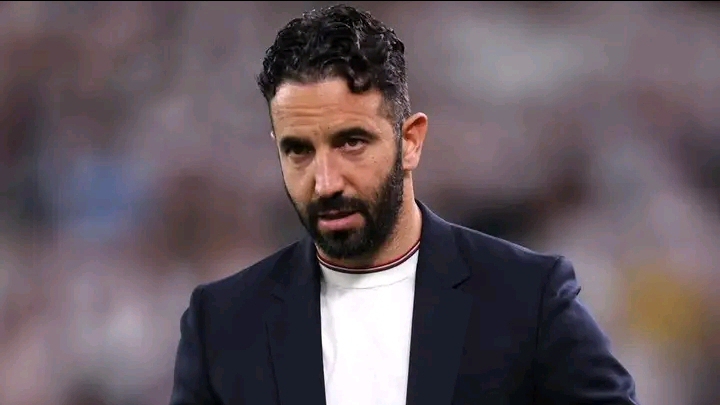

In the wake of Ruben Amorim’s abrupt sacking from Manchester United on January 6, 2026, football enthusiasts and analysts alike are reflecting on the Portuguese manager’s illustrious career prior to his ill-fated stint at Old Trafford.
While his time in England ended in disappointment, marked by a poor record and internal tensions, Amorim’s tenure at Sporting CP stands as a beacon of success, innovation, and club transformation.
Hired in March 2020 amid financial controversy as one of the most expensive managerial acquisitions in history, Amorim not only ended long-standing title droughts but also instilled a winning culture, developed a pipeline of elite talents, and elevated Sporting to European prominence.
This exploration delves into the depths of his legacy, examining how a young coach reshaped one of Portugal’s storied clubs into a modern powerhouse.
The Appointment: A Bold Gamble That Paid Dividends
Ruben Amorim’s journey at Sporting CP began on March 4, 2020, when he was appointed following the dismissal of Silas.
At just 35 years old, Amorim arrived from Braga with a €10 million release fee paid by Sporting, making him the third-most expensive manager ever at the time and signing a contract until June 2023 with a €20 million buyout clause.
This move was a high-stakes investment for a club grappling with instability, including a infamous 2018 incident where fans attacked players and staff at the training ground, leading to a toxic atmosphere and a mass exodus of talent.
Sporting had endured a 19-year wait for a Primeira Liga title and had only claimed four major trophies in the preceding decade, overshadowed by rivals Benfica and Porto.
Amorim’s early days were defined by immediate impact. In his debut season (2019–20), he steadied the ship, but it was the 2020–21 campaign that announced his arrival.
Guiding Sporting to an unbeaten run of 32 league matches—with just one loss overall—he secured the Primeira Liga title, ending the prolonged drought, alongside the Taça da Liga.
This double triumph earned him the Primeira Liga Manager of the Year award, signaling the dawn of a new era where Sporting reclaimed its status as a title contender.
Tactical Innovation: Building a Resilient and Attacking Machine
Central to Amorim’s success was his tactical acumen, which blended pragmatism with flair.
He predominantly deployed a 3-4-3 formation, inherited from his brief spells at Casa Pia and Braga, featuring two defensive midfielders to shield a back three while empowering attacking wing-backs to stretch the pitch.
This setup emphasized intense pressing in the opponent’s final third, exploiting wings and half-spaces, and transitioning to a compact low block when defending.
Players like Pedro Porro and Nuno Mendes thrived as dynamic wing-backs, while midfield anchors such as João Palhinha and Matheus Nunes provided balance.
Influenced by mentors like Jorge Jesus for intensity, José Mourinho for adaptive opponent analysis, and Pep Guardiola for possession elements, Amorim evolved his style over time.
By the 2024–25 season, he shifted toward more dominant possession and high pressing, leading Sporting to a perfect start with 10 consecutive Primeira Liga wins, the most goals scored, and fewest conceded in the league.
This adaptability turned Sporting into a “powerhouse,” as described in tactical breakdowns, where the team not only dominated domestically but also made strides in Europe, reaching the Champions League round of 16 in 2021–22 for the first time since 2008–09 and the Europa League quarter-finals in 2022–23, including a memorable penalty shootout victory over Arsenal.
Amorim’s philosophy fostered a collective spirit, where every player felt integral, contrasting with individualistic approaches elsewhere.
This cohesion was evident in high-stakes matches, such as the 2–0 win over Porto in December 2023 that snapped an eight-game winless streak against them, or the 4–1 thrashing of Manchester City in the Champions League in November 2024, cementing his status as Sporting’s most successful coach in the competition.
Trophy Cabinet and Statistical Dominance
Amorim’s trophy haul at Sporting is a cornerstone of his legacy. Over 231 matches, he amassed 164 wins, 34 draws, and 33 losses—a staggering 71% win rate.
Key honors included two Primeira Liga titles (2020–21 and 2023–24), two Taça da Liga triumphs (2020–21 and 2021–22), and the 2021 Supertaça Cândido de Oliveira. In 2021–22, Sporting defended their Taça da Liga with a 2–1 victory over Benfica and added the Supertaça via a 2–1 win against Braga.
Even in challenging seasons, like 2022–23 when the team finished fourth domestically amid a player exodus, Amorim’s resilience shone through with European exploits.
His final act before departing for Manchester United in November 2024 was a 4–2 win over Braga, equaling the club’s best-ever league start with 11 consecutive victories.
Statistically, his 2024–25 Sporting side outperformed his later Manchester United team in every metric, from win percentage to goals scored per game, highlighting the stark contrast in environments.
Nurturing Talent: A Pipeline of Stars
One of Amorim’s most enduring contributions was his commitment to youth development, aligning with Sporting’s renowned academy.
He promoted and honed talents like Gonçalo Inácio, Matheus Nunes, Nuno Mendes, Daniel Bragança, Tiago Tomás, and Geovany Quenda, integrating them seamlessly into the first team.
Pedro Gonçalves emerged as a star, netting 23 goals in the 2020–21 title-winning season, while record signing Viktor Gyökeres (£17 million in 2023) became a prolific striker under his guidance.
Despite selling key assets—Palhinha to Fulham, Nunes to Wolves—Amorim rebuilt effectively, replacing them with players like Morten Hjulmand and Hidemasa Morita.
This approach not only sustained success but also generated significant transfer revenue, bolstering the club’s finances.
Fans and analysts praise this as a “dynasty-building” effort, with Amorim’s focus on young players creating a sustainable model that extended beyond trophies to cultural impact.
Broader Impact and Reflections Post-Departure
Amorim’s influence transcended results, rejuvenating a club mired in discord by fostering unity and a “winning mentality.”
He navigated crises, such as the 2022–23 rebuild, to deliver European highs and domestic consistency, earning accolades like “studious coach with intuition” from peers.
His departure in November 2024 left Sporting atop the league, a testament to the foundation he built, though some fans lamented the unfinished project.
Recent social media reflections, even amid his United sacking, underscore this legacy. One fan noted how Amorim’s tactics and spirit turned Sporting into a “dominant force,” while older posts from 2024 urged him to stay for continued growth and community impact.
Analysts highlight his “unshakeable team spirit” and ability to break droughts, as seen in video breakdowns of his unique approach.
Ultimately, Ruben Amorim’s legacy at Sporting CP is one of revival and excellence. He transformed a struggling giant into a serial winner, blending tactical prowess with inspirational leadership.
As he moves forward post-United, his time in Lisbon remains a blueprint for managerial success, inspiring clubs worldwide to invest in vision, youth, and resilience.
Whether viewed through trophies, statistics, or the stars he launched, Amorim’s era at Sporting endures as a golden chapter in Portuguese football history.
Share This Post