
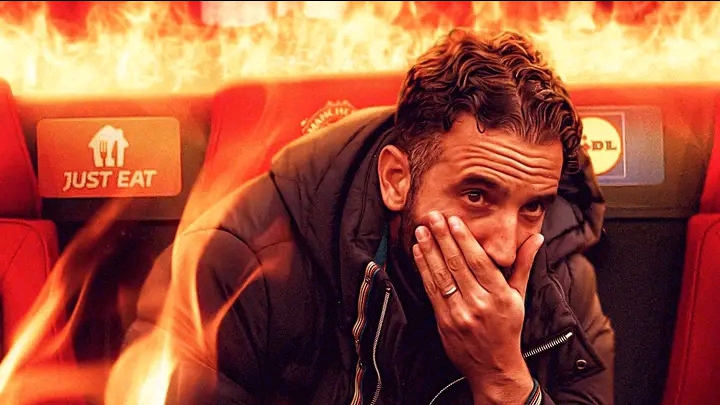

In a stunning development that has sent shockwaves through the football world, Manchester United has officially sacked head coach Ruben Amorim following a dismal run of form that has left the club languishing in the Premier League standings.
The decision, announced on January 6, 2026, marks the end of Amorim’s turbulent tenure at Old Trafford, where high expectations quickly gave way to mounting frustrations.
Club legend Darren Fletcher has been appointed as interim manager until the end of the season, bringing a fresh perspective and a proven track record from his time with the youth academy.
The Fall of Amorim: A Promising Start Turns Sour
Ruben Amorim arrived at Manchester United in November 2024 with immense hype, fresh off his success at Sporting CP where he had masterminded league titles and a reputation for tactical innovation.
His appointment was seen as a bold move by the club’s hierarchy, aiming to inject a modern, possession-based style into a team still reeling from years of inconsistency post-Sir Alex Ferguson.
However, the Portuguese manager’s time in charge has been plagued by inconsistent results, defensive frailties, and public clashes with the board.
Over 63 games across all competitions, Amorim’s record paints a picture of underachievement: 25 wins, 15 draws, and 23 losses. The team scored 122 goals but conceded 114, highlighting a leaky defense that often undermined any attacking flair.
This win percentage of just under 40% represents the worst managerial record at United since the legendary Sir Alex Ferguson retired in 2013, a statistic that has drawn sharp criticism from fans and pundits alike.
The final straw appears to have been a string of poor performances, including embarrassing defeats in domestic cups and a failure to mount a serious challenge for European spots, culminating in vocal dissatisfaction from key players and staff.
Former United defender and club icon Rio Ferdinand weighed in on the sacking, expressing a mix of surprise and inevitability. “I am surprised but when you look at his record, in black and white, I’m not surprised,” Ferdinand stated in a candid interview.
He pointed to the swift nature of the decision, noting, “I think that has been definitive and the reason it’s been so sharp overnight. Two managers have spoken out against the hierarchy now and been sacked immediately. But his record is the worst of any United manager since Sir Alex Ferguson.”
Ferdinand’s comments underscore the growing tensions at the club, where managerial instability has become a recurring theme.
Amorim joins a list of recent casualties, including Erik ten Hag, whose own criticisms of the club’s structure preceded his exit.
The sacking comes amid broader scrutiny of Manchester United’s ownership and executive decisions under INEOS, led by Sir Jim Ratcliffe.
Critics argue that the club has failed to provide adequate support in the transfer market, with injuries to star players like Marcus Rashford and Bruno Fernandes exacerbating on-pitch issues.
Amorim himself had publicly questioned the squad’s depth and the board’s ambition, statements that reportedly accelerated his departure.
This move raises questions about the club’s long-term strategy, as United now seeks its fourth permanent manager in less than a decade.
Darren Fletcher: A Club Stalwart Takes the Helm
Stepping into the breach is Darren Fletcher, a 41-year-old former midfielder who spent over a decade as a player at Old Trafford, winning multiple Premier League titles and the Champions League under Ferguson.
Fletcher’s transition to coaching has been seamless, earning him plaudits for his work with the Under-18s team.
His appointment as interim manager until the season’s end is viewed as a stabilizing force, allowing the club time to identify a long-term successor while leveraging Fletcher’s deep understanding of United’s ethos.
Fletcher’s record with the U18s speaks volumes about his potential: in 15 games, he secured 9 wins and suffered only 4 defeats, amassing a points-per-game average of 1.93.
His sides scored 32 goals while conceding just 11, showcasing an attacking philosophy that emphasizes fluid movement, youth integration, and defensive solidity—qualities that have been sorely missing from the senior team.
Pundits have praised Fletcher’s ability to develop young talents, with several academy graduates crediting him for their progression. This style could provide a much-needed boost to a squad desperate for inspiration.
As interim boss, Fletcher faces immediate challenges, including upcoming fixtures against top rivals and the need to rally a disillusioned dressing room.
His familiarity with the club could prove invaluable in restoring morale, but the pressure will be immense to deliver results and secure a respectable finish in the league.
Speculation is already rife about potential permanent replacements, with names like Thomas Tuchel, Graham Potter, and even a return for Ole Gunnar Solskjær being floated in media circles.
Implications for Manchester United’s Future
This managerial change is more than a personnel shift; it reflects deeper issues at one of football’s most storied institutions.
Manchester United’s fans, known for their passionate support, have expressed mixed reactions—some relieved by the end of Amorim’s era, others wary of yet another period of transition.
The club’s financial health remains robust, bolstered by global sponsorships and matchday revenues, but on-field success is crucial to maintaining that status.
Looking ahead, the board must address systemic problems, from recruitment to infrastructure, to avoid repeating the cycle of hires and fires.
Fletcher’s interim role offers a bridge to stability, but the search for a visionary leader who can restore United to the pinnacle of English and European football will be paramount.
As the season unfolds, all eyes will be on Old Trafford to see if this latest chapter signals a turning point or merely another footnote in a saga of unfulfilled potential.
Share This Post