

•The Escalation Comes Amid Historic Recognition
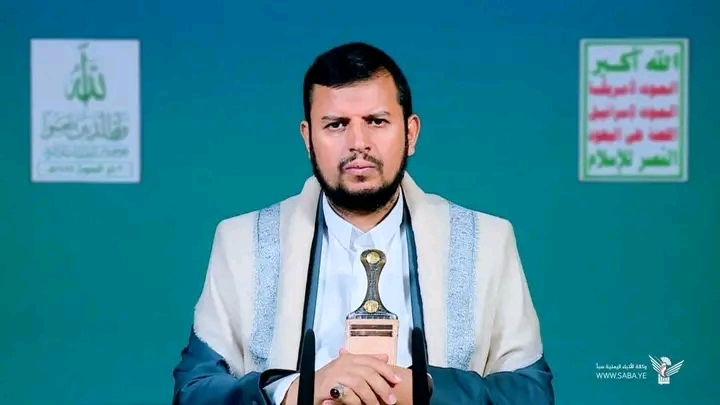
Sanaa, Yemen| Yemen’s Iran-backed Houthi rebel leader, Abdul-Malik al-Houthi, has issued a stark warning, declaring any Israeli presence in Somaliland a “legitimate military target” for his forces.
The threat comes just days after Israel became the first country to formally recognize the breakaway region of Somaliland as an independent sovereign state, escalating tensions in the strategically vital Horn of Africa and Red Sea region.
In a statement released on Sunday through Houthi-affiliated media, al-Houthi condemned Israel’s December 26 announcement as an “aggressive” and “hostile” act.
“We consider any Israeli presence in Somaliland a military target for our armed forces, as it constitutes aggression against Somalia and Yemen, and a threat to the security of the region,” he declared.
The Houthi chief further described the recognition as a “hostile stance targeting Somalia and its African surroundings, as well as Yemen, the Red Sea, and the countries along both shores of the Red Sea,” warning of “grave consequences” for regional stability.
Israel’s Groundbreaking Recognition of Somaliland
On December 26, Israeli Prime Minister Benjamin Netanyahu announced that Israel had signed a joint declaration with Somaliland’s President Abdirahman Mohamed Abdullahi (also known as Cirro), establishing full diplomatic relations.
Netanyahu, alongside Foreign Minister Gideon Sa’ar, framed the move as “in the spirit of the Abraham Accords” – the U.S.-brokered normalization agreements that have expanded Israel’s ties with several Arab and Muslim-majority nations since 2020.
Netanyahu highlighted plans for immediate cooperation in agriculture, health, technology, and economic development, while inviting the Somaliland president for an official visit to Israel.
Somaliland’s leadership hailed the recognition as a “historic milestone,” with President Abdullahi expressing aspirations to join the Abraham Accords and emphasizing commitments to regional peace, stability, and mutual prosperity.
Somaliland, a former British protectorate that declared independence from Somalia in 1991 following a brutal civil war, has functioned as a de facto independent state for over three decades.
It boasts its own government, currency, military, and democratic institutions, achieving relative stability compared to the Al-Shabaab insurgency-plagued Somalia. Despite this, it has lacked formal international recognition until Israel’s landmark decision.
Geopolitical Implications and Strategic Motivations
Israel’s move carries significant strategic weight, given Somaliland’s prime location on the Gulf of Aden, overlooking the Bab el-Mandeb Strait – a critical chokepoint for global maritime trade connecting the Red Sea to the Indian Ocean.
Analysts suggest the recognition could provide Israel with enhanced intelligence and operational capabilities to counter threats from the Houthis, who have repeatedly targeted Israeli-linked shipping and territory since the escalation of the Gaza conflict in 2023.
Reports indicate years of quiet engagement by Israel’s Mossad intelligence agency with Somaliland officials, underscoring the deal’s security dimensions.
The partnership may also bolster Israel’s Red Sea access amid ongoing disruptions caused by Houthi attacks, which have forced rerouting of global shipping and inflated costs.
Widespread International Condemnation
The recognition has provoked sharp backlash from Somalia and a broad coalition of regional and international actors.
Somalia’s government swiftly denounced it as an “unlawful step” and “deliberate attack” on its sovereignty, insisting Somaliland remains an “integral and inseparable” part of the country. President Hassan Sheikh Mohamud accused Israel of violating international norms.
Condemnations poured in from Egypt, Turkey, Djibouti, the European Union, the African Union (AU), the Arab League, the Gulf Cooperation Council, and the Organization of Islamic Cooperation.
The AU warned that recognizing breakaway regions sets a “dangerous precedent” threatening continental peace, while Egypt and others reaffirmed unwavering support for Somalia’s territorial integrity.
The United States has maintained its policy of recognizing Somalia’s unity, with President Donald Trump reportedly stating he would not follow Israel’s lead. Regional bodies have called for dialogue between Mogadishu and Hargeisa to resolve longstanding differences.
Escalating Regional Tensions
The Houthi threat adds another layer of volatility to an already tense region. The Iran-supported group, which controls much of northern Yemen including the capital Sanaa, has positioned itself as a defender of Palestinian causes and regional sovereignty.
Their warning signals potential for renewed confrontation, particularly as Israel has conducted airstrikes on Houthi targets in Yemen in response to prior attacks.
As celebrations erupted in Somaliland’s streets and diplomatic ripples continue, Israel’s bold diplomatic gambit underscores shifting alliances in the Horn of Africa.
Whether it paves the way for broader recognition of Somaliland or ignites further instability remains to be seen, but it has undeniably thrust the long-isolated region into the global spotlight.
Share This Post