

•This Comes Amid Allegations of Toxic Waste Dumping
In the arid expanses of Marsabit County, northern Kenya, a growing health crisis has gripped communities in areas like Kargi, Korr, Loglogo, Kalacha, and Hurri Hills.
Reports of a surge in throat and stomach cancer cases, potentially linked to contaminated water sources, have reignited long-standing fears of environmental pollution from historical oil exploration activities.
Former Marsabit County Assembly (MCA) member Assunta Galgidele has spearheaded calls for immediate scientific testing of local boreholes and shallow wells, warning that over 1,000 residents may have succumbed to these cancers in recent years.
While no definitive proof of contamination exists, allegations point to toxic or even nuclear waste dumped in the Chalbi Desert during the 1980s by multinational oil companies, prompting renewed investigations and lawsuits.
The concerns stem from a reliance on underground water sources in this semi-desert region, where nomadic pastoralist communities depend heavily on boreholes for drinking, cooking, and livestock needs.
Galgidele, who previously represented the Kargi-South Horr ward, has emphasized the vulnerability of these areas, noting that many boreholes were drilled near abandoned oil wells.
“The national and county governments must urgently conduct scientific tests on water sources in the county,” she stated, highlighting the disproportionate impact on local populations.
According to her accounts, the majority of fatalities have occurred in the aforementioned locales, with symptoms including severe throat pain, difficulty swallowing, and abdominal distress—hallmarks of esophageal and gastric cancers.
This alarm was amplified by investigative journalist Dennis Onsarigo, whose work has brought national attention to the issue.
In April 2024, Onsarigo posted on X (formerly Twitter) questioning a mysterious burial operation in the Chalbi Desert: “What is it they buried in the Chalbi Desert in Marsabit County that required those doing it to be dressed in protective gear, with the locals who took part complaining of severe burns, chest pains, and later difficulties with swallowing food?”
His query referenced eyewitness accounts of workers in hazmat suits handling unknown materials, with participating locals reportedly suffering immediate health effects.
Onsarigo’s earlier documentary, “Desert of Death,” produced in 2014 and followed up in 2015, documented dozens of cancer-related deaths attributed to contaminated water.
In the film, he traced the illnesses to toxic carcinogens allegedly buried in the 1980s, noting a higher prevalence of throat cancer in northern Kenya compared to national averages.
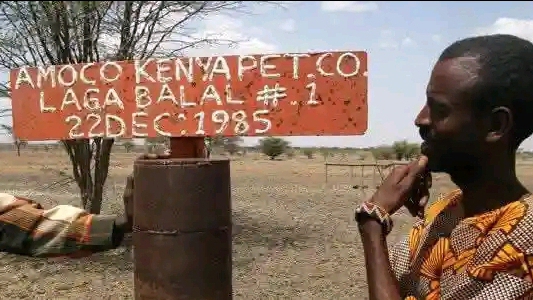
At the heart of these suspicions is the legacy of oil exploration by Amoco Kenya Limited, a subsidiary of the American multinational Amoco Corporation (now part of BP). In the 1970s and 1980s, amid high global oil prices, Amoco drilled exploratory wells in the Chalbi Desert, including sites in Kargi and Dukana locations.
The company abandoned the project after failing to find commercially viable reserves, but locals and activists allege that drilling waste—including potentially hazardous chemicals, heavy metals, or radioactive materials—was improperly disposed of, seeping into aquifers over decades.
A Greenpeace report from the early 2000s criticized Amoco for inadequate waste management, suggesting that residues from drilling muds and chemicals could have introduced carcinogens like benzene and polycyclic aromatic hydrocarbons into the groundwater.
These claims have fueled legal actions against the Kenyan government. In 2020, four residents from Marsabit filed a lawsuit in the Environment and Land Court, accusing the state of negligence in allowing toxic waste dumping and failing to mitigate health risks.
The petitioners linked a “cache of carcinogenic, hazardous waste” dumped in the desert to elevated cancer rates, demanding compensation and environmental remediation.
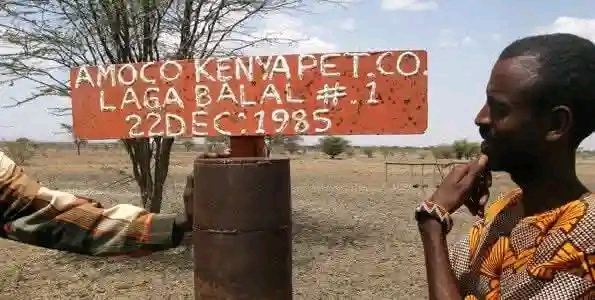
Similar concerns were raised in 2013 by media reports questioning whether Amoco’s wells were used as dumping sites for international waste, a practice allegedly common in Africa during that era.
More recently, in January 2025, a video circulated highlighting politician Cyrus Jirongo’s 2024 allegations of nuclear waste dumping in Kargi, with no subsequent government action despite mounting deaths.
By June 2025, Kenyan Members of Parliament initiated a probe into toxic waste claims in northern Kenya, questioning Marsabit Governor Nathif Jama on the matter.
Additionally, as of October 2025, a non-governmental organization has resumed investigations into the oil pollution scandal, focusing on nomadic communities’ exposure to cancer risks from the Chalbi Desert sites.
Scientific evidence adds layers to the debate. A 2020 study published in the Journal of Geoscience and Environment Protection examined natural radioactivity in Kargi’s soil, calculating excess lifetime cancer risks from radionuclides like uranium and thorium.
While the research attributed some risks to geological factors, it did not rule out anthropogenic contributions from industrial activities.
Health experts note that chronic exposure to heavy metals or radioactive elements in water can lead to cellular mutations, increasing cancer incidence.
However, comprehensive epidemiological data for Marsabit remains limited, with calls for baseline studies to differentiate natural from man-made contaminants.
The human toll is profound. Community leaders describe a “valley of death,” where once-healthy herders now face debilitating illnesses, straining sparse medical facilities.
At Kargi dispensary, for instance, nurses in the past reported referring numerous cases to Marsabit County Hospital, where diagnoses confirmed advanced cancers.
Social media amplifies these stories, with recent X posts from locals like Bonaya Happi decrying the situation as “mass murder in slow motion” and demanding accountability from agencies such as the Ministry of Health and the National Environment Management Authority (NEMA).
Despite these developments, official responses have been muted. The Kenyan government has not issued a comprehensive statement on the latest allegations, though NEMA has previously been urged to conduct water tests.
BP, as Amoco’s successor, has denied involvement in illegal dumping in historical statements, but advocates argue for independent audits.
As investigations continue, residents and leaders insist that the surge in cases demands immediate action to prevent further tragedy.
This ongoing saga underscores broader issues of environmental justice in resource-rich but marginalized regions, where industrial legacies may linger long after profits are extracted.
For Marsabit’s communities, the quest for clean water and truth remains a matter of life and death.
Share This Post