

•The Development Comes Amid Weeks of Political Upheaval
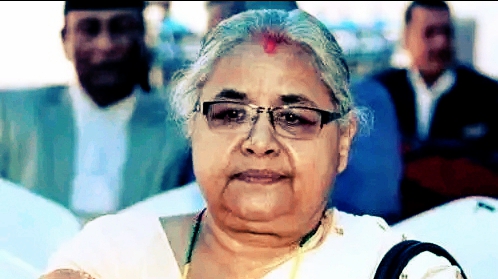
In a landmark moment for Nepal’s political landscape, former Chief Justice Sushila Karki has been appointed as the country’s interim prime minister, marking her as the first woman to assume this pivotal role.
The appointment, announced on earlier today, follows weeks of intense, youth-led protests that culminated in the resignation of former Prime Minister K.P. Sharma Oli, signaling a seismic shift in the Himalayan nation’s governance.
A Historic Appointment Rooted in Resilience
Sushila Karki, a trailblazer known for her judicial integrity and commitment to justice, steps into the prime ministerial role at a time of profound political turbulence.
Her ascension to the top office is not only a historic milestone for gender equality in Nepal but also a testament to her reputation as a formidable figure in public service.
Karki, who served as Nepal’s first female Chief Justice from 2016 to 2017, is celebrated for her bold rulings against corruption and her unwavering dedication to upholding the rule of law.
Karki’s appointment as interim prime minister comes as a beacon of hope for a nation grappling with political instability and public discontent.
Her leadership is expected to steer Nepal through a transitional period, with the mandate to stabilize the government and address the demands of a populace yearning for reform.
The Catalyst: Youth-Led Protests and Oli’s Resignation
The path to Karki’s appointment was paved by weeks of relentless protests spearheaded by Nepal’s youth, who took to the streets in a powerful display of civic activism.
These demonstrations, sparked by widespread dissatisfaction with the government’s handling of economic challenges, corruption allegations, and governance issues, turned deadly as clashes with security forces resulted in significant loss of life.
The mounting pressure proved untenable for Prime Minister K.P. Sharma Oli, who tendered his resignation, paving the way for a new interim leadership.
Oli’s departure marks the end of a contentious tenure that saw both achievements and controversies.
While his administration made strides in infrastructure development, it faced criticism for alleged authoritarian tendencies and failure to address systemic issues like unemployment and inequality, which fueled public outrage.
The youth-led movement, amplified by social media and grassroots organizing, became a clarion call for change, demanding accountability and a government that reflects the aspirations of Nepal’s younger generation.
Sushila Karki: A Legacy of Courage and Reform
At the helm of Nepal’s judiciary, Sushila Karki earned a reputation as a fearless reformer. Her tenure as Chief Justice was marked by landmark decisions that challenged entrenched corruption and championed accountability.
From nullifying questionable government appointments to advocating for judicial independence, Karki’s judicial legacy resonates with the principles of fairness and transparency—qualities that Nepal’s citizens now hope she will bring to the prime minister’s office.
Karki’s appointment is seen as a strategic move to restore public trust in governance. Her interim role will likely focus on calming political tensions, addressing the grievances raised during the protests, and laying the groundwork for free and fair elections.
Analysts suggest that her judicial background equips her with the impartiality and acumen needed to navigate Nepal’s complex political terrain during this critical juncture.
A New Chapter for Gender Equality in Nepal
Karki’s rise to the prime ministership is a historic triumph for gender equality in a country where women have long been underrepresented in high-level political roles.
Her appointment sends a powerful message about the potential for women to lead and shape Nepal’s future.
Advocacy groups and women’s rights organizations have hailed the move as a step toward dismantling patriarchal barriers in politics, inspiring a new generation of female leaders.
“This is a moment of pride for every Nepali woman,” said Anjali Shrestha, the co-founder of Women’s Empowerment Network, a local not-for-profit organization. “Sushila Karki’s leadership is a testament to what women can achieve when given the opportunity to serve at the highest levels.”
Challenges Ahead for the Interim Government
As interim prime minister, Karki faces a daunting array of challenges. Nepal’s economy, heavily reliant on tourism and remittances, has been battered by global uncertainties and domestic unrest.
Youth unemployment remains a pressing issue, with many young Nepalis demanding better opportunities and systemic reforms.
Additionally, Karki must navigate the delicate balance of addressing protestors’ demands while maintaining stability in a politically fragmented nation.
Her administration is expected to prioritize dialogue with protest leaders, civil society, and political factions to chart a path forward.
Key issues on the table include constitutional amendments, anti-corruption measures, and economic revitalization plans.
Karki’s ability to foster unity and deliver tangible results in the interim period will be critical to her success and Nepal’s stability.
Global and Regional Implications
Karki’s appointment has drawn international attention, with global leaders and organizations expressing support for Nepal’s democratic transition.
Neighboring countries, particularly India and China, which wield significant influence in Nepal’s geopolitical sphere, are closely monitoring the developments.
Karki’s neutral stance and judicial background may position her as a unifying figure capable of maintaining balanced relations with both regional powers.
The international community has also called for restraint and dialogue to prevent further violence.
United Nations officials and human rights organizations have urged Karki’s government to investigate the protest-related deaths and ensure accountability for any excesses by security forces.
A Nation at a Crossroads
Sushila Karki’s appointment as Nepal’s interim prime minister marks a defining moment in the country’s history.
As the first woman to hold this office, she carries the hopes of millions who seek a more inclusive, transparent, and prosperous Nepal.
Her leadership comes at a time when the nation stands at a crossroads, with the potential to redefine its democratic journey or succumb to further instability.
The weeks and months ahead will test Karki’s ability to translate her judicial legacy into effective governance. For now, her appointment is a symbol of resilience, progress, and the enduring power of collective action.
As Nepal embarks on this new chapter, the world watches with anticipation, hopeful that Sushila Karki will lead with the same courage and conviction that defined her storied career.
Stay tuned for updates on Nepal’s political transition and Sushila Karki’s interim leadership as events unfold.
Share This Post