


In the arid heart of Chari, Isiolo County, Kenya, a single natural spring, Kuro Mume, stands as a beacon of hope and survival for both wildlife and pastoralist communities during the region’s punishing dry seasons.
As climate change intensifies droughts across the Horn of Africa, this vital water source has become an indispensable refuge, drawing herds of livestock, wild animals, and desperate herders from far and wide.
However, with its growing importance comes increasing pressure, raising urgent calls from local leaders to protect Kuro Mume Spring from overuse, environmental degradation, and potential collapse.
This article explores the critical role of Kuro Mume Spring, the challenges it faces, and the broader implications for Chari’s ecosystems and communities, offering a comprehensive look at a lifeline under threat.
The Vital Role of Kuro Mume Spring
Nestled in the rugged, sun-scorched landscapes of Isiolo South, Kuro Mume Spring is more than just a water source—it is the lifeblood of Chari’s ecosystems and pastoralist communities.
Unlike seasonal rivers or smaller water points that dry up during the region’s prolonged dry seasons, Kuro Mume remains a consistent and reliable source of water, even in the harshest conditions.
For centuries, it has sustained both human and animal life, serving as a critical gathering point for nomadic herders and a diverse array of wildlife, including elephants, zebras, antelopes, and predators like lions and hyenas.
The spring’s significance has grown exponentially in recent years as climate change exacerbates drought cycles in Kenya’s arid and semi-arid lands (ASALs).
According to data from the Kenya Meteorological Department, the Horn of Africa has experienced increasingly severe droughts over the past decade, with rainfall deficits becoming more frequent and prolonged.
In Chari, where alternative water sources are scarce, Kuro Mume Spring has become a magnet for survival, attracting pastoralists and their livestock from as far as neighboring counties, as well as wildlife from nearby conservancies and rangelands.
A Gathering Point for Survival
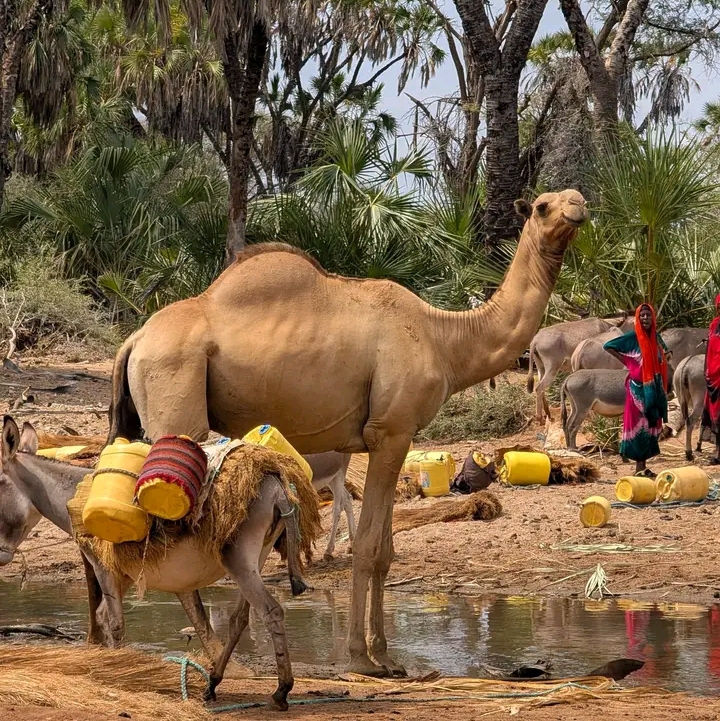
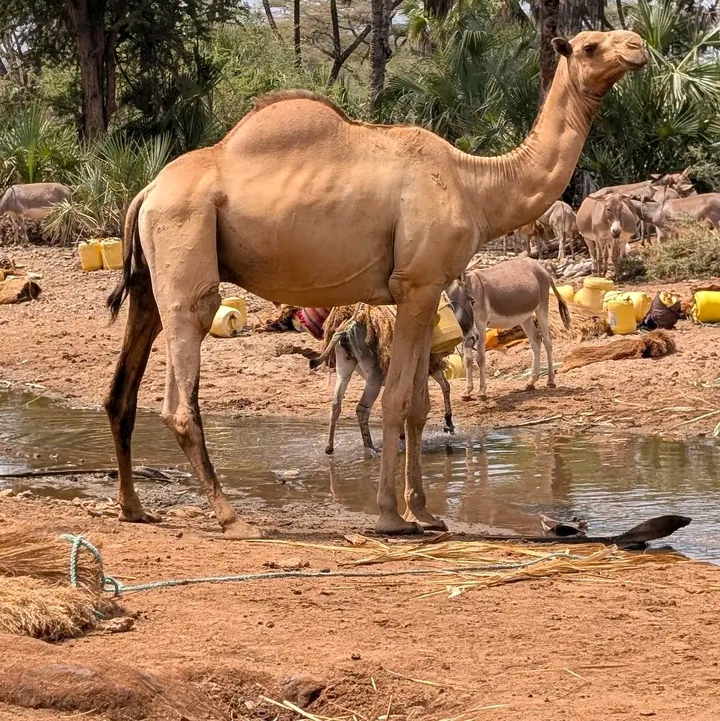
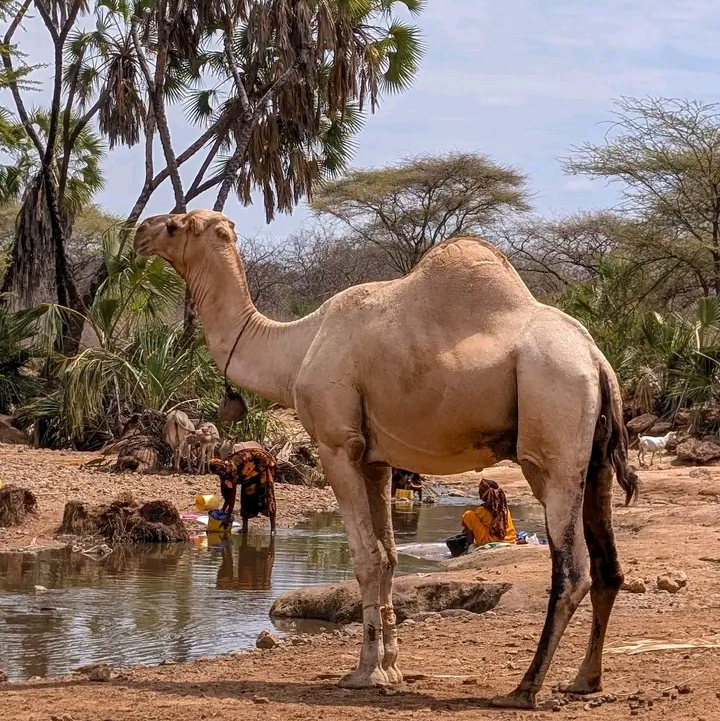
During the dry seasons, which can last up to six months in Isiolo South, Kuro Mume Spring transforms into a bustling hub of activity. Herders from the Borana, Somali Samburu, and other pastoralist communities guide their cattle, goats, and camels to the spring, often traveling dozens of kilometers across parched landscapes.
Wildlife, too, converges on the spring, with animals like elephants and buffaloes relying on its waters to survive when other waterholes and rivers run dry. This convergence, while a testament to the spring’s importance, also underscores the delicate balance that sustains it.
The spring’s ability to support such a diverse range of users is remarkable, but it is not without challenges. The influx of animals and people places immense pressure on the surrounding environment.
Overgrazing by livestock has led to soil erosion and vegetation loss around the spring, while the trampling of wildlife further degrades the delicate ecosystem.
Community elders, such as Abdullahi Deka, a respected leader in Chari, have noted that the spring’s surroundings are becoming increasingly barren, threatening the long-term sustainability of this critical resource. “Kuro Mume is our only hope when the rains fail,” Deka said in a recent interview. “But if we don’t protect it, we risk losing it forever.”
Environmental and Social Challenges
The growing reliance on Kuro Mume Spring has brought to light a host of environmental and social challenges. Overuse is perhaps the most immediate threat, as the spring struggles to meet the demands of an ever-increasing number of users.
During peak drought periods, hundreds of livestock and wildlife gather daily, leading to concerns about water depletion and contamination.
Poor waste management practices, such as livestock defecation near the spring, further exacerbate the risk of waterborne diseases, posing health risks to both humans and animals.
Environmental degradation is another pressing issue. The loss of vegetation around the spring has accelerated soil erosion, which could alter the spring’s flow and reduce its capacity over time.
Climate change compounds these problems, as rising temperatures and erratic rainfall patterns weaken the region’s ecosystems, making them less resilient to human and animal pressures.
According to a 2024 report by the International Union for Conservation of Nature (IUCN), springs and oases in arid regions like Isiolo are particularly vulnerable to climate-induced stressors, with many at risk in the coming decades.
Socially, the spring’s importance has also sparked tensions. Competition for access to water during droughts has occasionally led to conflicts between pastoralist groups, as well as between herders and conservationists seeking to protect wildlife.
In 2023, local media reported skirmishes between herders over grazing rights near Kuro Mume, highlighting the need for better resource management and conflict resolution mechanisms.
Community-Led Efforts and Calls for Protection
Recognizing the existential importance of Kuro Mume Spring, community leaders in Chari are spearheading efforts to safeguard it.
Local initiatives, supported by organizations like the Isiolo County Government and non-governmental organizations (NGOs), aim to address the dual challenges of overuse and environmental degradation. These efforts include:
- Sustainable Water Management: Community groups are working to regulate access to the spring, implementing rotational grazing schedules to reduce pressure on the surrounding ecosystem. Water committees, composed of local elders and herders, have been established to monitor usage and ensure equitable access.
- Rehabilitation of the Surrounding Ecosystem: Reforestation and anti-erosion projects are underway to restore vegetation around the spring. These initiatives aim to stabilize soil, prevent erosion, and enhance the spring’s resilience to climate change. Partnerships with organizations like the Kenya Forest Service have facilitated the planting of drought-resistant trees and grasses.
- Community Education and Awareness: Local leaders are raising awareness about the importance of protecting Kuro Mume Spring through community forums and workshops. These programs emphasize sustainable practices, such as proper waste disposal and controlled livestock watering, to minimize environmental impact.
- Advocacy for Policy Support: Community leaders are urging the national and county governments to designate Kuro Mume Spring as a protected area. Such a designation would unlock funding for conservation efforts and provide legal frameworks to regulate its use. “We need the government to recognize the spring as a national asset,” said Fatuma Adan, a local conservationist. “Without it, Chari’s people and wildlife have no future.”
The Broader Implications for Chari and Beyond
The story of Kuro Mume Spring is a microcosm of the broader challenges facing Kenya’s ASALs in the era of climate change.
Across the region, water scarcity is driving both human and wildlife populations to the brink, with springs, rivers, and boreholes becoming flashpoints for competition and conflict.
The survival of Kuro Mume Spring is not just a local issue—it is a case study in the urgent need for sustainable resource management, climate adaptation, and community resilience.
For Chari’s pastoralists, the spring represents more than just water; it is a symbol of cultural heritage and survival.
For wildlife, it is a critical refuge in an increasingly hostile environment. Protecting Kuro Mume Spring will require a collaborative effort involving communities, government agencies, and conservation organizations.
Investments in infrastructure, such as water storage systems and alternative watering points, could alleviate pressure on the spring, while climate-smart agricultural practices could reduce dependence on grazing.
A Call to Action
As droughts intensify and the pressures on Kuro Mume Spring mount, the time for action is now. Community leaders, supported by regional and national stakeholders, are calling for immediate measures to protect this vital resource.
By addressing overuse, restoring the surrounding ecosystem, and fostering cooperation among users, Chari can ensure that Kuro Mume remains a lifeline for generations to come.
For those interested in supporting these efforts, organizations like the Northern Rangelands Trust and the Isiolo County Government offer opportunities to contribute to conservation and sustainable development initiatives in the region.
Together, we can preserve Kuro Mume Spring as a beacon of hope in an increasingly arid world.
Share This Post