
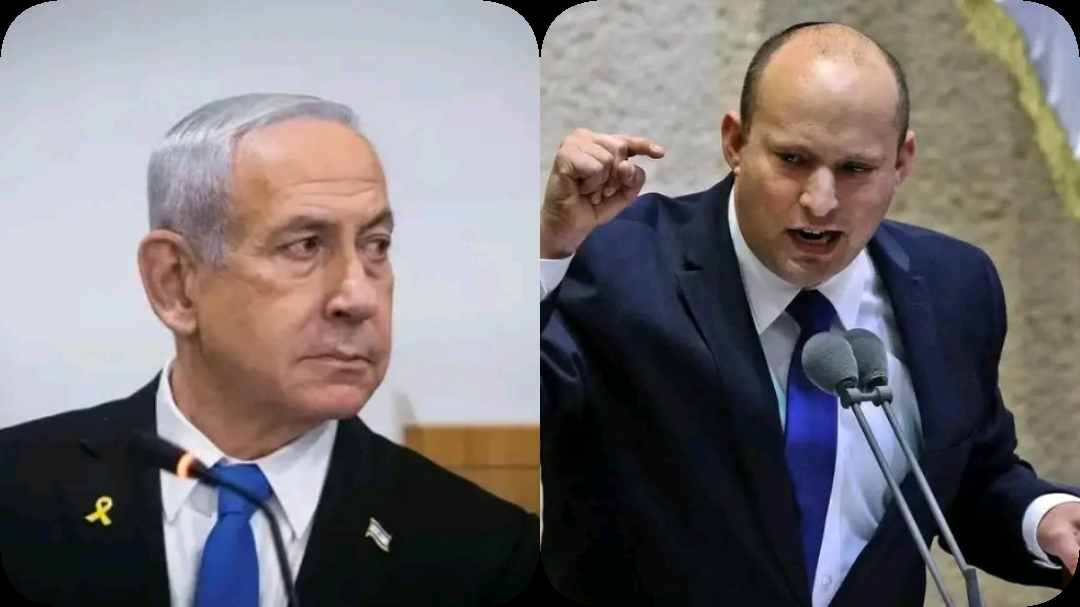

In a hard-hitting televised interview, former Israeli Prime Minister Naftali Bennett has called for the ouster of Benjamin Netanyahu, Israel’s longest-serving leader, accusing him of deepening societal divisions and mismanaging critical national issues.
Speaking on Israel’s Channel 12 on Saturday, June 28, 2025, Bennett declared that Netanyahu’s 20-year tenure—spanning two stints from 1996-1999 and 2009-2021, followed by his return in 2022—has been “too long” and “not healthy” for the nation.
While stopping short of confirming a political comeback, Bennett’s remarks have fueled speculation about his ambitions to challenge Netanyahu in a future election, as Israel grapples with internal rifts, the ongoing Gaza conflict, and regional tensions with Iran.
A Fractured Nation Under Netanyahu’s Leadership
Bennett, a right-wing politician who briefly led Israel from 2021 to 2022, didn’t mince words in his critique of Netanyahu. He placed “heavy responsibility” on the current prime minister for the growing polarization within Israeli society.
Netanyahu, a polarizing figure, commands a loyal base of supporters but faces fierce opposition from critics who have taken to the streets in mass protests since the onset of the Gaza war in October 2023.
These demonstrations, often centered in Tel Aviv, have decried Netanyahu’s handling of the conflict, his coalition’s reliance on far-right and ultra-Orthodox parties, and controversial judicial reforms that critics argue undermine Israel’s democratic institutions.
“Netanyahu has been in power for 20 years… that’s too long, it’s not healthy,” Bennett said, echoing sentiments shared by a growing number of Israelis frustrated with the prime minister’s prolonged dominance. “He bears heavy responsibility for the divisions in Israeli society.”
The former prime minister pointed to the societal rifts that have intensified under Netanyahu’s leadership, including tensions between secular and religious communities, as well as differing visions for Israel’s future amid ongoing security challenges.
A Fragile Coalition and Netanyahu’s Resurgence
Bennett’s own tenure as prime minister offers context for his criticism. In 2021, he spearheaded a diverse coalition that included right-wing, centrist, left-wing, and even Arab parties to oust Netanyahu after 12 consecutive years in office.
The coalition, co-led with opposition leader Yair Lapid, was a historic experiment in Israeli politics, uniting unlikely allies to break Netanyahu’s grip on power. However, the fragile alliance collapsed in mid-2022 after just over a year, plagued by ideological differences and defections.
The subsequent snap election in November 2022 paved the way for Netanyahu’s return, bolstered by a coalition of far-right and ultra-Orthodox Jewish parties.
This government, one of the most right-wing in Israel’s history, has drawn criticism for its hardline policies, including settlement expansion in the West Bank and its uncompromising stance in the Gaza war.
Bennett’s latest remarks underscore the lingering tensions from that turbulent period, positioning him as a potential alternative to Netanyahu’s leadership.
Gaza War and Hostage Crisis: A “Catastrophe” in Political Management
The ongoing war in Gaza, sparked by Hamas’s deadly October 2023 attack, has been a focal point of Bennett’s critique.
While praising the Israeli military’s “exceptional” performance, he labeled the Netanyahu government’s political management of the conflict a “catastrophe” and a “disaster.”
Bennett criticized the government’s “inability to decide” on critical issues, particularly the fate of Israeli hostages still held in Gaza.
Over 1,200 Israelis were killed in the initial Hamas attack, and more than 250 were taken hostage, with dozens still in captivity as of June 2025.
Israel’s military response has resulted in over 41,000 Palestinian deaths, according to Gaza health officials, and has drawn international scrutiny for its intensity and humanitarian toll.
Bennett called for an immediate “comprehensive” agreement to secure the release of all remaining hostages, urging the government to prioritize their safe return over the complete elimination of Hamas. “Leave the task of eliminating Hamas to a future government,” he said, signaling a pragmatic approach to the protracted conflict.
Bennett’s Role in Strikes on Iran
In a surprising revelation, Bennett claimed credit for laying the groundwork for Israel’s recent military strikes against Iranian nuclear and military sites earlier this month.
Describing the attacks as “very good” and “needed,” he argued that his short-lived government had set the stage for such operations, which aimed to curb Iran’s nuclear ambitions and regional influence.
The strikes, widely attributed to Israel, have heightened tensions in an already volatile region, with Iran vowing retaliation.
Bennett’s comments highlight his continued relevance in Israel’s security discourse, even as he remains outside active politics.
His tenure as prime minister was marked by a focus on strengthening Israel’s military and intelligence capabilities, particularly in response to threats from Iran and its proxies, such as Hezbollah in Lebanon.
Political Comeback on the Horizon?
While Bennett has taken a break from politics since his coalition’s collapse, recent public opinion polls suggest he retains significant support among Israelis.
Some surveys indicate he could pose a credible challenge to Netanyahu in a future election, potentially capitalizing on widespread dissatisfaction with the current government.
However, Bennett remained coy about his plans during the Channel 12 interview, sidestepping questions about a potential run for office. “I’m focused on contributing to Israel in other ways,” he said, leaving the door open for a political comeback.
Israel’s next election is not scheduled until late 2026, but early elections are a common feature of the country’s volatile political landscape.
Analysts speculate that mounting pressure from protests, coalition infighting, and public frustration over the Gaza war could trigger a snap election sooner. Bennett’s reemergence as a vocal critic of Netanyahu positions him as a key player to watch in Israel’s political arena.
A Call for Change Amid Uncertainty
Bennett’s scathing critique of Netanyahu reflects broader anxieties about Israel’s direction under its longest-serving leader. The combination of internal divisions, a prolonged war in Gaza, and escalating tensions with Iran has heightened calls for new leadership.
By framing Netanyahu’s tenure as a source of national discord and political paralysis, Bennett is tapping into a sentiment shared by many Israelis who yearn for stability and unity.
As Israel navigates these challenges, Bennett’s remarks serve as both a rebuke of the status quo and a potential preview of his political ambitions.
Whether he can translate his criticisms into electoral success remains uncertain, but his intervention has reignited debates about Israel’s future and the legacy of Benjamin Netanyahu.
Share This Post