
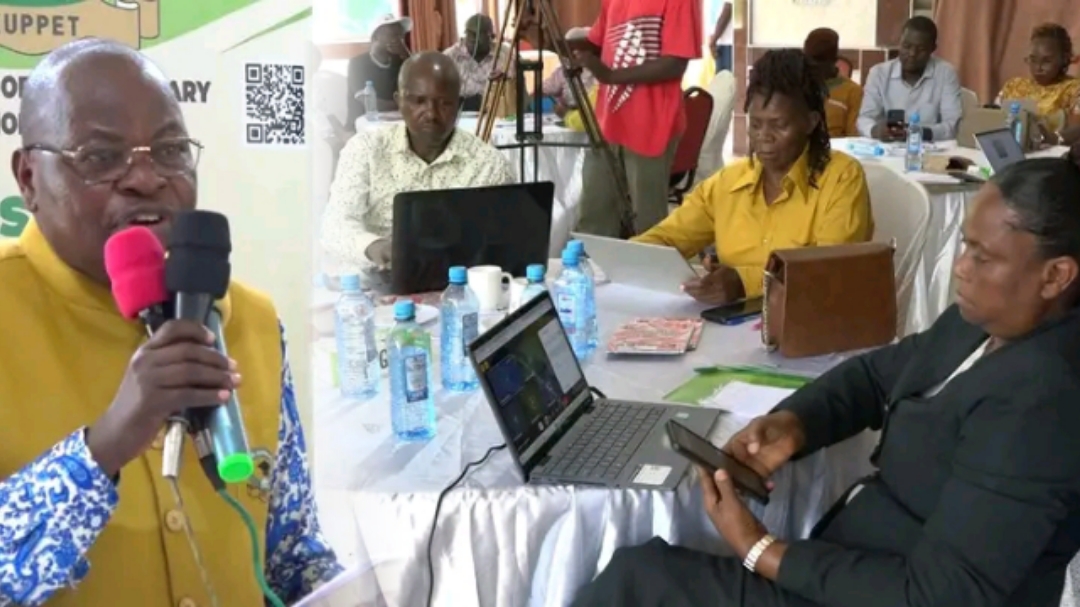

The Kenya Union of Post-Primary Education Teachers (KUPPET) is gearing up for a pivotal meeting with the Teachers Service Commission (TSC) on July 2, 2025, to negotiate a new Collective Bargaining Agreement (CBA). The union has put forward a robust set of proposals aimed at significantly improving teachers’ remuneration, working conditions, and the overall structure of the education system. With a focus on addressing long-standing concerns and adapting to the evolving Competency-Based Education (CBE) framework, KUPPET’s demands signal a bold push for transformative change in Kenya’s education sector.
Ambitious Salary and Allowance Proposals
At the forefront of KUPPET’s agenda is a substantial salary increase for teachers. The union is advocating for a basic salary hike ranging from 50% to 100%, a move intended to align teachers’ pay with the rising cost of living and the critical role they play in shaping the nation’s future. Additionally, KUPPET is pushing for a 20% increase in house allowances, with a proposal to standardize all teachers under Cluster One, ensuring equitable housing support regardless of their geographical posting.
The union is also calling for a dramatic 250% increase in commuter allowances to ease the financial burden of daily travel for teachers, many of whom work in remote or underserved areas. To further enhance teachers’ welfare, KUPPET is demanding the retention of the existing 45 hardship zones, alongside the introduction of daily subsistence and leave allowances. These measures aim to provide financial relief for educators working in challenging environments.
Speaking at a leadership workshop in Malindi, KUPPET Secretary General Akello Misori underscored the union’s unwavering commitment to securing better compensation. He highlighted the need for additional allowances, including hazardous, overtime, and risk allowances, each pegged at 20% of the basic salary. “Our teachers deserve remuneration that reflects the critical and often demanding nature of their work,” Misori stated, emphasizing the union’s resolve to advocate for fair pay and improved working conditions.
Structural Reforms to Address CBE Challenges
Beyond financial demands, KUPPET is proposing significant structural changes to address challenges within the Competency-Based Education (CBE) system, particularly at the Junior Secondary School (JSS) level. KUPPET Chairman Omboko Milemba, who also serves as the Member of Parliament for Umuhaya, has called for the establishment of three distinct school levels: primary school, JSS, and high school. This restructuring aims to resolve ongoing confusion over the representation of JSS teachers, a contentious issue between KUPPET and the Kenya National Union of Teachers (KNUT).
Milemba argued that designating JSS as a standalone level would streamline teacher representation and improve coordination within the education system. “For JSS to function effectively, it must be recognized as an independent school level. This will create a clear linkage between primary, JSS, and high school teachers, ensuring smoother implementation of the CBE curriculum,” he explained. The proposal is seen as a critical step toward addressing administrative and operational challenges in the transition to the CBE framework, which has faced criticism for its complexity and resource demands.
Capacity-Building and Leadership Commitment
The Malindi workshop, attended by KUPPET’s National Executive Board and other union leaders, served as a platform to strategize and build consensus on these proposals. Officially closed by Secretary General Akello Misori, the event underscored the union’s proactive approach to equipping its leaders with the skills needed to navigate the upcoming CBA negotiations. The workshop also highlighted KUPPET’s commitment to fostering unity and resilience among its members as they advocate for teachers’ rights.
Implications for Kenya’s Education Sector
The upcoming CBA talks are poised to be a defining moment for Kenya’s education sector. KUPPET’s demands reflect broader concerns about teacher welfare, curriculum implementation, and systemic inefficiencies. A successful negotiation could lead to significant improvements in teachers’ living standards, potentially reducing turnover and enhancing the quality of education delivery. However, the ambitious nature of the proposals, particularly the substantial salary and allowance increases, may spark intense discussions with the TSC, which must balance these demands with budgetary constraints.
As the July 2, 2025, meeting approaches, stakeholders across the education sector will be closely watching the negotiations. The outcome could set a precedent for future labor agreements and shape the trajectory of Kenya’s education system, particularly as it adapts to the demands of the CBE framework.
Share This Post