
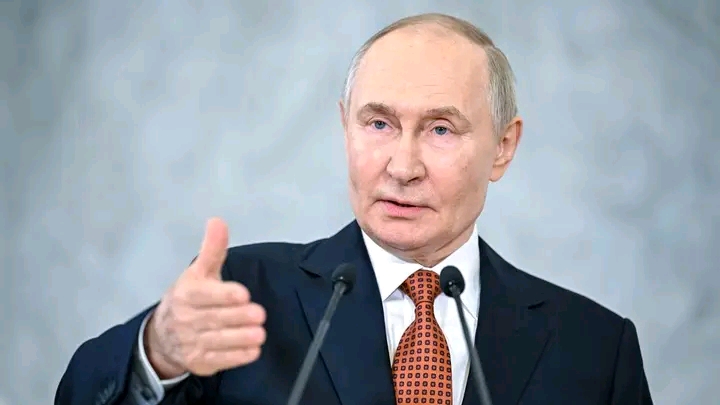

Minsk, Belarus| Russian President Vladimir Putin delivered a wide-ranging press conference on the sidelines of the Eurasian Economic Union (EAEU) summit in Minsk, tackling critical issues such as the ongoing Ukraine conflict, Russia’s strained relations with NATO, economic challenges under Western sanctions, and the future of US-Russia ties.
His remarks underscored Moscow’s evolving foreign policy, economic strategies, and perspectives on global dynamics, offering insights into Russia’s stance amid heightened geopolitical tensions.
Ukraine Conflict: Seeking Common Ground in Istanbul Talks
Putin provided updates on the delicate negotiations aimed at resolving the Ukraine conflict, highlighting the second round of talks held in Istanbul earlier this month. He acknowledged significant differences between the Russian and Ukrainian proposals, describing their roadmaps as “polar opposites.”
Despite this, he emphasized the talks’ purpose: to bridge gaps and find mutually acceptable solutions. “The goal is to look for ways to bring our positions closer,” Putin said, signaling Russia’s willingness to continue dialogue.
A notable outcome of the negotiations has been the agreement on prisoner swaps and the repatriation of fallen soldiers’ remains. Putin revealed that Russia has already returned the remains of 6,000 Ukrainian troops and is prepared to hand over an additional 3,000.
He stressed Moscow’s readiness to sustain these humanitarian efforts, noting that Russian and Ukrainian delegation leaders maintain “constant contact.”
Putin proposed that the next round of talks, potentially in Istanbul, should focus on reviewing each side’s memorandums to advance the process.
While expressing openness to negotiations, Putin reiterated Russia’s firm stance on its security interests, a recurring theme in his critique of Western policies.
NATO’s Expansion and Alleged Deceptions
A significant portion of Putin’s remarks targeted NATO, which he accused of perpetuating a narrative of Russian “aggressiveness” while ignoring Moscow’s security concerns.
He claimed that NATO’s pledge in the early 1990s not to expand eastward was a “blatant lie,” pointing to the alliance’s growth toward Russia’s borders as evidence of provocative behavior.
“This is what aggressive behavior looks like,” Putin stated, accusing NATO of dismissing Russia’s warnings about the strategic implications of its expansion.
Putin criticized NATO members’ recent commitment to increase defense spending to 5% of GDP by 2035, framing it as an escalation that threatens regional stability.
He contrasted this with Russia’s plans to reduce its defense budget over the next three years, asserting that Moscow has no intention of attacking NATO. “We are done playing one-sided games with the West,” he declared, signaling a shift toward a more assertive Russian foreign policy.
NATO, in response, has consistently denied making formal commitments against eastward expansion and maintains that its actions are defensive, posing no threat to Russia. This divergence in narratives continues to fuel tensions between Moscow and the alliance.
Economic Resilience Amid Sanctions
Addressing Russia’s economic landscape, Putin acknowledged the strain of high defense spending, currently at 6.3% of GDP, which he admitted has contributed to inflation.
However, he emphasized a “level-headed approach” to managing these challenges, highlighting Russia’s economic growth of over 4% annually for the past two years.
In contrast, he pointed out the sluggish 0.9% growth in the euro area, claiming that major economies like France and Germany are “on the brink of recession.” In a pointed remark, he quipped, “They’re about to drop dead, yet they’re still trying to write our obituary.”
Putin also addressed Western sanctions, particularly discussions in the EU and US about tightening restrictions on Russian oil exports.
He dismissed the feasibility of such measures, arguing that global demand for oil and petrochemicals is rising as the world economy grows. “A ban on Russian oil will be de facto impossible to enforce,” he stated, expressing confidence that sanctions have failed to cripple Russia’s economy.
He credited Russia’s focus on supporting its domestic defense industry, unlike European NATO members, which he claimed rely heavily on US weapons purchases.
US-Russia Relations: A Nod to Trump
In a rare personal comment, Putin expressed “deep respect” for US President Donald Trump, describing him as a “courageous man” who has faced significant challenges.
He welcomed the Trump administration’s expressed interest in facilitating a resolution to the Ukraine conflict, suggesting that Moscow is open to renewed engagement with Washington.
Putin did not rule out a future meeting with Trump and indicated Russia’s willingness to welcome American companies back to its market, hinting at potential economic cooperation.
Global Context and Russia’s Strategic Outlook
Putin’s remarks at the EAEU summit reflect Russia’s broader strategic priorities: asserting its security interests, countering Western influence, and maintaining economic stability in the face of sanctions.
The EAEU, comprising Armenia, Belarus, Kazakhstan, Kyrgyzstan, and Russia, serves as a platform for Moscow to strengthen regional alliances and promote economic integration as a counterweight to Western-led blocs.
The Russian president’s comments come at a time of heightened global scrutiny, with the Ukraine conflict and NATO’s role dominating international discourse.
His critique of Western policies, coupled with an optimistic outlook on Russia’s economic resilience, underscores Moscow’s determination to navigate a complex geopolitical landscape on its own terms.
Looking Ahead
As negotiations with Ukraine continue and tensions with NATO persist, Putin’s statements signal Russia’s intent to pursue a multifaceted strategy: engaging in diplomacy where possible, reinforcing economic self-sufficiency, and recalibrating its approach to Western relations.
The prospect of renewed US-Russia dialogue under the Trump administration adds another layer of complexity to an already volatile global environment.
For now, the world watches closely as Russia navigates these challenges, with the outcomes of the Istanbul talks and the broader trajectory of US-Russia relations likely to shape the geopolitical landscape in the months ahead.
Share This Post