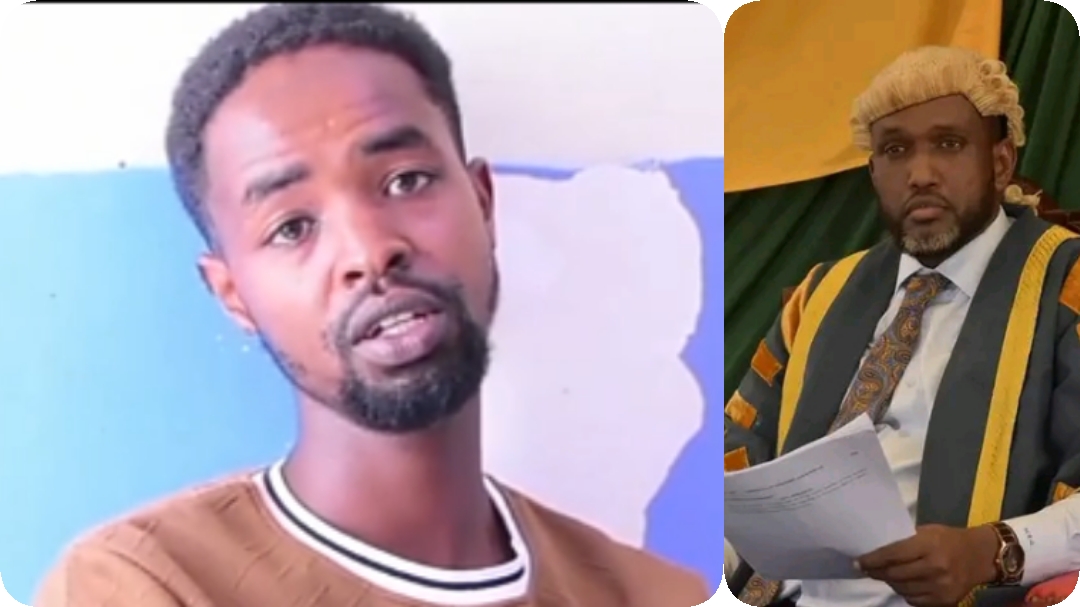
A 26-year-old man wounded during recent political unrest in Isiolo County has come forward with explosive claims, directly accusing former County Assembly Speaker Mohamed Roba Qoto of shooting him during violent protests linked to the failed impeachment of Governor Abdi Ibrahim Guyo.
The allegations, if proven, could expose a dangerous nexus of political impunity, misuse of firearms, and growing lawlessness within Kenya’s devolved governance system particularly in the Northern Kenyan enclave.
The Victim: A Protester Turned Patient
Barack Abdullahi, a youth from the marginalized Sakuye community and son of the late community elder Abdullahi Mohamed (widely known as Wankenno), was among hundreds of demonstrators who gathered outside the Isiolo County Assembly on June 26, 2025.
The protest was sparked by a controversial impeachment motion against Governor Guyo—a motion that was both politically charged and legally contested.
According to Abdullahi, the demonstration started peacefully but quickly descended into chaos. Speaking from his hospital bed at Almasi Medical Centre, where he is recovering from a gunshot wound, he gave a harrowing account of the events.
“I was peacefully exercising my constitutional right under Article 37 of the Kenyan Constitution when I saw the former Speaker, Mohamed Roba Qoto, in a vehicle bearing a county flag. He pulled out a firearm and aimed directly at me. I tried to run, but I fell. I woke up in hospital with a bullet in my ankle,” he said.
🎥Credits: Youtube/K24TV
Surgeon Dr. Abdikadir Mohamud, who performed the emergency operation, confirmed that a small-caliber bullet was removed from Abdullahi’s ankle, adding that the injury appeared consistent with a close-range gunshot.
Mounting Allegations Against Mohamed Roba Qoto
The spotlight now turns to Mohamed Roba Qoto, a once-powerful county official now at the center of multiple controversies.
While Qoto has denied the allegations, calling them baseless and insisting that the “burden of proof lies with the accuser,” growing evidence and eyewitness reports have intensified pressure on investigators.
According to sources within the Directorate of Criminal Investigations (DCI), Qoto had been disarmed just days before the shooting following reports of prior reckless firearm use.
Despite this, multiple witnesses—including Abdullahi’s family—insist he was armed on June 26.
“My brother was shot in cold blood while protesting peacefully,” said Asli Salad Mohamed, Barack’s cousin. “We demand a full investigation and immediate action. Isiolo cannot be ruled through fear and impunity.”
Further complicating the matter are claims that Qoto had earlier threatened Governor Guyo with a gun inside the County Assembly chambers.
Reports allege that he discharged a live round which narrowly missed the governor, prompting concerns over how he maintained access to weapons despite official sanctions.
A Disputed Impeachment and Legal Intrigues
The impeachment motion against Governor Guyo, brought forth by Sericho Ward MCA Abubakar Godana and supported by 16 of 18 MCAs, cited abuse of office, absenteeism, and gross misconduct.
However, it quickly became ensnared in legal wrangles. On June 23, Justice Eston Nyaga of the Meru High Court issued conservatory orders halting any proceedings on the motion.
Despite this, a defiant County Assembly reportedly reconvened at a hotel in Isiolo—without the official mace, an essential symbol of legislative authority—and passed the motion in defiance of the court. The impeachment was later nullified on June 27 for contempt of court, exposing serious procedural breaches.
In a move many see as an attempt to evade arrest, Qoto secured a separate court injunction shielding him from DCI apprehension, raising eyebrows about selective justice and abuse of judicial mechanisms.
Tensions Escalate Amid Threats and Inflammatory Rhetoric
Public frustration has been compounded by the inaction of law enforcement regarding incendiary remarks made by Sericho MCA Abubakar Godana and Marsabit County official Suleiman Abdikadir.
The two were filmed threatening “bloodshed and anarchy” in the presence of journalists—yet neither has faced questioning or arrest.
This apparent double standard in law enforcement has fueled fears of rising ethnic tensions and violent political brinkmanship in Isiolo and neighboring Marsabit County.
The Bigger Picture: A Region on the Brink
The shooting of Barack Abdullahi is not an isolated incident. It echoes national outrage over recent killings during anti-government protests, such as the case of blogger Albert Ojwang, who died in police custody in Nairobi.
Both incidents spotlight the increasing criminalization of dissent and the reckless use of force by state and quasi-state actors.
Governor Guyo, while facing criticism for alleged misgovernance, has dismissed the impeachment as a politically engineered coup by external forces intent on destabilizing Isiolo.
He has vowed to work with local leaders and development partners to restore order and resume stalled county projects.
A Cry for Justice and a Test for Rule of Law
As Abdullahi slowly recovers, his case has become a symbol of resistance against impunity. The Sakuye community, long sidelined in county politics, is now demanding justice and transparency.
Legal experts warn that the outcome of this investigation will serve as a litmus test for Kenya’s commitment to constitutionalism, devolution, and the rule of law.
Civil society organizations have called for an independent inquiry, proper enforcement of disarmament orders, and criminal accountability for all public officials who misuse firearms.
Despite public outcry, the DCI has yet to release a conclusive statement. With pressure mounting from across the political spectrum, the coming days will be critical in determining whether justice will prevail—or whether yet another act of violence will be quietly buried beneath layers of legal obfuscation and political maneuvering.