
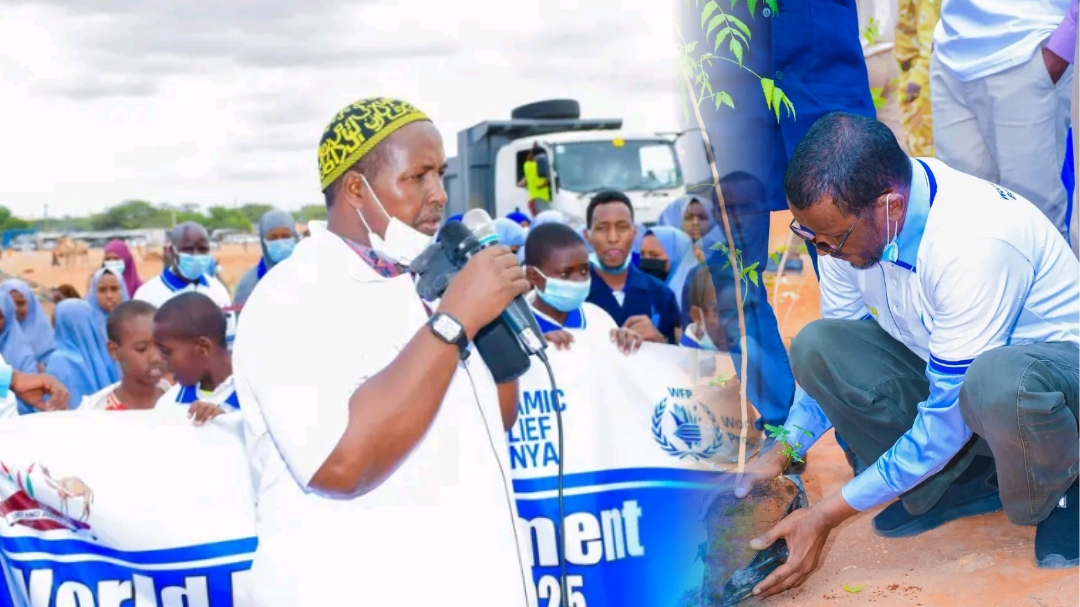

On June 5, 2025, Wajir County joined the global community in commemorating World Environment Day, rallying under the theme “End Plastic Pollution.”
The county spearheaded a series of impactful initiatives to address the escalating crisis of plastic waste, promote sustainable practices, and foster environmental stewardship.
Led by the Department of Environment, Energy, Climate Change & Natural Resources, in collaboration with Wajir Municipality, Islamic Relief, KCB Bank, and other partners, the day was marked by public awareness campaigns, a community cleanup at Orahey Grounds, and a tree-planting exercise at Wagberi Primary School.
These efforts underscore Wajir’s commitment to combating plastic pollution and safeguarding its ecosystems for future generations.
Tackling Plastic Pollution: A Growing Global Threat
Plastic pollution has emerged as one of the most pressing environmental challenges worldwide, with devastating impacts on ecosystems, wildlife, and human livelihoods.
In Wajir County, the effects are particularly pronounced, as plastic waste clogs waterways, contaminates soil, and endangers livestock and wildlife.
Improperly disposed plastics also pose risks to public health and undermine the region’s pastoralist and agricultural economies.
Recognizing the urgency of this issue, Wajir’s World Environment Day activities aimed to raise awareness about the dangers of plastic pollution and inspire collective action to mitigate its impact.
The public awareness campaigns organized across the county educated residents on the importance of reducing single-use plastics, proper waste disposal, and the benefits of recycling.
These initiatives targeted schools, markets, and community centers, ensuring broad outreach and engagement.
By fostering a culture of environmental responsibility, Wajir aims to empower its residents to adopt sustainable practices in their daily lives.
Community-Driven Action: Cleanups and Tree Planting
A key highlight of the day was a community cleanup exercise at Orahey Grounds, where volunteers, local leaders, and partner organizations worked together to remove plastic waste and other debris.
The cleanup not only beautified the area but also served as a powerful reminder of the importance of collective action in maintaining a clean and healthy environment.
Complementing the cleanup, a tree-planting initiative at Wagberi Primary School saw participants, including students and community members, plant trees to enhance the county’s green cover.
Speaking at the event, Mr. Yaqub Dahiye, the County Executive Committee Member (CECM) for Environment, emphasized the multifaceted benefits of afforestation.
“The trees we plant today will provide shade, prevent soil erosion, improve water retention, and support biodiversity,” he said.
These efforts align with Wajir’s broader vision of promoting agroforestry and sustainable land management to combat desertification and climate change in the arid region.
Long-Term Solutions: Plastic Recycling and Job Creation
Beyond immediate actions, Wajir County is investing in sustainable, long-term solutions to address plastic pollution. The county is establishing a Plastic Recycling Plant and Material Recovery Facilities within Wajir Municipality.
These state-of-the-art facilities will enable the collection, sorting, and processing of plastic waste, transforming it into reusable materials.
By reducing the volume of plastic waste in landfills and the environment, these projects aim to mitigate pollution and promote a circular economy.
Moreover, the recycling initiatives are expected to create significant socio-economic benefits.
The Plastic Recycling Plant and Material Recovery Facilities will generate employment opportunities, particularly for the youth, thereby contributing to poverty alleviation and economic empowerment.
By integrating environmental conservation with economic development, Wajir is setting a model for sustainable growth in the region.
A Call for Collaborative Action
CECM Yaqub Dahiye called on all levels of government, development partners, and community stakeholders to prioritize environmental protection in their projects and policies.
He advocated for the integration of tree planting, agroforestry, and sustainable practices into all development initiatives, emphasizing that sustainability must be a central pillar of decision-making.
“Protecting our planet is a shared responsibility,” he stated, urging collective action to address the interconnected challenges of climate change, pollution, and biodiversity loss.
Wajir’s proactive approach aligns with global efforts to combat plastic pollution, as highlighted by the United Nations Environment Programme (UNEP), which leads World Environment Day celebrations.
The county’s initiatives reflect the global call to reduce plastic production, improve waste management, and promote sustainable alternatives to single-use plastics.
A Blueprint for a Greener Future
Wajir County’s World Environment Day 2025 activities demonstrate its commitment to environmental conservation and sustainable development.
By combining immediate actions like cleanups and tree planting with long-term investments in recycling infrastructure, the county is addressing the root causes of plastic pollution while fostering economic resilience.
These efforts not only protect Wajir’s fragile ecosystems but also serve as a blueprint for other regions grappling with similar challenges.
As the world continues to confront the plastic pollution crisis, Wajir’s initiatives offer hope and inspiration. Through collaboration, innovation, and community engagement, the county is paving the way for a cleaner, greener, and more sustainable future.
Share This Post