

Washington mediates truce as nuclear-armed neighbors step back from brink of war following military strikes and cross-border hostilities
In a significant diplomatic breakthrough, India and Pakistan have agreed to an immediate and comprehensive ceasefire following an intense round of U.S.-mediated negotiations.
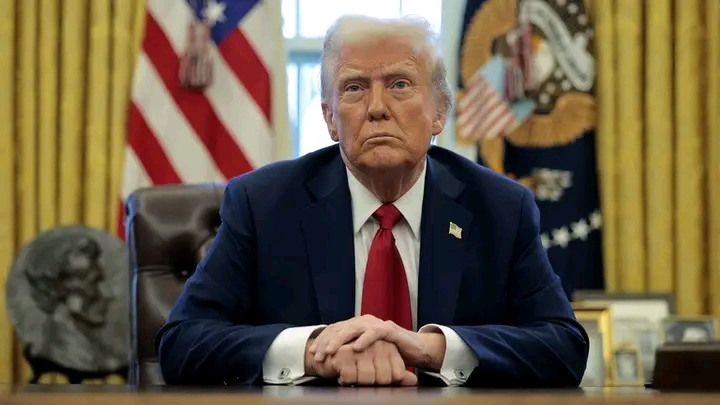
The announcement was made by U.S. President Donald Trump on Saturday, who revealed that the agreement was reached after a “long night of talks” involving top officials from both South Asian nations.
“I am pleased to announce that India and Pakistan have agreed to a full and immediate ceasefire,” President Trump stated in a post on Truth Social.
He commended both sides for exhibiting “common sense and great intelligence” in de-escalating the crisis.
The truce marks a sudden yet crucial halt to a sharp military escalation between the two nuclear-armed rivals, who were on the verge of open conflict following deadly tit-for-tat strikes earlier in the week. According to the Indian Ministry of External Affairs, the ceasefire took effect at 5 p.m. local time on Saturday.
Islamabad’s Foreign Minister, Ishaq Dar, also confirmed the agreement, noting in a statement on X (formerly Twitter) that “Pakistan and India have agreed to a ceasefire with immediate effect.” However, he did not directly acknowledge U.S. involvement in the mediation process.
Further details of the diplomatic effort were provided by U.S. Secretary of State Marco Rubio, who disclosed that Washington had facilitated high-level engagements over the previous 48 hours.
Rubio stated that he, along with Vice President J.D. Vance, had participated in extensive talks with Indian and Pakistani leadership, including Prime Ministers Narendra Modi and Shehbaz Sharif, Indian External Affairs Minister Subrahmanyam Jaishankar, and Pakistan’s Chief of Army Staff General Asim Munir.
Rubio added that both sides had agreed to begin broader dialogue “on a wide set of issues at a neutral venue,” suggesting that Washington aims to play a longer-term role in stabilizing South Asia’s most volatile bilateral relationship.
The ceasefire announcement comes after a particularly volatile week. On Tuesday, India launched “Operation Sindoor,” a coordinated air and missile campaign targeting suspected terrorist infrastructure in Pakistan and Pakistan-administered Kashmir.
The operation was conducted in response to an April terrorist attack in Jammu and Kashmir that left 26 Indian civilians dead.
The assault was claimed by The Resistance Front, a militant group allegedly affiliated with Lashkar-e-Taiba, a Pakistan-based jihadist organization.
Indian authorities claimed they had uncovered credible evidence linking the attackers to cross-border terror networks and claimed that communication links traced the operation back to Pakistani territory.
Pakistan has categorically denied any involvement, demanding an impartial international investigation.
In retaliation for the Indian strikes, Pakistan launched cross-border shelling and drone attacks across the Line of Control (LoC), the contested military boundary in the Kashmir region.
By late Friday, Islamabad announced its own military operation—code-named “Bunyan Al Marsoos” (Arabic for “Unbreakable Wall”)—targeting Indian military installations.
The rapid escalation raised international concerns over the potential for a full-scale war between the two longstanding adversaries.
In a bid to defuse tensions, military operations chiefs from both nations reportedly held a direct phone conversation—initiated by the Pakistani side—on Saturday morning, agreeing to cease all hostilities.
India’s Foreign Ministry confirmed that the ceasefire was jointly coordinated at the operational level.
The international community, particularly key players like the United States, has long feared that unresolved disputes and recurring border skirmishes between India and Pakistan could ignite a broader regional conflict, especially given both nations’ nuclear capabilities.
While the ceasefire brings a temporary pause to active military engagement, analysts caution that without a sustained and structured dialogue on underlying issues—particularly the Kashmir dispute and terrorism—the truce may prove fragile.
Diplomatic observers are now watching closely to see whether the newly proposed negotiations at a neutral venue can lead to a more enduring peace framework between the two arch-rivals.
Share This Post