
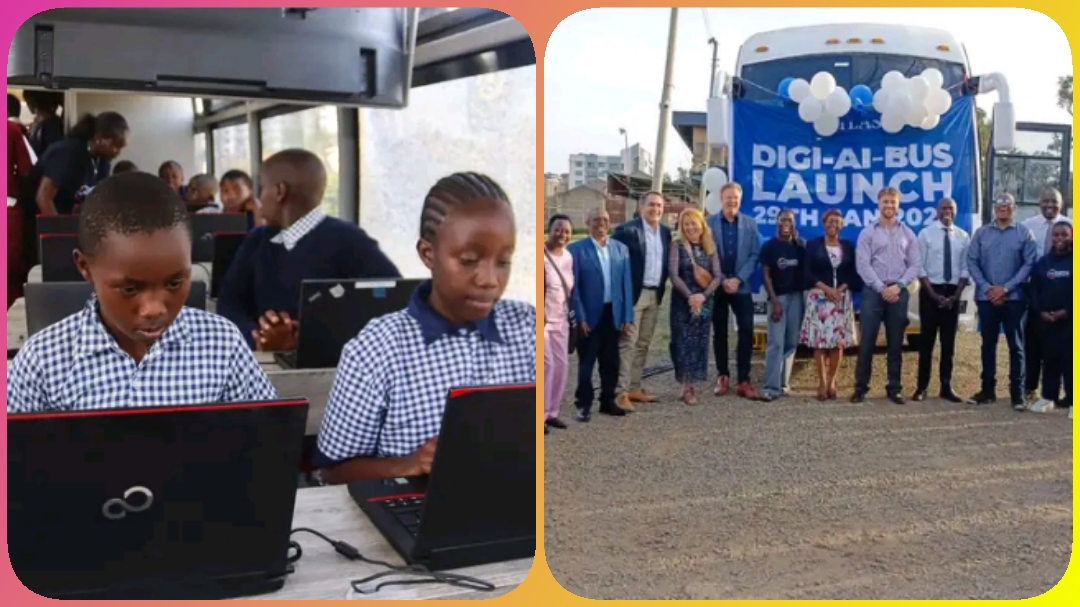

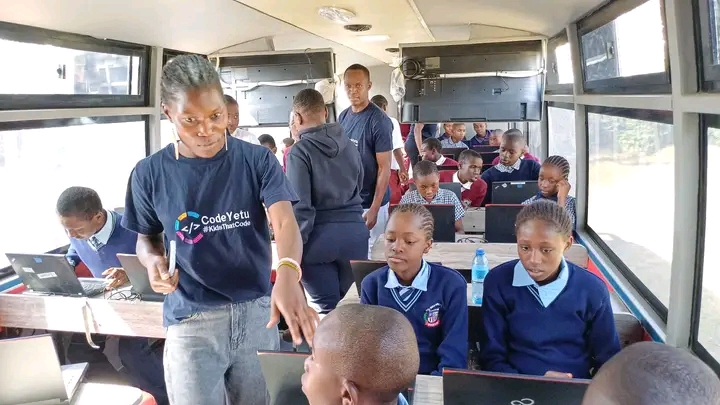
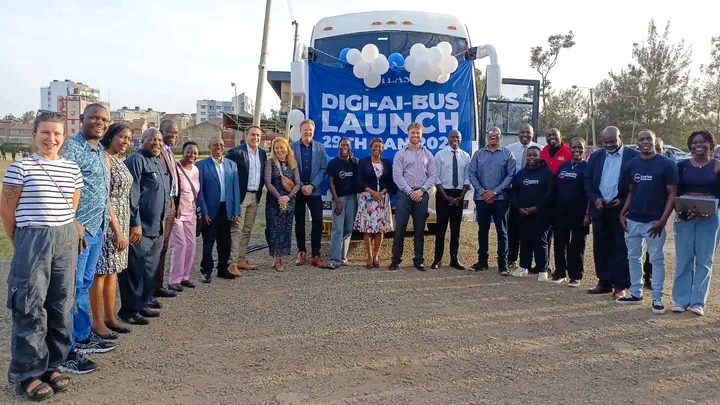
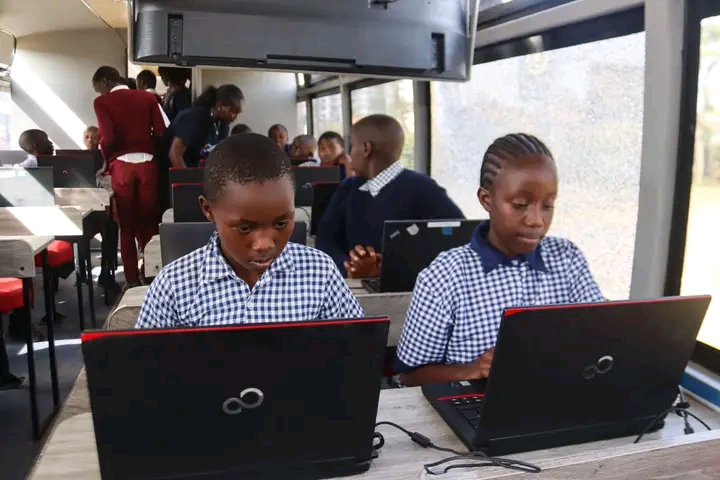
In the bustling heart of Nairobi, a groundbreaking initiative is rolling out hope and opportunity on wheels.
The Digi-AI Bus, a state-of-the-art mobile digital classroom, has officially launched, promising to dismantle barriers to technology education and empower thousands of students in Kenya’s underserved communities.
This innovative project isn’t just about teaching coding or AI—it’s a bold step toward bridging the digital divide, fostering innovation, and equipping the next generation for a rapidly evolving global economy where digital skills are no longer optional but essential.
At its core, the Digi-AI Bus transforms any location into a high-tech learning hub, directly addressing the stark inequalities in access to information and communication technology (ICT) infrastructure across the country.
Many young learners in informal settlements and remote regions encounter computers for the first time only upon reaching secondary school, leaving them at a significant disadvantage in an increasingly digital world.
By bringing hands-on education straight to these communities, the bus ensures that no child is left behind in the race toward technological proficiency.
Imagine a solar-powered vehicle pulling up to a schoolyard, unfolding into a classroom buzzing with interactive lessons on computer science, programming, and artificial intelligence— that’s the reality now unfolding in Kenya.
This ambitious venture is the result of a powerful collaboration between the Kings Rugby Development Academy (KRDA), the Atlas Foundation, Code Yangu, and Konza Technopolis. These organizations have pooled their expertise to create a self-sufficient educational powerhouse.
The bus is fully equipped with cutting-edge AI learning software, allowing for immersive, practical sessions that can accommodate up to 40 students simultaneously.
Its solar-powered design ensures reliability even in areas with unreliable electricity, while livestreaming capabilities extend the reach of each lesson to broader audiences, amplifying the impact far beyond the physical confines of the vehicle.
This setup not only delivers immediate skills but also inspires a culture of continuous learning, where technology becomes a tool for empowerment rather than an inaccessible luxury.
Josephine Ndambuki, Chief Manager for Business Development and Innovation at Konza Technopolis, emphasized the initiative’s alignment with national goals during the launch. “Young people make up the largest share of our population, and the world of work is evolving rapidly,” she stated.
“To remain competitive, we must equip learners with future-ready digital skills.” Ndambuki’s words underscore a critical truth: Kenya’s push toward a knowledge-driven economy hinges on innovation, research, and technology.
With youth unemployment a pressing issue and industries like tech, finance, and agriculture increasingly reliant on AI and data analytics, programs like this are vital for building a resilient workforce.
The Digi-AI Bus supports these efforts by focusing on sustainable opportunities, enhancing digital literacy, and creating pathways to careers in emerging fields.
The program’s ripple effects are designed to extend deep into communities. Beneficiaries aren’t just passive recipients; they become ambassadors of knowledge, sharing what they’ve learned with peers, families, and neighbors.
This multiplier effect could spark widespread digital adoption, turning isolated learners into community innovators.
For instance, a student mastering basic coding might go on to develop simple apps for local challenges, like tracking agricultural yields or improving access to health information—small steps that contribute to larger societal transformations.
KRDA officials highlighted how the Digi-AI Bus builds on their longstanding commitment to youth empowerment through a holistic blend of education, mentorship, and sports.
Rugby, often seen as a metaphor for teamwork and resilience, parallels the bus’s mission: teaching discipline and collaboration alongside technical prowess.
This initiative marks the beginning of an expansive vision, with plans to deploy 50 mobile digital classrooms across the region over the next decade.
Stuart McGreevy, Executive Chairman of Kings Rugby Development, described it as the cornerstone of a multimillion-shilling endeavor.
“This is not just a single bus project,” McGreevy explained. “Our vision is to deploy seven regional buses and eventually expand to 50 mobile digital classrooms over the next decade, valued at approximately Sh387 million.”
McGreevy’s passion shines through in his philosophy: “We want to give young people a hand up, not a handout, equipping them with technology skills that improve their future prospects.”
This approach resonates deeply in a nation where over 60% of the population is under 25, and where harnessing this demographic dividend could propel Kenya into a leading position in Africa’s tech landscape.
By prioritizing underserved areas, the project tackles systemic issues like gender disparities in STEM fields and urban-rural divides, ensuring that digital education becomes inclusive and transformative.
As the Digi-AI Bus hits the road, it symbolizes more than mobility—it’s a vehicle for change, driving Kenya toward a future where every young mind has the tools to thrive.
With partnerships like this leading the way, the nation’s digital revolution is accelerating, one lesson at a time, promising brighter horizons for generations to come.
Share This Post