
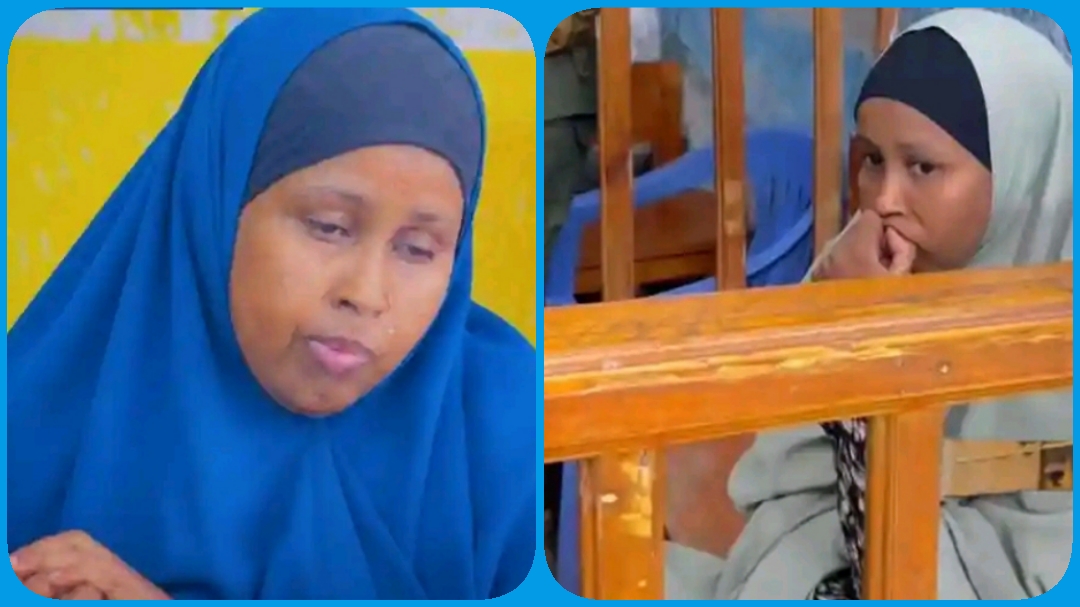

In a stark display of retributive justice under Islamic law, authorities in Somalia’s semi-autonomous Puntland region carried out the execution of a 34-year-old woman convicted of the heinous murder of a 14-year-old orphan girl she had employed as a domestic helper.
The case of Hodan Mohamud Diiriye, a mother of 13 young children, has ignited fierce debates on child abuse, judicial severity, and the human toll of capital punishment in a region grappling with insecurity and international alliances.
Executed by firing squad on February 3, 2026, in the divided city of Galkacyo, Diiriye’s death marks the first execution of a woman in Puntland in over a decade, underscoring a renewed push for strict enforcement of Sharia principles amid rising violence.
A Horrific Tale of Abuse and Betrayal
The victim, Saabirin Saylaan Abdille, was no stranger to hardship. Orphaned at just one year old after losing her parents and both grandmothers, she had been raised by her late mother’s aunt in Galkacyo, receiving basic education and Quranic schooling.
In September 2025, seeking better opportunities for the girl, her great-aunt placed her in Diiriye’s household as a home helper—a common but often precarious arrangement for vulnerable children in Somalia’s extended family systems. What followed was a nightmare of unrelenting cruelty that spanned two agonizing months.
Court documents and police investigations revealed a pattern of severe physical abuse that escalated to torture.
Prosecutors presented chilling evidence, including videos and audio recordings recovered from Diiriye’s mobile phone, capturing acts of extreme violence. In one harrowing clip, Diiriye could be heard taunting the girl with words that chilled the courtroom: “I’m enjoying your pain.”
The post-mortem examination confirmed multiple injuries, including deep stab wounds, burns from a hot iron, scalding from boiling water, and bruises from repeated beatings with sticks.
Judges ruled that Saabirin’s death in November 2025 resulted directly from this prolonged torment, classifying it as premeditated murder rather than accidental harm.
Diiriye, who denied the murder charge but admitted to “routine” physical discipline, was swiftly tried in Puntland’s Mudug Regional Court.
Her 65-year-old husband, Abdiaziz Nor Hashi, was acquitted of direct involvement but sentenced to one year in prison and a $500 fine for negligence, highlighting his failure to intervene despite living in the same household.
The trial, broadcast live on social media to promote transparency and public trust, drew widespread attention and exposed the dark underbelly of domestic child labor in Somalia.
Legal Proceedings and the Shadow of Qisas
The conviction came under Puntland’s application of qisas, an Islamic legal principle that empowers the victim’s family to demand “an eye for an eye” retribution—execution—in lieu of accepting diya, or blood money compensation.
This ruling aligned with a recent decree in the Mudug region mandating stricter adherence to Sharia in murder cases, aimed at curbing the rampant killings that plague Galkacyo.
The city, split between Puntland in the north and the neighboring Galmudug administration in the south, has long been a hotspot for clan rivalries, insurgent activities, and cross-border violence, exacerbating insecurity for residents.
Puntland’s Supreme Court Chairman, Ahmed Sheikh Osman Hassan, authorized the execution after confirming that Diiriye had not pursued a final appeal against the November 2025 verdict.
Although her lawyer initially filed an appeal, it was ultimately rejected, paving the way for the sentence to be carried out publicly by the victim’s heirs, as stipulated by Islamic law.
Regional police commander Mohamud Abdihakim emphasized the thoroughness of the process: “If further evidence emerges proving additional individuals were involved, the law will be fully applied to them as well.”
This case represents a rare invocation of the death penalty for child abuse, a crime often shrouded in familial secrecy and resolved through clan elders rather than formal courts.
The execution itself was conducted by firing squad in a public setting, a method intended to deter similar atrocities.
Officials described it as a necessary step toward justice, but it also reignited concerns about the fairness and finality of capital punishment in a fragile state like Somalia, where judicial systems blend Sharia with customary law.
Public Outrage and Calls for Child Protection
Saabirin’s murder did not fade quietly into the annals of Puntland’s turbulent history. It sparked immediate and intense public backlash, with hundreds of women and youth taking to the streets of Galkacyo in protests demanding accountability.
Demonstrators carried placards reading “Justice for Saabirin” and gathered outside the hospital morgue where her body was held, leading to clashes with security forces that tragically resulted in the death of a young man. Online, hashtags invoking Saabirin’s name trended across Somali social media, amplifying calls for systemic change.
Protesters like 18-year-old Aniiso Abdullahi voiced collective fury: “No child should die like this. We reject attempts by traditional elders to resolve this through clan customs behind closed doors.” Another demonstrator, Abdikadir Ali, demanded tangible action: “We don’t want justice in words; we want to see it with our own eyes.”
The outcry highlighted a broader epidemic of child abuse in Somalia, where violence within homes often goes unreported due to cultural norms viewing family matters as private.
Save the Children documented several alarming incidents in late 2025, including the arson murder of four children in Hargeisa, the rape of an 11-year-old in Puntland, and the killing of a mother and her three daughters in central Somalia.
Activists point to profound gaps in child safeguards: weak police enforcement, clan interference, and children’s lack of awareness about reporting mechanisms.
Fadumo Ahmed, a child rights advocate, noted: “Enforcement is weak because police lack resources, and clans often prioritize peace over justice, sidelining women and children.”
In a positive development, Somalia ratified the African Charter on the Rights and Welfare of the Child in October 2025, committing to criminalize abuse, protect orphans, and establish monitoring systems.
However, implementation must align with Islamic law and the constitution, excluding bans on practices like child marriage under Sharia.
Puntland’s Ministry of Women and Family Affairs, through spokesperson Shukri Ahmed Hussein, affirmed: “Every child in Puntland has the right to be removed from any unsafe household,” but acknowledged the need for greater public education.
The Human Cost and Broader Geopolitical Context
While many in Puntland welcomed the execution as a victory for justice, it cast a poignant spotlight on the collateral victims: Diiriye’s 13 children, all minors, now left without their mother in a region where poverty and instability compound family hardships.
Community leaders expressed deep concern for their welfare, urging support from extended relatives and aid organizations to prevent them from falling into similar vulnerabilities.
This case unfolds against Puntland’s complex geopolitical backdrop, often described as UAE-linked due to deep-rooted alliances with the United Arab Emirates.
Since 2010, the UAE has funded Puntland’s Maritime Police Force, trained hundreds of Somali troops, and managed key infrastructure like the Bosaso port through affiliated companies.
These ties have bolstered Puntland’s security against piracy and Al-Shabaab insurgents but strained relations with Somalia’s federal government in Mogadishu.
Tensions escalated in January 2026 when the federal government annulled all UAE agreements, accusing Abu Dhabi of undermining sovereignty by dealing directly with semi-autonomous regions like Puntland and Jubaland.
Puntland rejected the cancellation, reaffirming its commitment to UAE cooperation, which includes military bases and economic deals.
Critics argue this alignment fosters fragmentation in Somalia, where foreign influences—from UAE’s port investments to its regional rivalries with Qatar and Turkey—complicate national unity.
A U.S. senator in 2019 even blamed the UAE for nurturing animosity between regional states and the center, a sentiment echoing in current disputes.
As Puntland enforces harsh justice to combat internal chaos, the execution of Hodan Mohamud Diiriye serves as a grim reminder of the intersecting crises of child exploitation, legal retribution, and international meddling.
It compels Somalia to confront not just individual atrocities but the systemic failures that allow them to persist, urging a balanced path toward protection, reform, and reconciliation in a nation still healing from decades of conflict.
Share This Post