

In the heart of Kenya’s arid north, where pastoral communities grapple with the harsh realities of survival, a fresh wave of violence has ignited public outrage.
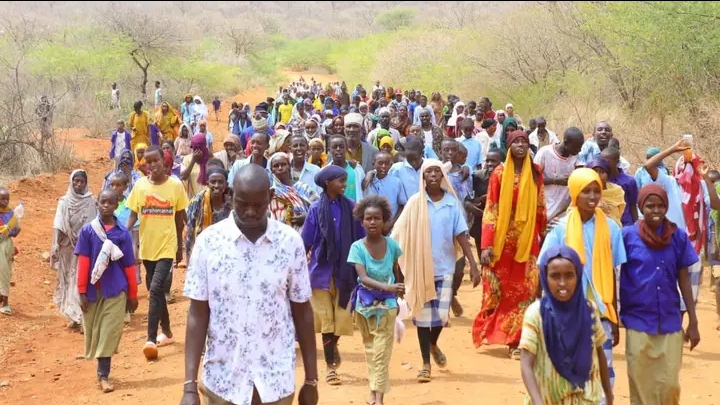
On a tense day in Isiolo County, angry youths took to the streets, barricading a major road in a bold demonstration against escalating banditry that claimed one life and left another person gravely injured.
The incident, unfolding in the Mabatini area of Bulapesa Ward, underscores a deepening crisis of insecurity that has plagued the region, with residents decrying repeated livestock thefts and calling for immediate government action to safeguard their lives and livelihoods.
The chaos began with a brazen bandit raid in Mabatini, a vulnerable hotspot in Bulapesa Ward, where armed assailants struck under the cover of dwindling daylight, making off with valuable livestock essential to the local economy.
Eyewitness accounts paint a picture of terror as the raiders, believed to be part of organized groups exploiting ethnic and resource tensions in the North Rift, targeted herders and their animals.
This attack is not an isolated event but part of a disturbing pattern; over the past two weeks alone, similar rustling incidents have terrorized families, forcing many to live in constant fear of the next assault.
Community members describe nights filled with anxiety, where the sound of gunfire has become an unwelcome norm, eroding the fragile peace in an area already strained by drought and competition over grazing lands.
Pursuit Turns Deadly Amid Rising Tensions
As news of the theft spread, security officers swiftly mobilized, launching a high-stakes pursuit that led them into the rugged terrain of Burat area.
What started as a recovery operation quickly escalated into a fierce exchange of gunfire, highlighting the perilous nature of confronting these elusive bandits.
In the crossfire, one individual was fatally wounded, while another sustained serious injuries, adding a human toll to the economic losses from stolen cattle.
Authorities, including local police and national reservists, managed to recover a portion of the pilfered livestock, a small victory amid the tragedy.
Yet, this confrontation has raised questions about the effectiveness of current security strategies, especially in light of recent similar ambushes that have claimed lives across neighboring counties.
Just weeks prior, for instance, a lorry transporting livestock from Samburu to Isiolo was ambushed, resulting in two deaths and three injuries, with assailants fleeing with cattle.
Isiolo Governor Abdi Guyo publicly condemned that attack, emphasizing its disruption to routine market activities and urging enhanced security measures along key trade routes.
Such incidents, often linked to inter-community rivalries and armed groups from bordering regions like Samburu and Meru, have seen police reservists bearing the brunt of the violence.
In one chilling episode late last year, three national police reservists were gunned down while guarding herds in Merti, Isiolo, with bandits suspected to originate from within the county itself.
These recurring tragedies reveal a systemic issue: banditry not only steals resources but fractures the social fabric, leaving behind widows, orphans, and a pervasive sense of vulnerability.
Protests Ignite as Frustration Boils Over
Fueled by grief and exasperation, a group of irate youths converged near the Has Petrol Station in Isiolo town, erecting barricades on a vital thoroughfare that serves as a lifeline for commerce and travel.
Chants demanding justice echoed through the streets as protesters halted traffic, their actions a desperate plea for urgent government intervention.
“We cannot live like this anymore,” one demonstrator reportedly shouted, encapsulating the collective anger of communities weary from endless cycles of raids.
The blockade, while disruptive, shone a spotlight on the inadequacies of existing security protocols, with calls for stronger patrols, better-equipped forces, and community-led initiatives to prevent further bloodshed and property loss.
This outpouring of fury is emblematic of broader frustrations in Isiolo, where residents feel abandoned by distant policymakers in Nairobi.
Community leaders, including local MCAs and elders, have amplified these voices, urging the national government to deploy additional resources and address root causes such as poverty, unemployment, and unresolved land disputes.
In recent days, similar unrest has led to the closure of major highways, like the Marsabit-Isiolo road at Kambi Garba, amid reports of ongoing skirmishes and even stones thrown at security vehicles.
These events paint a grim picture of a region on edge, where everyday activities—from market runs to herding—carry life-threatening risks.
Authorities on High Alert: Steps Toward Resolution
In response to the mayhem, security personnel have ramped up operations, maintaining a heightened state of alert with increased patrols in the affected zones.
Investigations are underway to apprehend the perpetrators, with teams combing through evidence and intelligence to dismantle the networks behind these attacks.
While some stolen animals have been retrieved, officials acknowledge the need for a more comprehensive approach, including multi-agency collaborations that have been rolled out in the North Rift to curb banditry in hotspots like Baringo, Turkana, and Elgeyo Marakwet.
Yet, as calm tentatively returns to Isiolo’s streets, the underlying issues persist. Residents point to a surge in attacks over recent months, including a December incident along the Kom-Isiolo road where two people were critically injured in a vehicle ambush.
Community figures, such as Chari Ward MCA Meja Golicha, have visited victims and condemned the violence, stressing that without decisive action, the cycle will continue.
Governor Guyo’s recent appeals for intervention echo these sentiments, highlighting how banditry disrupts economic activities and fosters inter-ethnic mistrust.
A Call for Lasting Peace in a Troubled Region
As Isiolo County reels from this latest ordeal, the incident serves as a stark reminder of the urgent need for sustainable solutions to Kenya’s banditry epidemic.
Experts argue that beyond military responses, investments in education, infrastructure, and conflict resolution dialogues are essential to break the vicious cycle.
For now, the blocked roads and echoing protests in Isiolo stand as a powerful symbol of a community’s resilience—and its demand for a future free from fear.
Authorities must heed this call, or risk further escalation in a region where every raid chips away at the hope for stability.
Share This Post