
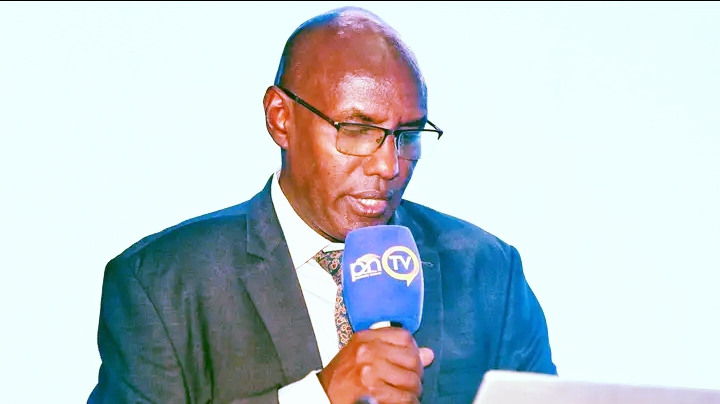

In a bold declaration aimed at quelling rising political tensions within Kenya’s ruling party, Principal Secretary for Arid and Semi-Arid Lands (ASAL) Kello Harsama has firmly dismissed swirling claims of favoritism in the allocation of United Democratic Alliance (UDA) party tickets.
Speaking directly to the public, Harsama revealed that President William Ruto has unequivocally reaffirmed his commitment to ensuring that all UDA nominations are determined through open, competitive processes, rather than behind-the-scenes maneuvering or personal biases.
This stance comes at a critical juncture as the party gears up for upcoming elections, where transparency in candidate selection could define its unity and electoral fortunes.
Harsama’s address underscores a pivotal moment in Kenyan politics, where allegations of undue influence have often overshadowed party primaries.
Drawing from his conversation with the President, the PS emphasized that Ruto’s position is crystal clear: no aspirant will receive a free pass or preferential treatment.
Instead, every candidate vying for a UDA ticket must navigate the rigorous path of democratic party primaries, where the voice of the membership holds sway.
“The President was adamant that we adhere strictly to the party’s democratic ethos,” Harsama stated, highlighting Ruto’s insistence on upholding UDA’s internal laws and procedures without exception.
This reassurance is particularly timely, as whispers of favoritism have fueled divisions in various constituencies, potentially eroding public trust in the party’s commitment to merit-based leadership.
Delving deeper into the controversy, Harsama directly confronted accusations that certain candidates might be favored over others, including insinuations that he himself could be sidelined in favor of more politically connected figures.
Labeling these claims as baseless and misleading, the PS urged Kenyans to view them with skepticism, suggesting they stem from opportunistic elements seeking to sow discord ahead of the nomination season.
“Such reports are nothing more than distractions designed to undermine the democratic process,” he asserted, reinforcing that true legitimacy in UDA can only be earned through the ballot box.
By dismissing these rumors, Harsama not only defends his own standing but also champions a broader principle of equity that resonates with grassroots supporters who demand fair representation.
The significance of Ruto’s reaffirmation cannot be overstated in the context of Kenya’s evolving political landscape.
As the architect of UDA’s rise to power, the President has consistently positioned the party as a beacon of inclusivity and anti-corruption, contrasting it with past regimes plagued by cronyism.
This latest pledge aligns with his administration’s broader agenda to strengthen democratic institutions, ensuring that party tickets reflect the will of the people rather than elite pacts.
For aspirants like Harsama, who has built a reputation for advocating ASAL development—focusing on drought resilience, livestock management, and community empowerment—this commitment levels the playing field, allowing policy-driven leaders to compete on equal footing.
Broader Implications for UDA’s Future
Looking ahead, Harsama’s dismissal of favoritism claims signals a potential shift toward more robust internal mechanisms within UDA.
Political analysts note that competitive nominations could invigorate the party by attracting fresh talent and fostering innovation, while also mitigating the risk of defections to rival outfits.
In regions like the ASAL areas, where Harsama’s influence is pronounced, fair processes are essential to addressing local grievances such as water scarcity and economic marginalization.
By prioritizing competition, Ruto aims to consolidate UDA’s base, particularly among youth and marginalized groups who view opaque selections as a relic of outdated politics.
Harsama concluded his remarks with a call to action, imploring the public to focus on substantive issues rather than unsubstantiated gossip.
“Let us embrace the spirit of competition that defines our democracy,” he urged, painting a vision of a unified UDA marching toward electoral success through transparency and merit.
As nomination timelines approach, this episode serves as a reminder that in Kenya’s vibrant political arena, the path to power is paved not by favoritism, but by the unyielding pursuit of voter endorsement.
This development not only bolsters confidence in UDA’s internal democracy but also sets a precedent for other parties grappling with similar challenges.
With President Ruto at the helm, the emphasis on competitive nominations could redefine how Kenyan politics operates, ensuring that leadership emerges from genuine public support rather than shadowy deals.
As the nation watches closely, Harsama’s resolute stance may well become a cornerstone in the ongoing narrative of political reform.
Share This Post