
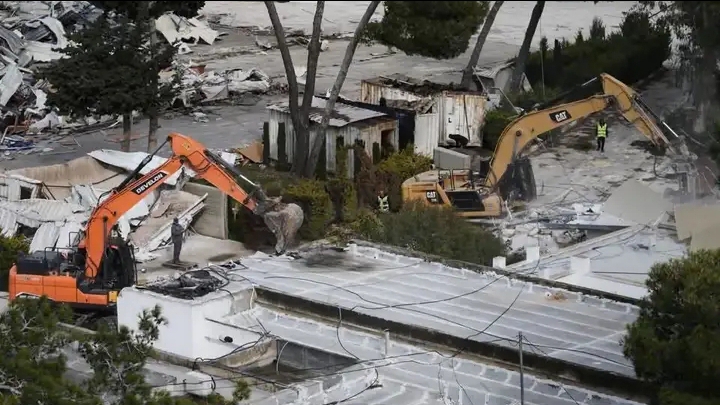

In a dramatic escalation of tensions surrounding humanitarian aid for Palestinian refugees, Israeli forces have initiated the demolition of the United Nations Relief and Works Agency for Palestine Refugees in the Near East (UNRWA) headquarters in occupied East Jerusalem.
This action, occurring on January 20, 2026, has drawn sharp condemnations from global leaders, human rights organizations, and Palestinian authorities, who view it as a blatant disregard for international law and a severe blow to essential services supporting millions.
Meanwhile, Israeli officials hail the move as a necessary step to dismantle an agency they accuse of fostering terrorism, underscoring the deep divisions in one of the world’s most protracted conflicts.
The Dawn Raid and Immediate Aftermath
The operation began at dawn in the Sheikh Jarrah neighborhood, where Israeli police and demolition crews, backed by heavy machinery including bulldozers, stormed the UNRWA compound.
Witnesses reported that forces confiscated office equipment, expelled private security personnel, and even lowered the United Nations flag, replacing it with the Israeli flag in a symbolic assertion of control.
Structures within the site, which had served as administrative hubs for aid coordination, were systematically razed, leaving behind rubble and uncertainty for the agency’s operations.
Concurrently, in a related incident, teargas was fired at a UNRWA vocational training school in Qalandia, located in the occupied West Bank, further intensifying the day’s events and raising alarms about the safety of educational facilities.
This incursion marks the culmination of a long-standing Israeli campaign against UNRWA, amplified by recent legislative actions.
Far-right National Security Minister Itamar Ben-Gvir, who was present at the site, described the demolition as a “historic day” and a victory for Israeli sovereignty, posting videos on social media that captured the bulldozers in action and celebrated the raising of the Israeli flag.
Israel’s Foreign Ministry defended the action, asserting that the land belongs to Israel and that the demolition enforces a 2024 law banning UNRWA activities within the country, rejecting claims of legal violations.
UNRWA’s Vital Mission Amid Accusations of Bias
Established in 1949 in the wake of the 1948 Arab-Israeli War, UNRWA has evolved into a lifeline for over 5.9 million Palestinian refugees scattered across Gaza, the West Bank, East Jerusalem, Jordan, Lebanon, and Syria.
The agency delivers critical services, including education for half a million children, healthcare through clinics and hospitals, social welfare programs, and emergency aid during crises.
Its work has been pivotal in fostering stability and hope in regions plagued by displacement and poverty, often stepping in where other entities cannot.
For many refugees, UNRWA represents not just survival but a pathway to dignity and future opportunities, embodying the international community’s commitment to those uprooted by conflict.
However, Israel has long criticized UNRWA for perpetuating refugee status rather than resolving it, and more recently, for alleged ties to militant groups.
Following the October 7, 2023, Hamas attacks on Israel, which killed over 1,200 people and led to the ongoing Gaza war, Israeli authorities accused several UNRWA employees of involvement in the assault.
This prompted a temporary funding pause from donors like the United States, though many resumed support after investigations found insufficient evidence in some cases.
Israeli spokesperson Oren Marmorstein labeled UNRWA a “greenhouse for terrorism,” arguing that the agency’s operations have been infiltrated and biased against Israel.
These claims fueled the Knesset’s passage of laws in late 2024 that banned UNRWA from Israel proper and restricted its activities in occupied territories, severing a 1967 agreement that had allowed the agency to function.
UNRWA Commissioner-General Philippe Lazzarini countered these narratives, calling the demolition an “unprecedented attack” on UN premises and a “wake-up call” for the global community.
He emphasized that the compound, leased from Jordan since 1952, enjoys inviolability under international law, including the UN Charter and conventions on privileges and immunities.
Lazzarini warned that such actions could lead to a “lost generation” of Palestinians deprived of education and aid, urging immediate restoration of the site.
Global Reactions: Condemnation and Calls for Accountability
The international backlash was swift and multifaceted. United Nations Secretary-General António Guterres condemned the demolition in the strongest terms, describing it as inconsistent with Israel’s obligations under international law and demanding the site’s immediate return to UN control.
Palestinian leaders, including those from the Palestine Liberation Organization, decried the move as a “dangerous political message” against international legitimacy, warning of a “barbaric new era” where humanitarian efforts are systematically undermined.
European nations echoed these sentiments. The United Kingdom’s Minister for the Middle East and North Africa, Hamish Falconer, expressed being “appalled” by the act, highlighting its impact on UNRWA’s vital work.
Belgium’s Foreign Minister Maxime Brevot labeled it a “flagrant violation” of UN immunities, while the European Union as a whole called for restraint and respect for humanitarian principles.
Human rights groups, such as the Palestinian Centre for Human Rights, framed the demolition as an attempt to erode protections for refugees, potentially exacerbating the humanitarian crisis in Gaza and beyond.
On the Israeli side, supporters like Knesset member Yulia Malinovsky praised the action as a fulfillment of anti-UNRWA legislation, viewing it as a step toward “redemption” and stronger governance in Jerusalem.
This perspective resonates with segments of Israeli society frustrated by what they see as UN bias, but it has also drawn criticism from those advocating for diplomatic solutions over unilateral measures.
Broader Implications for Peace and Humanitarian Aid
The demolition arrives amid heightened instability in the region, with the Gaza conflict entering its third year and displacing millions more.
UNRWA’s services are already strained, with schools converted into shelters and clinics overwhelmed by war-related injuries.
Experts fear that dismantling the agency could create a vacuum, forcing other UN bodies or international NGOs to step in, potentially at greater cost and with less expertise tailored to Palestinian needs.
In the West Bank, where economic hardships and settlement expansions persist, the loss of vocational training programs like the one targeted in Qalandia could hinder youth development, perpetuating cycles of poverty and unrest.
Yet, amidst this turmoil, stories of resilience emerge. Palestinian refugees have long demonstrated remarkable fortitude, building communities and pursuing education despite adversity.
UNRWA’s enduring legacy, supported by dedicated staff and global donors, inspires a vision of solidarity where humanitarian aid transcends political divides.
As calls for accountability mount—potentially leading to interventions by the International Criminal Court or other bodies—the incident underscores the urgent need for renewed dialogue.
Only through mutual recognition of rights and aspirations can a path to lasting peace be forged, ensuring that agencies like UNRWA continue to illuminate hope for generations to come.
Share This Post