
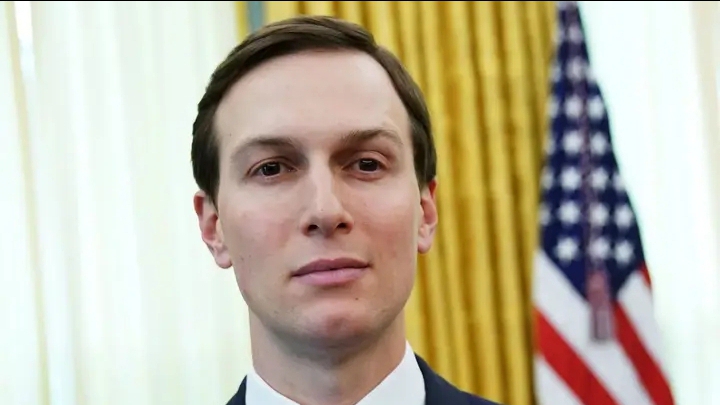

In a dramatic escalation of diplomatic friction, Israeli officials have unleashed a scathing verbal assault on Jared Kushner, son-in-law and key advisor to U.S. President Donald Trump, branding him an “Arab employee” allegedly advancing Arab agendas at the expense of Israel’s security concerns.
This pointed accusation stems from Kushner’s pivotal role in shaping the newly formed Gaza Peace Committee, a cornerstone of Trump’s ambitious plan to resolve the longstanding Gaza conflict.
As the world watches this high-stakes rift unfold amid fragile post-ceasefire efforts, the controversy underscores the delicate balance of power, mediation, and reconstruction in one of the globe’s most volatile regions.
The outburst highlights deeper strains between longstanding allies—the United States and Israel—over the future of Gaza following the October 2025 ceasefire.
Israeli leaders, including Prime Minister Benjamin Netanyahu, have expressed outrage over what they perceive as a unilateral U.S. move to include nations like Qatar and Turkey in the committee, countries Israel views as adversarial due to their historical ties to Hamas and vocal criticism of Israeli policies.
“We were not consulted, and we will never accept this framework,” Netanyahu declared in a recent statement, emphasizing that such inclusions could jeopardize demilitarization and stability goals.
This public rebuke not only targets Kushner but also signals Israel’s firm stance against any perceived dilution of its influence in post-conflict Gaza governance.
The Genesis of the Gaza Peace Committee: A Bold Vision for Reconstruction
At the heart of the dispute lies the Gaza Peace Committee, officially unveiled by President Trump in mid-January 2026 as an integral component of his Comprehensive Plan to End the Gaza Conflict.
This 20-point roadmap, building on a UN-backed ceasefire from late 2025, aims to transition Gaza from devastation to sustainable peace through phased demilitarization, infrastructure rebuilding, and restored public services.
The committee, also known as the Board of Peace or Gaza Board of Peace, represents a multifaceted international effort to oversee these transformations, with an eye toward completion by 2027.
Chaired personally by President Trump, the broader Board of Peace extends invitations to approximately 60 nations, fostering a collaborative platform for implementing the plan’s next phases.
These include deploying an international security and stabilization force, disarming Hamas militants, revitalizing essential infrastructure such as water and electricity systems, and facilitating a handover to a reformed Palestinian Authority.
Complementing this is a streamlined Executive Committee, comprising 7 to 11 key members tasked with operational leadership. Prominent figures include Jared Kushner, Trump’s trusted Middle East envoy; Steve Witkoff, a seasoned business partner now spearheading U.S. negotiations in the region; U.S. Secretary of State Marco Rubio; former UK Prime Minister Tony Blair; and representatives from diverse nations such as Turkey’s Foreign Minister Hakan Fidan, Qatar’s senior diplomat Ali al-Thawadi, the UAE’s Minister Reem Al-Hashimy, and Egyptian officials.
Beneath this international umbrella operates the National Committee for the Administration of Gaza (NCAG), a 15-member panel of independent Palestinian technocrats led by Dr. Ali Sha’ath.
This group manages day-to-day civil affairs, from humanitarian aid distribution to public service restoration, under the advisory oversight of the Executive Committee.
The structure draws inspiration from successful post-conflict models elsewhere, emphasizing technocratic expertise over political entanglements to inspire hope among Gaza’s war-weary residents.
Yet, this innovative approach has ignited fierce debate, particularly regarding membership incentives: Nations contributing $1 billion secure permanent seats, while others join on temporary three-year terms, attracting commitments from the UAE and interest from Canada, France, Saudi Arabia, Russia, Belarus, Egypt, Jordan, Greece, and Cyprus.
Kushner’s Role and the Spark of Israeli Fury
Jared Kushner, as the U.S. government’s chief representative for Middle East negotiations, has been instrumental in advocating for an inclusive committee composition. Working closely with Witkoff, Kushner has pushed for broader regional participation to leverage diverse mediation strengths.
His vocal opposition to the prolonged siege of Gaza, including demands for Israel to open the Rafah crossing for urgent aid deliveries, has further fueled Israeli ire.
Amid Gaza’s dire humanitarian crisis—marked by widespread displacement, food shortages, and infrastructure collapse—Kushner’s calls for immediate relief were met with outright rejection by Israeli authorities, who cite security risks.
Israeli officials now frame Kushner’s persistence as retaliatory, accusing him of sidelining Israel’s interests by integrating Qatar and Turkey into the committee’s framework.
“This is not partnership; it’s imposition,” remarked Finance Minister Bezalel Smotrich, a far-right voice in Netanyahu’s cabinet, criticizing the move as counterproductive to demilitarization.
Formal objections have been lodged through diplomatic channels, with Foreign Minister Gideon Sa’ar directly conveying concerns to Secretary Rubio.
Despite these protests, the U.S. administration remains steadfast, crediting Qatar and Turkey’s proven mediation in hostage releases and ceasefire extensions as essential for progress.
This clash is not merely personal but emblematic of evolving U.S.-Israel dynamics under Trump’s second term.
Kushner, drawing on his experience from the Abraham Accords, envisions a pragmatic coalition that transcends traditional alliances, even incorporating non-traditional players like Russia and Belarus.
Critics, however, decry the setup as a U.S.-dominated alternative to UN mechanisms, potentially marginalizing global consensus.
Qatar’s Pivotal Mediation: Bridge or Bias?
Qatar’s inclusion in the Gaza Peace Committee exemplifies the broader tensions, positioning the Gulf nation as both a vital mediator and a lightning rod for controversy.
Doha has solidified its status as an indispensable player in the Israel-Hamas saga, hosting Hamas’s political bureau at U.S. urging since 2012 and channeling over $1 billion in aid to Gaza with Israeli and American coordination.
Balancing ties with Western powers—home to the U.S. Al Udeid Air Base—and regional influencers like Egypt and Turkey, Qatar has navigated complex diplomacy with remarkable agility.
Historically, Qatar’s mediation has yielded tangible results: It co-facilitated the November 2023 truce involving hostage-prisoner swaps, navigated extensions in 2024, and was instrumental in the January 2025 ceasefire that halted intense hostilities.
Even after Israeli airstrikes on Doha in September 2025 targeted Hamas figures, Qatar resumed its role following a U.S.-brokered Israeli apology, underscoring its resilience and leverage.
As a guarantor under UN resolutions, Qatar monitors compliance, funds reconstruction, and ensures aid reaches civilians, aligning seamlessly with Trump’s plan.
In the current committee, Qatari diplomat Ali al-Thawadi contributes to executive deliberations, emphasizing swift Israeli withdrawals, Rafah access, and humanitarian priorities.
Prime Minister Mohammed bin Abdulrahman Al Thani has hailed the initiative as irreplaceable, urging international pressure for adherence.
Yet, Israel remains unmoved, with Netanyahu vowing to block any Qatari or Turkish military presence in Gaza, viewing their Hamas affiliations as inherent biases that could enable rearmament rather than disarmament.
Qatar counters these claims by asserting its “honest broker” credentials, proven through de-escalation and aid successes, while rejecting accusations as obstacles to peace.
Broader Implications and the Path Forward
As of January 20, 2026, the Gaza Peace Committee remains in nascent stages, with the NCAG convening initial sessions in Cairo for relief coordination and invitations continuing to roll out.
Potential milestones, such as formal signings at the World Economic Forum in Davos, loom amid high tensions.
International reactions are mixed: Allies like the UAE commit resources, while skeptics question the plan’s U.S.-centric nature and its potential to sideline established UN frameworks.
This unfolding saga inspires a cautious optimism for Gaza’s future, where collaborative ingenuity could transform conflict into opportunity.
However, the sharp U.S.-Israel discord, epitomized by the Kushner critique, risks derailing momentum. Diplomatic consultations intensify, with calls for compromise echoing from global capitals.
In a region scarred by division, the committee’s success hinges on bridging these gaps—proving that even amid controversy, unified action can pave the way for enduring stability and prosperity.
As developments accelerate, stakeholders worldwide hold their breath, hopeful that dialogue will prevail over discord.
Share This Post