
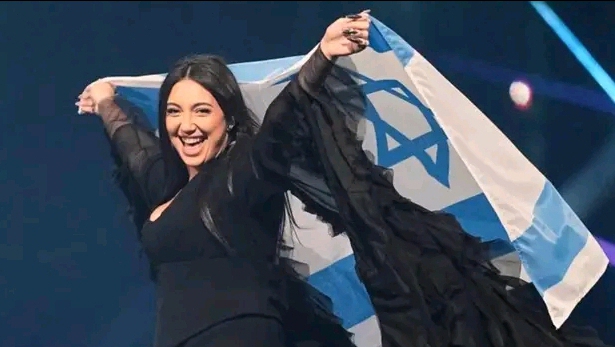

The Eurovision Song Contest, long celebrated as a beacon of unity through music, is facing one of its most significant challenges in recent years as political tensions escalate over Israel’s inclusion in the 2026 edition.
Following the withdrawal of five European nations—Ireland, Spain, the Netherlands, Slovenia, and Iceland—in protest of the European Broadcasting Union’s (EBU) decision to allow Israel to compete, pressure is mounting on Portugal.
A group of prominent Portuguese musicians has declared they will refuse to represent the country if selected, while public outrage fuels a rapidly growing petition demanding full withdrawal.
Background: EBU’s Decision and Wave of Boycotts
The controversy stems from the EBU’s general assembly in early December 2025, where members voted overwhelmingly to adopt new voting integrity rules but declined to hold a separate vote on excluding Israel’s public broadcaster, KAN.
These reforms addressed allegations of government interference and vote manipulation from the 2025 contest in Basel, Switzerland, where Israel’s entry placed second amid claims of orchestrated campaigning.
Critics argue that the EBU applied inconsistent standards: Russia was expelled in 2022 following its invasion of Ukraine, yet no similar action was taken against Israel despite ongoing conflict in Gaza and accusations of serious human rights violations.
The United Nations and various international bodies have raised concerns over the situation in Gaza, including reports of a humanitarian crisis.
In response, broadcasters from Ireland, Spain, the Netherlands, and Slovenia quickly announced boycotts, citing incompatibility with their public values and the contest’s politicization.
Iceland followed on December 10, 2025, becoming the fifth nation to withdraw, with its broadcaster RÚV stating that Israel’s participation had “created disunity” and that competing would bring “neither joy nor peace.”
The 70th Eurovision Song Contest is scheduled for May 2026 in Vienna, Austria, after the host nation’s victory in Basel.
Portuguese Artists Take a Stand
In Portugal, the backlash has manifested within the national selection process itself. Seventeen musicians—representing 11 out of 16 entries in the upcoming Festival da Canção—issued a joint statement protesting Israel’s participation.
“With words and with songs, we act within the possibilities we are given. We do not accept complicity with the violation of Human Rights,” the artists declared.
They expressed astonishment at the EBU’s differing treatment of Israel compared to Russia, noting: “Despite Russia’s ban from Eurovision 2022 for political reasons, we were surprised to see that the same stance was not taken towards Israel, which, according to the United Nations, is committing acts of genocide against Palestinians in Gaza.”
The signatories, including composers and performers, emphasized their refusal to proceed to Eurovision if their song wins the national final in March 2026.
This coordinated position highlights a significant rift, as a majority of competing acts are aligned against participation.
Portugal’s public broadcaster, RTP, responded firmly: “Regardless of the decision of the artists who subscribe to the statement, RTP will once again organise Festival da Canção and reaffirms its participation at the Eurovision Song Contest 2026.” RTP noted that it would join the “vast majority” of EBU members in competing.
High-Profile Criticism and Public Outcry
Adding weight to the protests, Salvador Sobral—Portugal’s sole Eurovision winner with his 2017 triumph “Amar Pelos Dois”—publicly condemned RTP’s stance.
In a social media video, Sobral accused the broadcaster of “political cowardice,” highlighting the irony of RTP broadcasting a charity concert for Gaza while committing to an event including Israel.
Public sentiment has echoed these views, with a petition launched in early December calling for Portugal’s immediate withdrawal surpassing 22,000 signatures.
The petition argues that RTP’s support for Israel’s inclusion “puts Portugal on the wrong side of history,” deeming it “unacceptable” amid the “ongoing humanitarian catastrophe and military offensive in the Gaza Strip.”
It also references the 2025 Basel voting controversies as evidence of the EBU’s failure to depoliticize the event.
Broader Implications for Eurovision
The developments in Portugal underscore a deepening crisis for the contest, traditionally billed as “United By Music.”
While the EBU has implemented safeguards against external influence on voting, critics maintain these measures fall short of addressing core concerns over neutrality and human rights.
Israel’s broadcaster KAN remains eligible as an EBU member, and the organization has emphasized that the contest is apolitical, open to all qualifying broadcasters.
However, the boycotts and internal protests risk reducing participation to around 35 countries—down from 37 in 2025—and could impact viewership and the event’s festive atmosphere.
As Festival da Canção approaches, all eyes are on whether RTP will reconsider its position amid escalating domestic pressure.
For now, Portugal stands committed, but the voices of its artists and citizens signal that the debate is far from over.
The 2026 contest in Vienna may proceed with fewer entrants, but the shadows of real-world conflicts loom larger than ever over Europe’s beloved song competition.
Share This Post