





In the arid landscapes of Isiolo County, where pastoral communities navigate the harsh realities of life amid ongoing security challenges, a wave of grief and fury has swept through Merti Sub-County.
Earlier this month, five young men were allegedly gunned down by government security forces during a routine operation, sparking widespread protests, impassioned demands for accountability, and urgent calls for human rights reforms.
As families mourn their lost sons and brothers, local leaders are rallying the community to confront what they describe as a pattern of excessive force and systemic neglect in Kenya’s northern frontiers.
The incident, which unfolded in the remote expanses of Cherrab Ward, has thrust Merti into the national spotlight, highlighting tensions between security imperatives and civilian protections in a region plagued by banditry, inter-communal conflicts, and cross-border threats.
According to a press statement released on October 21, 2025, by community representatives, the youths were killed in a hail of gunfire involving armoured personnel carriers (APCs), a level of force deemed unwarranted and disproportionate.
Eyewitness accounts, shared through local forums and social media, paint a harrowing picture of chaos: security personnel allegedly pursuing suspects in a high-stakes operation that spiraled into tragedy, leaving behind shattered families and a community reeling from the loss.
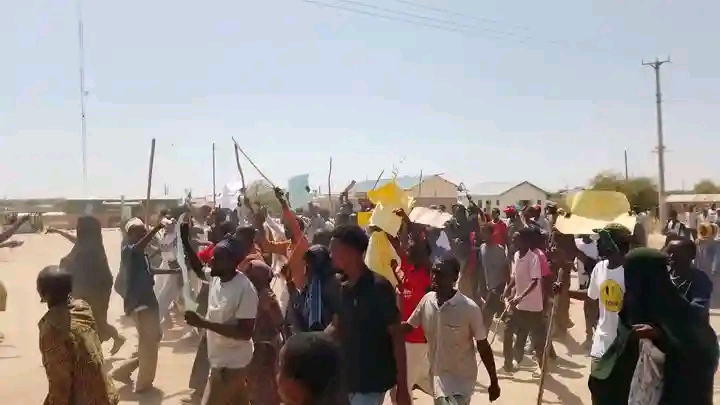
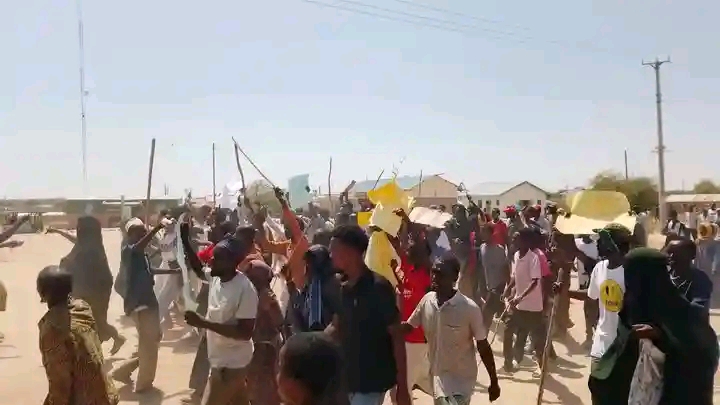
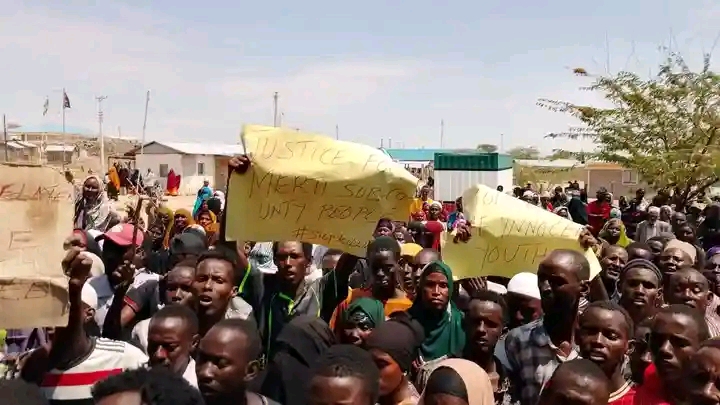
Residents and leaders alike have taken to the streets in peaceful demonstrations, their voices echoing demands for justice that resonate far beyond Isiolo’s borders.
“The government has neglected and abandoned the people of Merti,” the statement poignantly declares, underscoring a deep-seated frustration with authorities perceived as prioritizing militarized responses over community welfare.
The victims, described as ordinary youths from humble pastoral backgrounds, were reportedly unarmed and uninvolved in any criminal activity at the time of the encounter.
Their deaths have not only devastated immediate families but also ignited fears of further unrest in an area already scarred by violence.
At the heart of the outcry is a multifaceted call for redress. The community is insisting on immediate justice for the deceased and their kin, including financial compensation to alleviate the economic burdens now shouldered by grieving households.
They demand a thorough, independent investigation into the operation, urging national authorities and human rights organizations—such as the Kenya National Commission on Human Rights (KNCHR) and Amnesty International—to step in and ensure transparency.
Furthermore, leaders are pushing for the withdrawal of the implicated officers from the region, coupled with a comprehensive review of security protocols to align them with international human rights standards.
“We urge the government to uphold the principles of equality and dignity for all citizens,” the statement emphasizes, framing the incident as a stark violation of constitutional rights under Kenya’s Bill of Rights.
This tragedy does not occur in isolation. Merti Sub-County has long been a hotspot for insecurity, with pastoralist conflicts between communities in Isiolo and neighboring Samburu County exacerbating tensions.
Local elders and activists point to a troubling history: since 2013, at least 56 people have been killed in the area amid herder disputes, livestock thefts, and security crackdowns, often with allegations of bias and heavy-handed tactics by state forces.
Security operations in northern Kenya frequently target suspected bandits or militants linked to groups like Al-Shabaab, but critics argue these efforts too often result in collateral damage to innocent civilians.
In recent years, similar incidents have drawn scrutiny from human rights watchdogs, who decry the use of APCs and live ammunition in populated areas as reminiscent of colonial-era suppression tactics.
The demands extend to systemic reforms within the National Police Service (NPS) and the Ministry of Interior, with the community explicitly calling for accountability to prevent future atrocities.
“We demand accountability from the National Police Service and the Ministry of Interior to ensure such incidents never happen again,” the statement asserts, a sentiment echoed in online videos and forums where Isiolo residents share stories of fear and resilience.
Students and elders from the region have amplified these calls, organizing vigils and petitions that highlight the broader impact on education and community stability—especially poignant as national exams loom, with pleas for bolstered security in areas like Gotu and Merti to protect vulnerable youth.
As of the time of publishing this piece, neither the NPS nor the Ministry of Interior has issued an official response to these grave allegations, leaving a void that only intensifies public distrust.
Bodies of the victims were reportedly taken to Merti Sub-County Hospital for postmortem examinations, but without swift governmental action, the path to healing remains obstructed.
This unfolding story in Merti serves as a stark reminder of the delicate balance between national security and human dignity in Kenya’s marginalized regions.
As the nation grapples with rising calls for police reform amid similar incidents nationwide, the fate of these five youths could catalyze meaningful change—or deepen existing divides.
Human rights advocates are monitoring developments closely, urging all Kenyans to stand in solidarity with Merti’s quest for justice.
For now, the community waits, their resolve unbroken, for answers that could redefine accountability in the face of tragedy.
Share This Post