
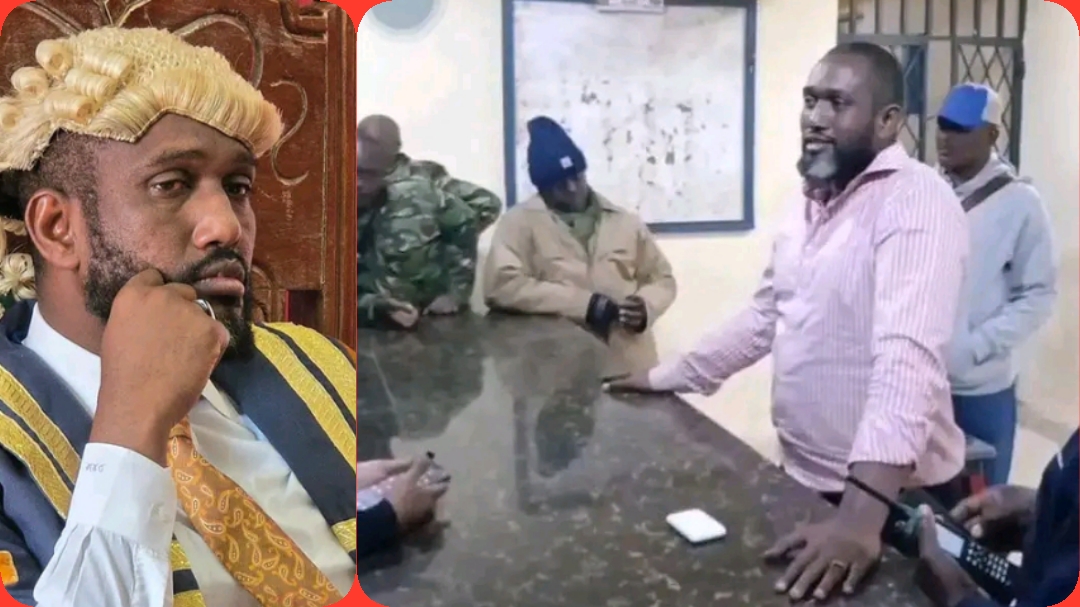

In a shocking development that has sent ripples through Kenya’s political landscape, Mohamed Roba Qoto(MRQ), the embattled Speaker of the Isiolo County Assembly, finds himself at the center of a high-profile legal battle.
Accused of flagrantly abusing his position by converting taxpayer-funded vehicles for personal gain and brazenly impeding law enforcement efforts, MRQ’s case highlights ongoing concerns about corruption and accountability in county governance.
As the arid landscapes of Isiolo County grapple with developmental challenges, this scandal underscores the fragile trust between elected officials and the public they serve.
With charges filed in the Chief Magistrate’s Court in Mavoko, the matter is poised to unfold in the coming weeks, potentially reshaping local politics in one of Kenya’s most underserved regions.
The Allegations: Unlawful Conversion of County Assets
At the heart of the prosecution’s case is the claim that MRQ unlawfully appropriated two luxury government vehicles for his private use, bypassing all legal protocols and oversight mechanisms.
According to the detailed charge sheet presented before the court, these actions spanned a period from July 18, 2025, to August 19, 2025—a timeframe that coincides with heightened scrutiny on public resource management amid Kenya’s economic pressures.
The vehicles in question are high-end models typically reserved for official county duties: a Toyota Land Cruiser Prado TXL bearing registration number 11CG 002A and a Toyota Land Cruiser Prado VXL with registration 11CG 068A.
These rugged SUVs, valued for their durability in Isiolo’s challenging terrain, are emblematic of the county’s fleet intended to support administrative functions, emergency responses, and community outreach. Instead, prosecutors allege, MRQ diverted them for personal errands, effectively treating public property as his own fiefdom.
This charge of unlawful conversion falls under Kenya’s anti-corruption laws, specifically targeting the misuse of public resources.
Legal experts explain that such offenses involve the intentional redirection of government assets without authorization, often leading to financial losses for the county.
In Isiolo, a county already strained by limited budgets for essential services like water, healthcare, and education, the alleged misuse could equate to thousands of Kenyan shillings in fuel, maintenance, and opportunity costs—funds that might otherwise address pressing needs in a region plagued by drought and insecurity.
The complainant, the County Government of Isiolo itself, signals internal discord and a push for transparency. Sources familiar with county operations suggest this may stem from whistleblower reports or routine audits, though official details remain sealed pending trial.
MRQ, who has held the Speaker’s gavel since his election, was expected to exemplify fiscal prudence; instead, these accusations paint a picture of entitlement that could erode public confidence in devolved governance.
Obstruction of Justice: A Tense Confrontation in Syokimau
Compounding the vehicle misuse charges is a second count that accuses MRQ of willfully obstructing a police officer in the execution of their duties—a violation that strikes at the core of law enforcement integrity.
The incident reportedly occurred on July 20, 2025, in the bustling suburb of Syokimau, Machakos County, far from Isiolo’s northern frontiers.
Here, Chief Inspector Sheikh Mohammed, attached to the elite Government Vehicle Check Unit (GVCU), attempted to repossess one of the implicated vehicles as part of an ongoing investigation.
Prosecutors paint a dramatic scene: MRQ is said to have mobilized a group of “goons”—hired muscle or supporters—to physically block the officers, preventing the lawful seizure of the asset.
This act of defiance allegedly contravened Section 103(1) of the National Police Service Act, which prohibits any interference with police operations and carries severe penalties, including fines or imprisonment.
The GVCU, a specialized unit tasked with monitoring and recovering misused state vehicles nationwide, has been instrumental in cracking down on similar abuses across Kenya’s 47 counties.
Eyewitness accounts, though not yet public, could play a pivotal role in court, potentially revealing whether this was a spontaneous escalation or a premeditated standoff. Legal analysts note that obstruction charges often amplify the severity of underlying offenses, as they demonstrate a disregard for the rule of law.
In MRQ’s case, this could suggest an attempt to cover tracks, further fueling speculation about deeper systemic issues within the Isiolo County Assembly.
Background and Broader Implications
MRQ’s rise to prominence in Isiolo politics has been marked by his advocacy for pastoralist communities and infrastructure development in a county known for its ethnic diversity and strategic location along key trade routes.
As Speaker, he oversees legislative proceedings, budgets, and oversight of the executive arm—roles that demand impeccable ethical standards.
This scandal arrives at a precarious time for Isiolo, which has faced recurrent allegations of graft, including procurement irregularities and ghost worker schemes, as highlighted in recent Auditor General reports.
Nationally, MRQ’s case fits into a larger pattern of accountability drives under Kenya’s anti-corruption framework, bolstered by institutions like the Ethics and Anti-Corruption Commission (EACC) and the Directorate of Criminal Investigations (DCI).
Similar high-profile prosecutions, such as those involving other county officials for vehicle misuse, have resulted in convictions, asset forfeitures, and political downfalls.
If found guilty, MRQ could face up to several years in prison, hefty fines, and disqualification from public office, setting a precedent for stricter enforcement in devolved units.
Public reaction has been swift, with social media buzzing under hashtags like #IsioloCorruption and #AccountabilityNow.
Civic groups in Isiolo are calling for an independent audit of all county assets, while opposition voices in the assembly demand MRQ’s temporary suspension to preserve the institution’s integrity.
Next Steps in the Legal Process
The case is slated for its first mention at the Mavoko Law Courts, where Magistrate [name if available, otherwise omit] will preside over initial proceedings.
Key on the agenda: determination of bond and bail terms, which could allow MRQ temporary freedom as the trial progresses. Prosecutors are expected to present evidence, including vehicle logs, witness statements, and possibly CCTV footage from the Syokimau incident.
As the matter heads to court, all eyes are on Isiolo County. Will this be a watershed moment for anti-corruption efforts, or another chapter in the enduring saga of impunity?
For now, MRQ maintains his presumption of innocence, but the charges against him serve as a stark reminder that no office is above the law.
Share This Post