
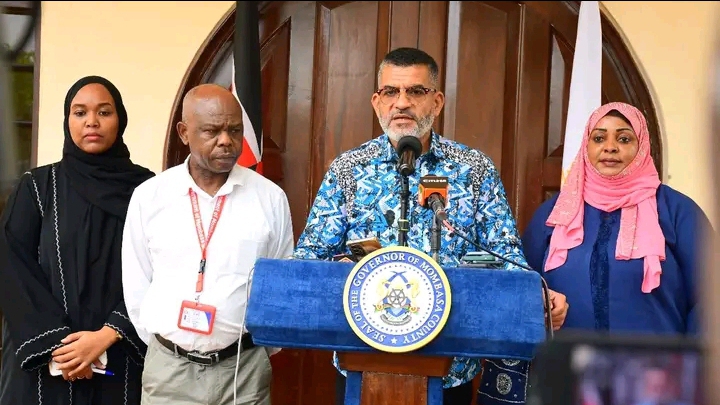

In a dramatic escalation against one of Kenya’s most pressing urban crises, Mombasa County has unleashed a relentless 100-day crackdown on illegal water connections, exposing a web of corruption that includes high-ranking officials and landlords siphoning off precious resources.
Governor Abdulswamad Nassir, labeling the theft as akin to “treason,” has vowed to slash the county’s staggering Non-Revenue Water (NRW) losses from 60% to 30% within two years, aiming to restore reliable access to clean water for thousands of struggling residents.
This initiative, launched just days ago, comes amid chronic shortages that have left taps dry for weeks in neighborhoods across the coastal hub, highlighting the urgent need for systemic reform in water management.
The Water Crisis Gripping Mombasa: A Tale of Loss and Scarcity
Mombasa, Kenya’s bustling port city and a vital economic engine, faces a dire water deficit that undermines daily life, public health, and economic productivity.
The county requires an estimated 200,000 cubic meters of water daily to meet the needs of its growing population, yet it receives only about 40,000 cubic meters from distant sources such as Baricho in Kilifi County and Marere and Tiwi in Kwale County.
Compounding this shortfall, approximately half of the supplied water—around 20,000 cubic meters—is lost through a combination of pipeline leakages, tampering, and rampant illegal connections.
This results in Non-Revenue Water rates soaring to 60%, the highest in the country, costing the Department of Water nearly Sh100 million (about $775,000) every month in unrealized revenue.
These losses aren’t just statistical anomalies; they translate into real hardship for Mombasa’s residents. Neighborhoods in sub-counties like Mvita, Changamwe, Kisauni, and Mwakirunge have endured prolonged periods without running water, forcing families to rely on expensive water vendors or unsafe alternatives.
Illegal connections, often orchestrated by profiteers who resell diverted water at inflated prices, exacerbate the inequality, leaving low-income households disproportionately affected.
Governor Nassir has been vocal about the human cost, stating that such practices deprive citizens of their constitutional right to water and equate to oppressing the very people officials are sworn to serve.
The roots of this crisis trace back to outdated infrastructure, including aging pipelines prone to leaks from sources like Mzima Springs, and a lack of robust monitoring systems.
Mombasa’s dependence on external water supplies from neighboring counties adds vulnerability, with transmission losses occurring along lengthy pipelines.
Without intervention, experts warn that the situation could worsen as urbanization and climate change intensify demand.
Unveiling the Scandal: Senior Officials Implicated in Water Theft
The crackdown has already yielded shocking revelations, with 21 illegal connections impounded in the initial phase.
Governor Nassir disclosed that among those involved are 21 senior government and county officials, including two from the county administration and others from national agencies, who have been diverting public water to their private properties for personal gain.
These officials, accused of reselling the stolen water, face imminent legal action, as the governor emphasized a zero-tolerance stance: “It is unacceptable for those in positions of power to exploit the system they should protect.”
The operation, spearheaded by the Mombasa Water Supply and Sanitation Company (Mowassco) in collaboration with the county’s infrastructure department, public health officials, enforcement teams, estate associations, community leaders, and security agencies, began three days ago in Changamwe, Mvita, and parts of Kisauni.
It has since expanded to other areas, with teams conducting audits, mapping connections, and dismantling unauthorized taps.
Landlords and individuals engaging in these practices are primary targets, as they often bypass meters to sell water at premium rates, further straining the supply chain.
Strategic Measures: From Enforcement to Innovation
At the heart of the 100-day sprint is a multifaceted strategy to curb losses and enhance efficiency. Key actions include:
- Immediate Enforcement: Rapid deployment of teams to identify and sever illegal connections, with legal prosecutions for violators. 11
- Technological Upgrades: The procurement of 1,000 smart meters to monitor consumption accurately, alongside Geographic Information System (GIS) mapping for better oversight of the water network. 12 However, rollout has been gradual, with calls for transparent installation processes to ensure effectiveness.
- Infrastructure Repairs: The county has committed to fixing leaking pipelines at its own expense, clearing pending bills to Mowassco to stabilize supply, and collaborating with Coast Water and other stakeholders to improve inflows from Baricho, Mzima, Marere, and Tiwi. 11
- Public Engagement: Residents are encouraged to report suspicious activities anonymously. Plans are in place to establish a toll-free hotline where tipsters can share information and potentially receive rewards, fostering community buy-in. 0 Awareness campaigns will educate the public on the impacts of water theft.
Looking beyond the crackdown, long-term solutions are on the horizon. The county is partnering with the national government and the World Bank on the Mwache Dam project, which could enable over 120,000 households to access clean water.
Additionally, hydrogeological surveys are underway to identify sites for deep wells within Mombasa, reducing reliance on external sources and aiming to boost household connections from the current 20,000 to 120,000 by 2027.
Broader Implications: A Step Toward Sustainable Water Security
This crackdown not only addresses immediate theft but signals a shift toward accountable governance in resource management.
By halving NRW, Mombasa could recover millions in revenue, reinvest in infrastructure, and mitigate health risks from contaminated alternatives. Economically, reliable water supply is crucial for tourism, manufacturing, and daily commerce in the city.
However, challenges remain, including ensuring the smart meters’ accuracy and overcoming resistance from entrenched interests. Success will depend on sustained collaboration and public vigilance.
As Governor Nassir aptly put it in a recent address, “In Mombasa, six out of every ten liters of water produced is lost through illegal connections, leakages, and tampering—we must end this now.”
Residents are urged to join the fight by reporting illegal activities, paving the way for a future where water flows equitably. For more updates on Mombasa’s water reforms, stay tuned as the county pushes toward a thirst-free tomorrow.
Share This Post