
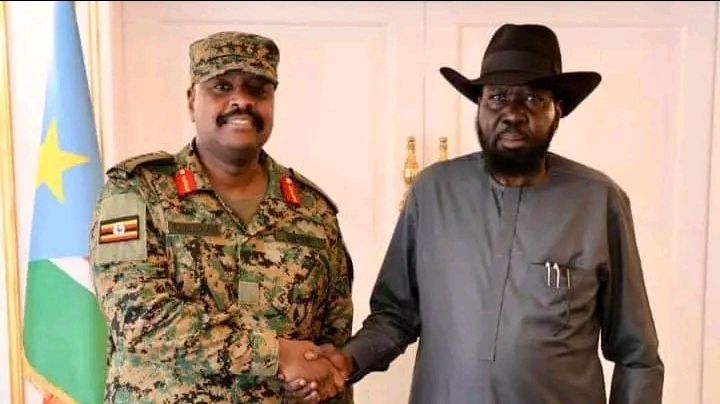

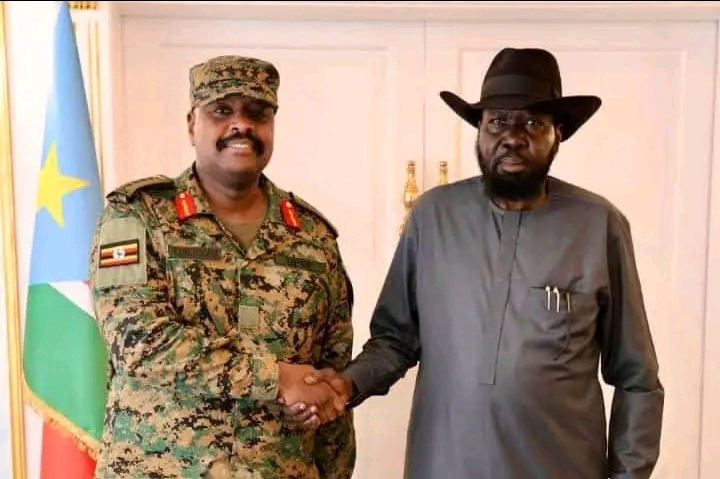
Juba, South Sudan| In a high-stakes diplomatic maneuver amid escalating border violence and regional instability, Uganda’s Chief of Defence Forces, General Muhoozi Kainerugaba, descended on Juba for closed-door talks with South Sudanese President Salva Kiir, signaling a desperate bid to salvage a fragile security pact between the two East African neighbors.
The visit, shrouded in secrecy and urgency, comes just weeks after deadly clashes along their disputed frontier left soldiers dead, thousands displaced, and fears of a broader conflict simmering in a region already scarred by civil wars and power struggles.
As tensions flare anew between Kampala and Juba, this meeting underscores the precarious balance of power in East Africa, where historical alliances forged in bloodshed now teeter on the edge of collapse.
With Uganda’s troops embedded deep in South Sudanese territory under a controversial operation, questions swirl about the true motives, costs, and consequences of this enduring partnership.
In this article, we will delve into the intricacies of the talks, the root causes of the border strife, the shadowy mechanics of bilateral military cooperation, and the broader implications for regional peace and stability.
A Swift Arrival and Sealed Discussions: The Anatomy of the Visit
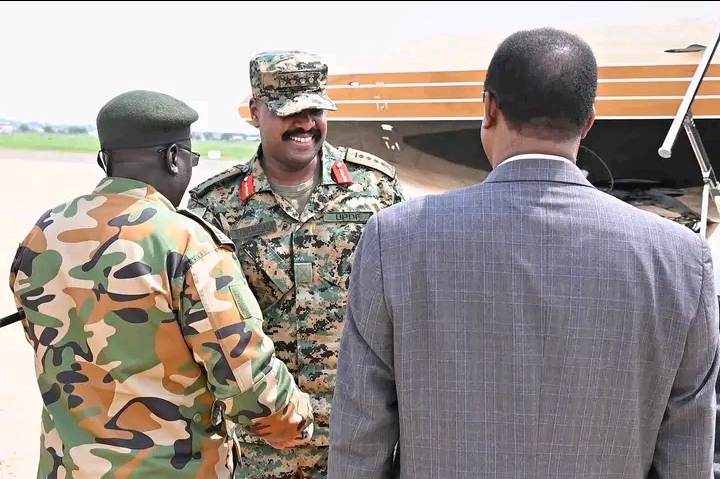
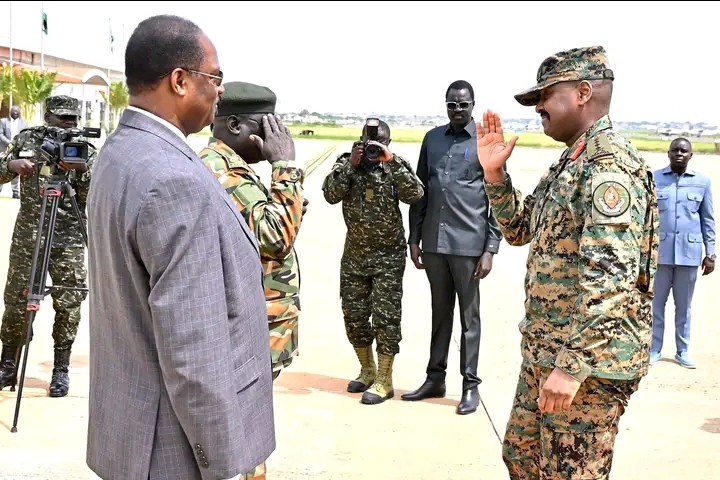
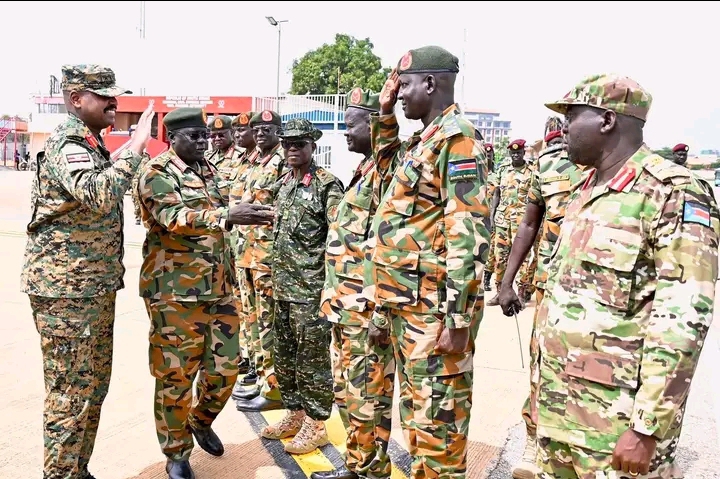
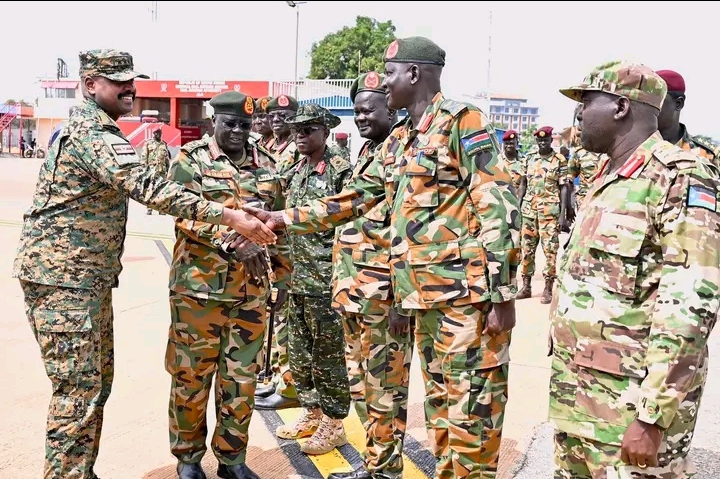
General Muhoozi Kainerugaba, the son of Ugandan President Yoweri Museveni and a figure often tipped as his successor, touched down in Juba early on Saturday, August 9, 2025, greeted with military honors by his South Sudanese counterpart, General Dau Aturjong, at Juba International Airport.
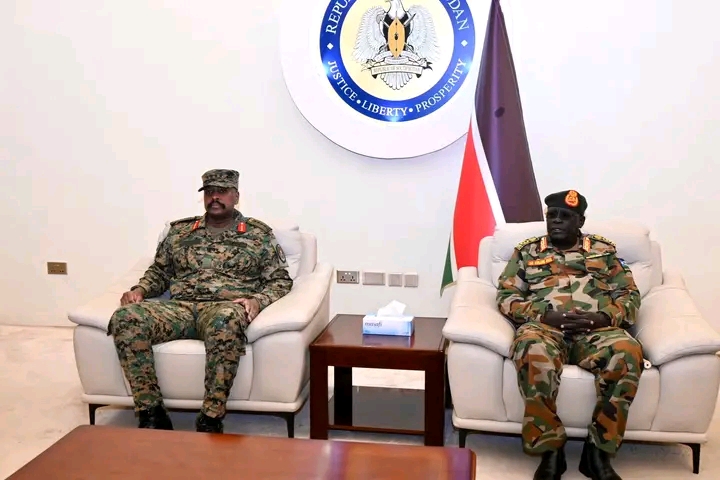
The reception set the tone for a day of intense, behind-closed-doors deliberations, first at the presidential palace with President Kiir and later with Vice President for the Economic Cluster, Dr. Benjamin Bol Mel.
Officials from both sides described the agenda as centered on “security cooperation” and “regional stability,” but the subtext was unmistakable: patching up relations frayed by recent hostilities.
Kainerugaba pledged Uganda’s unwavering commitment to bolstering ties with South Sudan, emphasizing joint efforts to combat cross-border threats and foster peace.
This marks the second high-level Ugandan military delegation to Juba in just a week, following Lieutenant General Sam Okiding’s inspection of Ugandan troops stationed near the capital—a move that itself raised eyebrows amid whispers of escalating deployments.
Capping off the visit, Kainerugaba toured Bilnyang village, the tactical nerve center of Operation Mlinzi Wa Kimya—Swahili for “Silent Guardian.” Here, he interacted with Ugandan soldiers, reaffirming their role in safeguarding South Sudan’s fragile peace.
Launched in March 2025 amid renewed power struggles between President Kiir and First Vice President Riek Machar, the operation has deployed Ugandan special forces to secure key areas around Juba, ostensibly to prevent conflict spillover and stabilize the region.
Yet, its secretive nature has fueled speculation about Uganda’s deeper economic and political interests, including access to South Sudan’s oil resources and influence over its volatile politics.
The Spark: Deadly Border Clashes in Kajo-Keji and a Humanitarian Catastrophe
The backdrop to these talks is a brutal confrontation on July 30, 2025, in South Sudan’s Kajo-Keji County, where Ugandan and South Sudanese forces exchanged fire, resulting in at least six to eight fatalities—primarily South Sudanese soldiers—and numerous injuries.
The skirmish, described by some as a “surprise attack,” erupted in villages like Nyainga Muda and Bori Boma, stemming from longstanding disputes over border demarcations reliant on outdated colonial-era maps.
The violence has displaced over 16,000 civilians, triggering a humanitarian crisis in an area already ravaged by poverty and insecurity. Local leaders, including the Bishop of Kajo-Keji, have issued desperate appeals for aid, highlighting shortages of food, water, and shelter as families flee to makeshift camps.
Reports of Ugandan forces allegedly attacking additional villages post-clash have only intensified accusations of aggression, with South Sudanese officials claiming territorial incursions.
These incidents are not isolated; they echo a pattern of simmering tensions. A 2022 agreement to jointly demarcate the 740-kilometer border has stalled, bogged down by disagreements over historical boundaries and resource-rich areas.
Analysts warn that without resolution, such flare-ups could ignite a wider conflict, drawing in regional players and exacerbating East Africa’s instability.
Operation Mlinzi Wa Kimya: A Veil of Secrecy Over Uganda’s Military Footprint
At the heart of the current dynamics is Operation Mlinzi Wa Kimya, a bilateral initiative that has seen Uganda deploy hundreds of troops, including special forces, to South Sudan since March 2025.
Officially aimed at securing Juba and preventing a relapse into civil war amid Kiir-Machar rivalries, the mission has provided tangible benefits, such as infrastructure projects like clean water taps for local communities. However, its opacity has invited scrutiny.
Unconfirmed allegations from the Awan Chan youth group, hailing from Kiir’s home region, claim each Ugandan soldier receives a staggering $200 daily stipend—far exceeding standard military pay and raising questions about funding sources and potential corruption.
Neither government has addressed these claims, but they amplify concerns over the operation’s true costs and beneficiaries.
Critics argue that Uganda’s involvement is driven by economic imperatives, including protecting trade routes and securing stakes in South Sudan’s oil sector, which supplies a significant portion of Uganda’s energy needs.
The deployment also serves strategic goals, positioning Uganda as a regional powerhouse while countering influences from Ethiopia and Sudan.
Historical Shadows: From Civil War Allies to Uneasy Partners
Uganda’s role in South Sudan is steeped in history. In 2013, as civil war erupted between Kiir and Machar, Kampala dispatched troops to bolster Kiir’s forces, tipping the scales in a conflict that claimed an estimated 400,000 lives and displaced millions before a tenuous 2018 peace deal.
This intervention cemented Uganda as Juba’s key security guarantor but also sowed seeds of resentment, with opposition factions viewing it as foreign meddling.
Fast-forward to 2025, and the alliance persists, albeit strained. President Museveni’s April visit to Juba amid political crises, coupled with General Kainerugaba’s recent tweets on South Sudan, highlight Uganda’s proactive stance in averting chaos that could spill over borders.
Yet, persistent border disputes and internal South Sudanese fractures—exacerbated by delayed elections and resource mismanagement—threaten to unravel these ties.
Broader Implications: A Tipping Point for East African Security?
Kainerugaba’s Juba sojourn may offer a temporary reprieve, but experts caution it’s merely a band-aid on deeper wounds.
The clashes risk derailing economic integration efforts within the East African Community, where both nations are members, and could invite external actors like China or the U.S. to meddle further in the region’s affairs.
Humanitarian agencies are sounding alarms over the displaced populations in Kajo-Keji, urging international intervention to provide aid and facilitate dialogue.
Meanwhile, calls for transparent border demarcation and demilitarization grow louder, with the African Union potentially stepping in to mediate.
As East Africa grapples with climate-induced resource conflicts and political volatility, the Uganda-South Sudan relationship stands as a litmus test.
Will these talks forge a path to lasting peace, or merely delay the inevitable? With soldiers on high alert and civilians caught in the crossfire, the stakes could not be higher.
Share This Post