
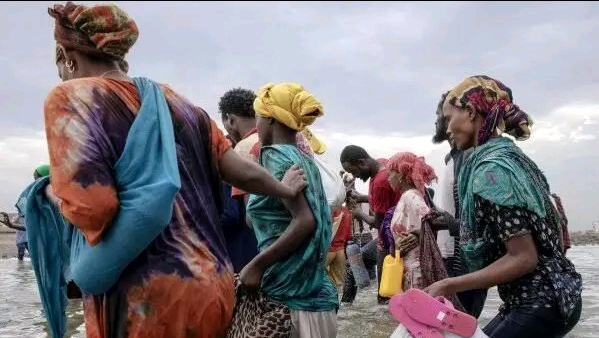

In a heart-wrenching incident that underscores the dire risks faced by migrants seeking better lives, seven Ethiopian migrants succumbed to hunger and thirst during a treacherous boat journey from Somalia to Yemen, the International Organization for Migration (IOM) reported on Wednesday.
This devastating loss adds to the alarming toll of over 350 migrant deaths and disappearances recorded along the Eastern Migration Route since the start of 2025, highlighting the escalating humanitarian crisis in the region.
A Deadly Voyage
According to the IOM, a vessel carrying 250 Ethiopian migrants, including 82 vulnerable children, departed from Bossaso, Somalia, bound for Yemen.
The boat, ill-equipped for the perilous journey across the Gulf of Aden, broke down mid-voyage, leaving its passengers stranded for seven grueling days.
Without adequate food, water, or shelter, the migrants endured unimaginable hardship. By the time the boat reached the Arqah area of southern Yemen on Tuesday, seven lives had been tragically lost to starvation and dehydration.
The IOM’s teams in Yemen were quick to respond, providing lifesaving assistance to the survivors, many of whom were in critical condition after their harrowing ordeal.
“These people have been through a week of hell on the high seas. They have been exploited, terrified, and traumatized,” said Abdusattor Esoev, IOM’s chief of mission in Yemen.
His words paint a stark picture of the desperation and exploitation that drive migrants to risk their lives on such dangerous journeys.
The Eastern Migration Route: A Deadly Pathway
The Eastern Migration Route, stretching from the Horn of Africa to Yemen and beyond, is one of the world’s most dangerous migration corridors.
Migrants, primarily from Ethiopia and Somalia, undertake this perilous journey in search of economic opportunities, safety, or reunification with family members in the Gulf states or further afield.
However, the route is fraught with risks, including overcrowded and unseaworthy vessels, exploitation by human traffickers, and the ever-present threat of violence, starvation, and disease.
Since January 2025, the IOM has documented more than 350 deaths and disappearances along this route, a grim statistic that reflects the scale of the crisis. Smugglers often overload boats with little regard for passenger safety, prioritizing profit over human lives.
The lack of food, water, and medical supplies on these voyages exacerbates the dangers, leaving migrants vulnerable to dehydration, malnutrition, and exposure to harsh weather conditions.
A Humanitarian Crisis Unfolds
The tragedy of the seven Ethiopian migrants is not an isolated incident but part of a broader humanitarian crisis driven by conflict, poverty, and desperation in the Horn of Africa.
Ethiopia, in particular, has seen a surge in outward migration due to ongoing political instability, economic hardship, and environmental challenges such as drought. For many, the promise of a better life in Yemen or the Gulf states outweighs the known risks of the journey.
Yemen itself, however, is a nation grappling with its own humanitarian disaster. Years of conflict have left the country in ruins, with millions facing food insecurity and limited access to basic services.
For migrants arriving on Yemen’s shores, the reality is often far bleaker than their hopes, with many facing detention, exploitation, or forced return to the dangers they fled.
The Role of the IOM and International Response
The IOM has been at the forefront of responding to the needs of migrants along the Eastern Route.
In addition to providing immediate assistance to survivors, the agency works to raise awareness about the dangers of irregular migration, combat human trafficking, and advocate for safer, legal migration pathways.
However, the scale of the crisis demands a coordinated international response. “These tragedies are a stark reminder of the urgent need for global action to address the root causes of migration and protect the most vulnerable,” Esoev emphasized.
He called for increased investment in humanitarian aid, conflict resolution, and economic development in countries of origin, as well as stronger measures to dismantle smuggling networks.
A Call to Action
The deaths of these seven Ethiopian migrants are a sobering reminder of the human cost of irregular migration. As the world grapples with the complexities of global migration, the international community must prioritize the protection of migrants’ rights and safety.
This includes addressing the systemic issues—poverty, conflict, and lack of opportunity—that force individuals to embark on such deadly journeys.
For now, the survivors of this ill-fated voyage are receiving critical support from the IOM and its partners in Yemen. But their story, and the stories of countless others, serves as a clarion call for action.
The world cannot turn a blind eye to the plight of migrants who, in their pursuit of hope, face unimaginable horrors on the high seas.
For more information on how to support migrant safety and humanitarian efforts, visit the International Organization for Migration at www.iom.int.
Share This Post