
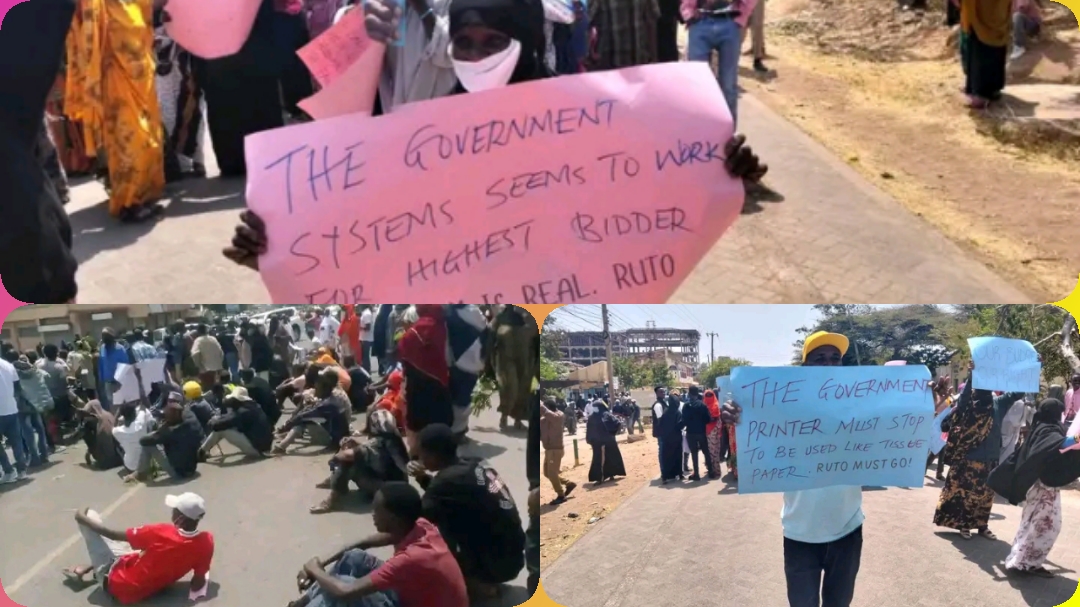

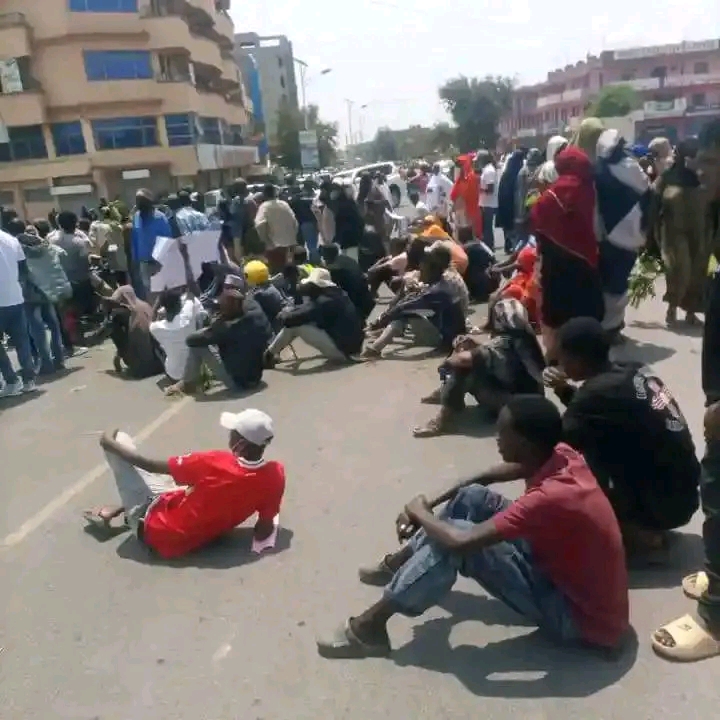
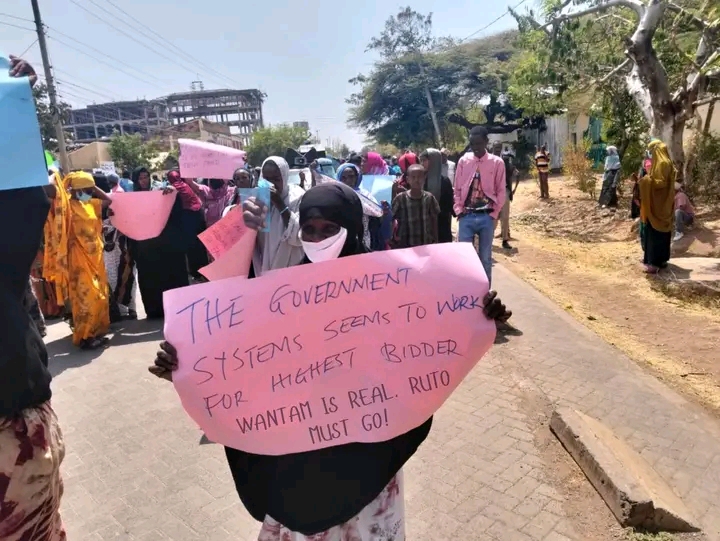
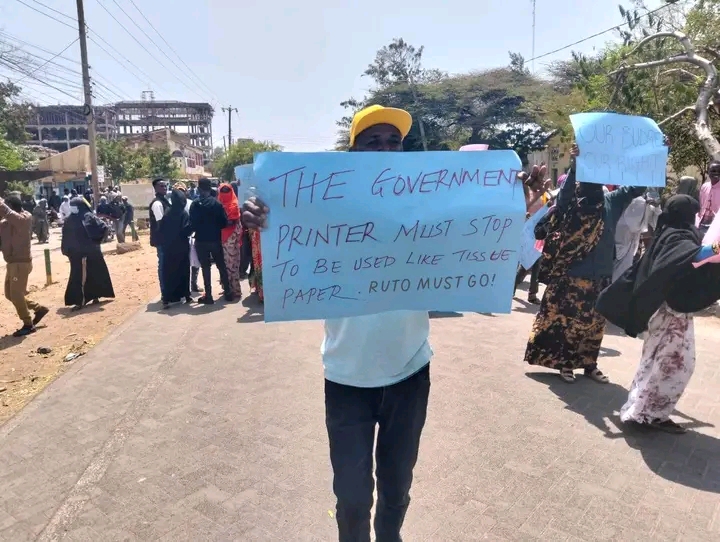
In the heart of Kenya’s arid north, Isiolo County was poised for what organizers billed as a citizen-led demonstration against local governance issues.
However, the much-hyped protest, anticipated to channel public frustration over the county’s speakership row and recently passed budget, quickly unraveled into a chaotic, politicized spectacle that failed to resonate with the masses.
What began as a call for accountability morphed into a targeted anti-government campaign, with placards and slogans aimed at President William Ruto, Health Cabinet Secretary Aden Duale, and independent institutions like the Ethics and Anti-Corruption Commission (EACC) and the Judiciary.
The result? A poorly attended protest, a divided community, and questions about whether Isiolo’s unrest is a genuine grassroots movement or a calculated political maneuver.
A Protest That Never Took Off
On the day of the demonstration, organizers—reportedly aligned with an anti-Governor Abdi Guyo faction—hoped to galvanize thousands to take to the streets.
Yet, the turnout was dismal, with estimates pegging the crowd at a mere 150 to 200 people, many of whom were allegedly mobilized from outside the county.
The low attendance forced organizers to delay the protest, a move that underscored the disconnect between their ambitions and public sentiment.
Shops remained open, streets stayed calm, and transport operators continued business as usual, signaling a collective snub from Isiolo’s residents, business owners, and workers.
Sources close to the planning revealed that the protest’s narrative was carefully crafted during a discreet late-night strategy meeting, allegedly held at Bomen Hotel.
The meeting, reportedly attended by allies of Senator Fatuma Dullo and erstwhile Speaker Mohamed Roba, birthed slogans like “Ruto Must Go” and “Ruto Wantam?”—phrases that shifted the protest’s focus from local grievances to a broader anti-government agenda.
This pivot, however, failed to ignite the public’s passion, with many residents viewing the demonstration as a politically driven stunt rather than a genuine call for change.
From County Grievances to National Politics
The protest’s original intent, according to organizers, was to address local issues, including a contentious speakership dispute and dissatisfaction with the county’s budget.
The speakership row, currently under legal scrutiny, has been a flashpoint in Isiolo’s political landscape, with rival factions vying for control.
Yet, what began as a county-level grievance quickly escalated into a broader attack on national leadership, with President Ruto and CS Duale singled out in protest chants and placards.
Even independent institutions like the EACC and Judiciary were not spared, raising eyebrows among analysts who questioned the protest’s true motives.
Security analysts and local leaders criticized the demonstration as reckless and politically motivated.
“This was less about the people of Isiolo and more about settling political scores,” said a local security expert, who spoke on condition of anonymity. “The slogans and targets suggest a coordinated effort to tarnish the national government’s image while exploiting local tensions.”
The involvement of state appointees, accused of fueling the unrest, further muddied the waters, lending credence to claims that the protest was orchestrated by political heavyweights seeking to undermine Governor Guyo and, by extension, the national administration.
A Community Unmoved
The lukewarm response from Isiolo’s residents spoke volumes. Unlike previous protests in Kenya that have drawn massive crowds, this demonstration failed to capture the public’s imagination.
Businesses operated as usual, and the streets remained largely quiet, with many locals dismissing the protest as a distraction from their daily struggles.
“We are tired of these political games,” said Halima Adan, a local trader. “If they want to fight, let them do it in court or at the ballot box, not on our streets.”
This public fatigue with street politics is a growing trend across Kenya, where citizens are increasingly wary of protests that appear to serve elite interests rather than address grassroots concerns.
In Isiolo, the disconnect was palpable, with residents rejecting the protest’s divisive rhetoric and opting for stability over chaos.
The failure of the demonstration to gain traction has been interpreted by analysts as a rejection of politicized agitation and a call for more constructive dialogue.
Governor Guyo’s Silence and the Bigger Picture
Amid the protest’s collapse, Governor Abdi Guyo maintained a conspicuous silence, choosing to focus on unity and development rather than engaging in the political fray.
His restraint has been praised by some as a sign of maturity, with analysts noting that his refusal to be drawn into the controversy may have strengthened his position.
“By staying above the noise, Guyo is signaling that he prioritizes governance over political theater,” said political analyst Jane Wambui. “The failed protest exposed the desperation of his rivals more than any public discontent with his leadership.”
The protest’s failure also raises broader questions about the state of politics in Isiolo and beyond. Just days before the demonstration, a group of local leaders had met with President Ruto, pledging their support and expressing confidence in his leadership.
The sudden shift to anti-government rhetoric during the protest has fueled speculation about opportunism and shifting allegiances. “It’s a classic case of political flip-flopping,” said Wambui. “These leaders are playing to multiple audiences, but the people of Isiolo are not buying it.”
A Power Struggle in Disguise?
At its core, the Isiolo protest appears to be less about public grievances and more about a power struggle between rival political camps.
The speakership dispute, while significant, is already before the courts, with legal processes underway to resolve it. Yet, for some leaders, the courtroom is too slow a battleground, and the streets offer a quicker, if riskier, platform to assert influence.
The protest’s anti-Ruto turn suggests an attempt to escalate local tensions into a national issue, potentially to pressure the government or gain leverage in county politics.
However, the strategy backfired spectacularly. By alienating residents and failing to mobilize significant numbers, the organizers exposed their own vulnerabilities.
“This was a miscalculation,” said a local political observer. “They overestimated their influence and underestimated the public’s desire for peace and progress.” The protest’s flop may serve as a cautionary tale for politicians seeking to exploit local issues for broader agendas.
What Lies Ahead for Isiolo?
As Isiolo moves forward, the failed protest underscores the need for genuine dialogue and solutions that prioritize the county’s development over political brinkmanship.
Residents are grappling with real challenges—water scarcity, infrastructure deficits, and unemployment—that demand collaborative leadership rather than divisive protests.
Governor Guyo’s focus on unity could set the tone for a more inclusive approach, but only if he can navigate the political landmines laid by his opponents.
For now, the people of Isiolo have spoken through their inaction, rejecting a protest that seemed more about power than progress. Whether this marks the end of such agitations or merely a pause in the county’s turbulent politics remains to be seen.
One thing is clear: in Isiolo, as in much of Kenya, the public is growing weary of leaders who prioritize personal ambition over collective welfare. As the dust settles, the question lingers: will Isiolo’s leaders heed the call for unity, or will they continue to fan the flames of division?
Share This Post