
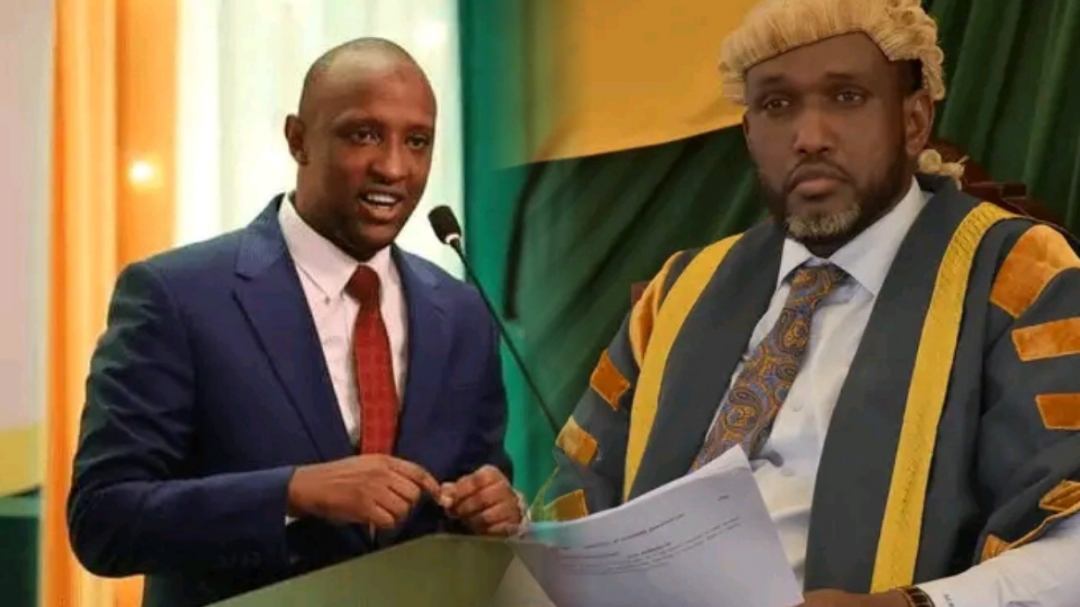

Isiolo, Kenya| In a stunning show of defiance against the judiciary, the Isiolo County Assembly has moved forward with the impeachment of Governor Abdi Ibrahim Hassan Guyo, despite multiple standing court orders that explicitly barred the process.
The politically charged maneuver, led by Speaker Mohamed Roba Qoto, has thrust the arid northern county into a full-blown constitutional crisis—one that threatens not just the tenure of a popular governor, but the very rule of law in Kenya’s devolved governance system.
Court Orders Flouted as Impeachment Proceeds
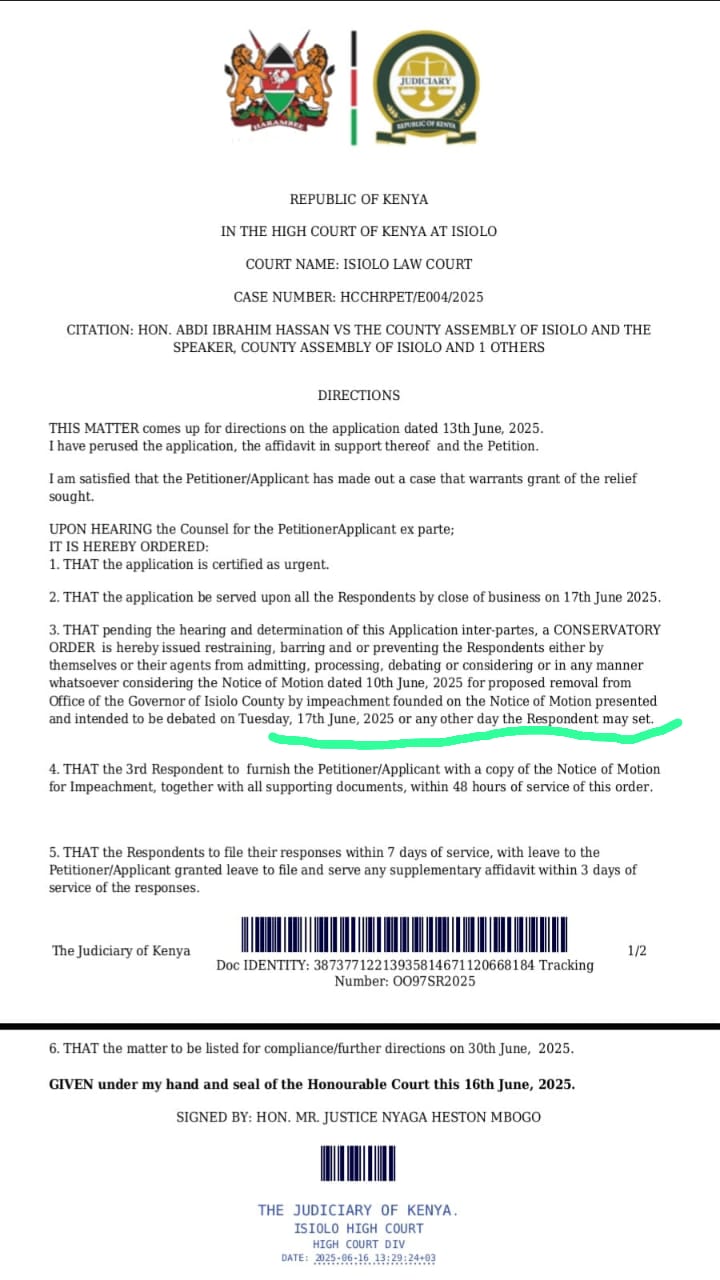
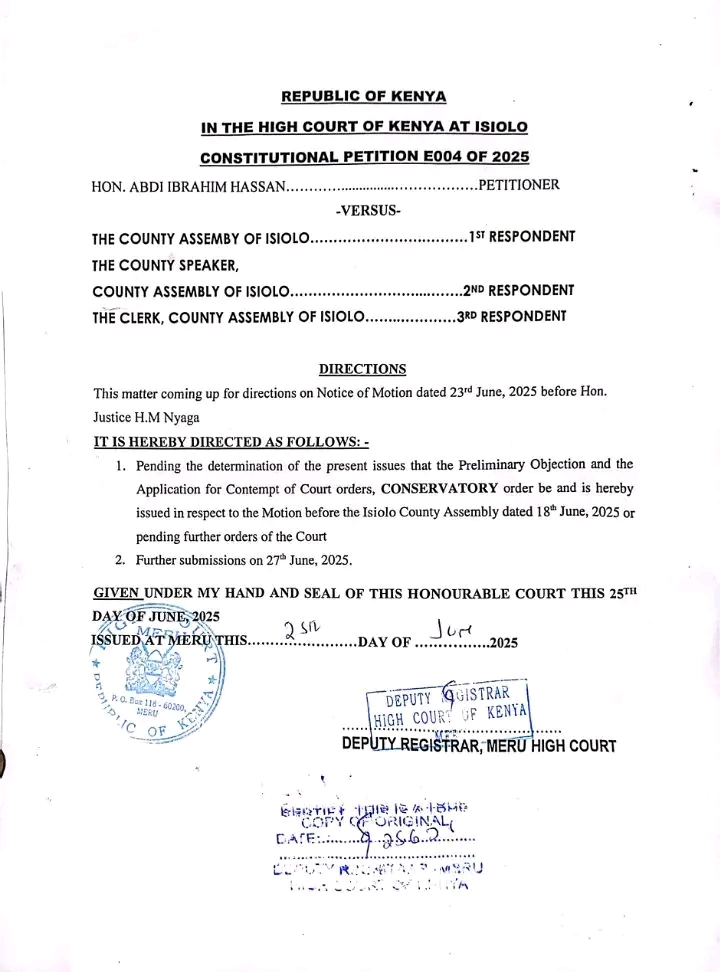
On June 25, 2025, the High Court in Isiolo, presided over by Justice Heston Nyaga, issued a conservatory order restraining the County Assembly from proceeding with the impeachment motion against Governor Guyo.
The judge cited a prima facie case and set a hearing for June 27, affirming that the governor’s rights to a fair process were at stake.
The court order was unambiguous: the Assembly, its Speaker, and all agents were barred from “admitting, processing, debating, or considering” the impeachment motion brought forward by Sericho Ward MCA Abubakar Godana on June 10.
However, in a move that legal analysts have termed “brazen contempt,” the County Assembly convened on June 26 and passed the motion with 16 out of 18 MCAs voting in favor of Governor Guyo’s ouster.
This has ignited a firestorm of criticism over the Assembly’s disregard for judicial authority, setting the stage for a bitter political and legal showdown.
Constitutional experts warn that such defiance could have grave implications for governance and democracy in Kenya’s counties.
Guyo’s Governance Record Under Attack—But Also Defended
The impeachment motion accuses Governor Guyo of abuse of office, gross misconduct, and violations of the Constitution, citing issues such as the alleged over-appointment of advisors, financial mismanagement, and inflammatory public remarks.
However, critics argue that these charges are either exaggerated or politically motivated.
Supporters of Governor Guyo have come out strongly in his defense, painting the impeachment as a thinly veiled power struggle driven by personal vendettas and external political forces.
They point to his development record, which includes significant investments in healthcare, water, and infrastructure.
Among the notable achievements are the drilling of 68 boreholes to address chronic water shortages, the establishment of a 14-bed High Dependency Unit in Isiolo Referral Hospital, and community development projects worth over KSh 770 million.
Speaking at a recent Senate session, Governor Guyo challenged the narrative of failure, saying, “I am accused of having done nothing in Isiolo, yet a lot of development programs are ongoing. The people of Isiolo know the truth.”
Speaker Roba’s Legal Woes Cloud Impeachment Drive
Speaker Mohamed Roba Qoto, who is at the forefront of the impeachment effort, is himself embroiled in a criminal case that has further tainted the legitimacy of the process.
On June 24, he was arrested and disarmed following accusations of threatening Governor Guyo with a firearm—an act that has earned him charges of attempted murder. He was later released on a KSh 100,000 bail.
The incident has fueled suspicions that Roba is pursuing a personal vendetta under the guise of legislative accountability.
Governor Guyo has accused the Speaker of colluding with political operatives from neighboring counties to destabilize his administration for partisan gain.
County Clerk’s Reinstatement Sparks Legal Wrangle
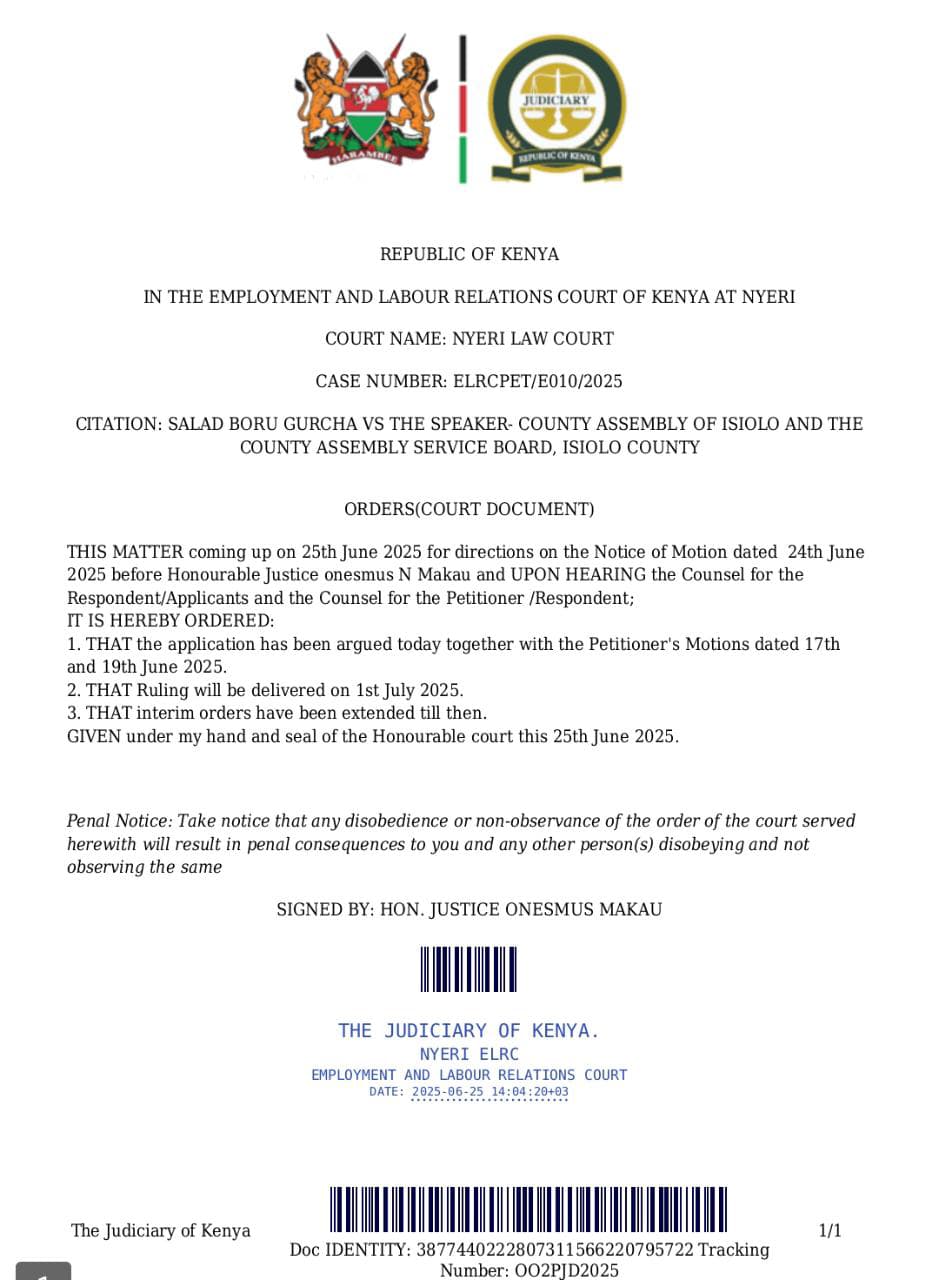
Adding to the legal morass is the reinstatement of County Assembly Clerk Salad Boru Guracha by the Employment and Labour Relations Court.
Guracha had been suspended by Speaker Roba and the Assembly Service Board, but successfully challenged the decision, arguing it was a preemptive tactic to manipulate the impeachment process.
Justice Onesmus Makau ruled in Guracha’s favor on June 19, preserving his position until a final determination set for July 1.
The Clerk’s adherence to the High Court’s conservatory order—evident in his cancellation of a scheduled public participation forum on June 18—has made him a central figure in defending institutional integrity.
Public Opinion Splits Amid Allegations of External Interference
Isiolo residents remain sharply divided over the impeachment. While some citizens, frustrated by perceived delays in service delivery, have welcomed the Assembly’s actions, many others see the impeachment as externally driven and illegitimate.
During public participation forums across the county’s 10 wards, a growing number of residents voiced concerns over the timing and manner of the impeachment.
Local activist Ibrahim Wako labeled the process “ill-informed” and urged citizens to resist what he described as foreign meddling in Isiolo’s internal affairs.
Elders and opinion leaders from various communities have echoed these sentiments. “This motion was not birthed in Isiolo—it is being pushed by outside interests,” said Abdulkadir Shariff Abdullahi, Chairperson of the Somali Council of Elders.
The elders are now calling for calm and dialogue to avert a possible resurgence of ethnic tensions that have historically plagued the region.
Security and Political Tensions Escalate
The political standoff has brought with it a spike in security concerns. MCAs aligned with the Speaker reportedly went into hiding in Nakuru and Machakos counties, claiming they were being trailed by armed individuals.
Burat MCA Nicholas Lorot reported that one of his supporters was abducted and assaulted.
The tension has spilled into the streets, with police on June 10 firing in the air to disperse protesters attempting to storm the Assembly premises.
Security has since been reinforced, with officers deployed from Meru County to oversee the ongoing proceedings.
What’s Next for Isiolo?
As the county awaits the High Court’s next ruling on June 27 and the Labour Court’s decision on July 1, the future of Isiolo’s governance hangs in the balance.
Governor Guyo, despite the political storm surrounding him, has maintained a tone of reconciliation and optimism.
“These are good people,” he said, referring to the MCAs. “They mean well for Isiolo. It’s just that some external forces may have incited them.”
The Governor’s supporters are banking on the judiciary to restore order and protect constitutionalism, while elders and civil society groups continue to press for a mediated solution that upholds both justice and development.
Whether this storm will strengthen or destabilize Governor Guyo’s administration remains to be seen.
But for now, Isiolo stands at a constitutional crossroads—where political ambition, judicial authority, and public interest collide in a high-stakes contest for the county’s future.
Share This Post